Horse show season never really stops — and the best equestrian facilities in America keep schedules packed from January through December. Whether you’re planning a multi-discipline breed show, a hunter/jumper circuit, a dressage festival, or a western rodeo-style event, the venue you choose determines everything: stall availability, ring quality, trailer flow, and how easy it is for exhibitors and families to get there and come back next year.
The best equestrian event venues in the United States share a common formula: ample, well-maintained stabling, multiple competition and warm-up rings with quality footing, safe load-in/load-out logistics for rigs, and strong destination basics — hotels, dining, and airports within a reasonable drive. Get those four pillars right, and you have a show that fills year after year.
Planner checklist — quick scan before you shortlist:
- Stabling capacity, wash racks, and tack space
- Competition rings and warm-up rings, footing type, and lighting
- Trailer and RV parking, load-in/out routes, and golf cart circulation
- On-site services (vet/farrier access, concessions, restrooms, vendor space)
- Local support (hotel clusters, group rates, airport drive time)
You can also search our directory of Equestrian Centers to find facilities across the country: Search Equestrian Centers
Here Are the Best Equestrian Centers in the United States
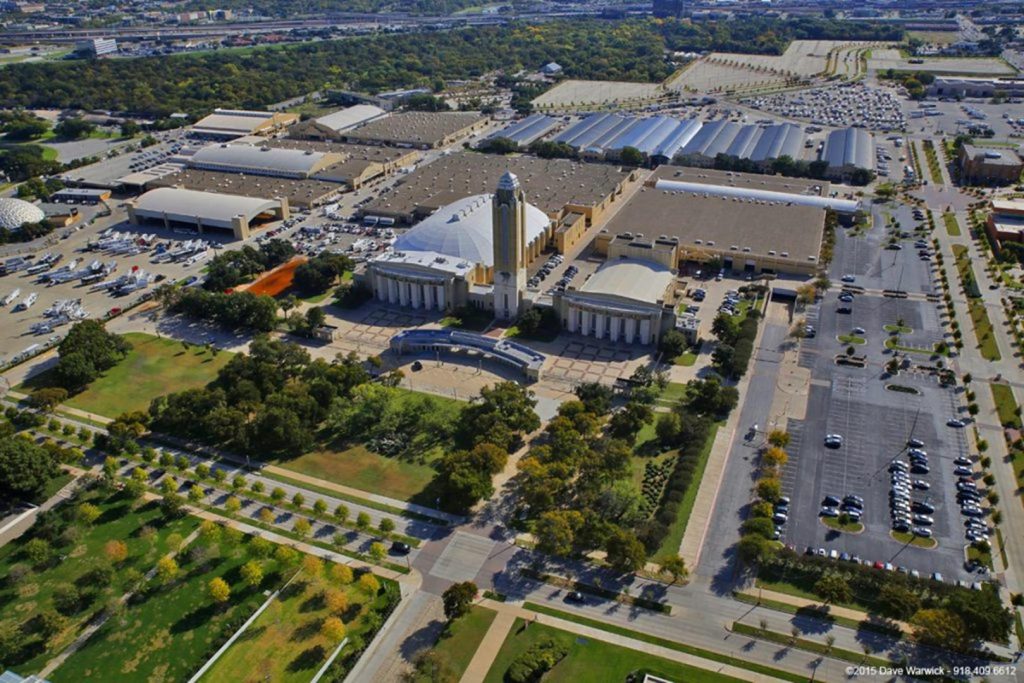
Will Rogers Memorial Center — Fort Worth, Texas
When event planners organize a large equestrian breed or discipline competition, they need a venue with the infrastructure to match the ambition. Will Rogers Memorial Center in Fort Worth delivers on every front.
The campus centers on the historic 2,856-seat Will Rogers Auditorium, a stunning Art Deco theater that doubles as the main show arena for indoor equestrian events. The Amon G. Carter, Jr. Exhibits Hall provides over 94,000 sq. ft. of contiguous exhibit space through the Texas Room, plus the 18,000 sq. ft. Round Up Inn ballroom — ideal for awards banquets, trade shows, and sponsor activations running alongside a show. The equestrian-specific footprint accommodates up to 2,500 horse stalls, and the complex includes an underground tunnel system connecting barns and arenas, a feature that significantly improves horse flow and safety on a busy show day.
Adjacent to the campus sits Dickies Arena, a 14,000-seat venue that can serve overflow or headline events requiring even larger spectator capacity. For planners managing multi-day, multi-ring events that also need expo space and spectator infrastructure, Will Rogers Memorial Center belongs at the top of any shortlist.
Planner notes:
- Best for: large multi-discipline shows that need stabling, expo space, and spectator seating under one roof
- Confirm early: stall blocks, warm-up allocations, and trailer routing across the interconnected campus
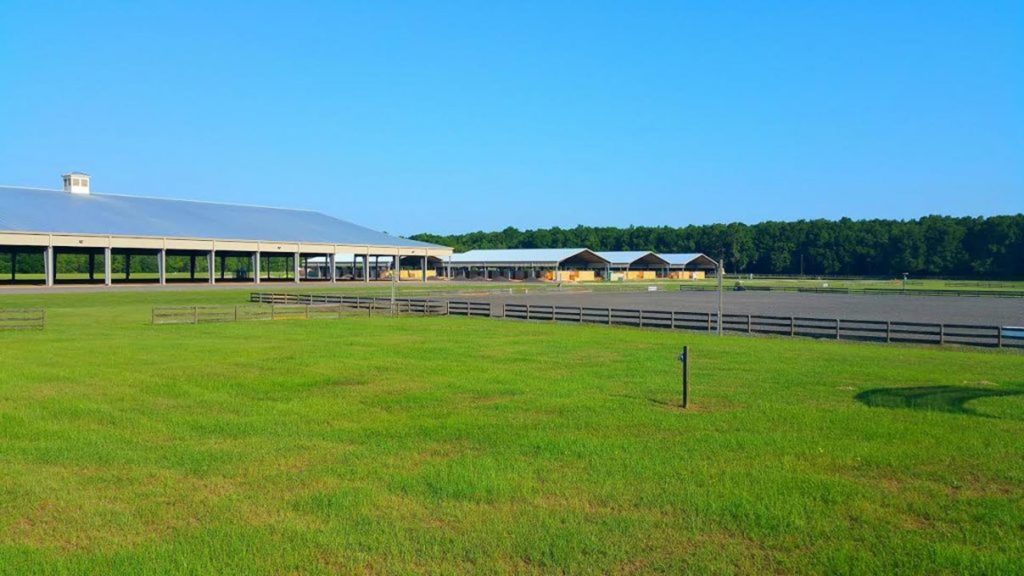
Florida Horse Park — Ocala, Florida
Situated in the heart of Florida’s horse country, the Florida Horse Park — officially the Florida Agriculture Center and Horse Park — is a 500-acre, multipurpose facility and one of Central Florida’s premier venues for equine, agricultural, and outdoor events. The park hosts competitions across a wide range of equestrian disciplines, from eventing and dressage to hunter/jumper and western.
The facility was designated an official training site for the United States Equestrian Team (USEF), a distinction that reflects the quality of its international-caliber competition courses. The park operates under the Florida Agriculture Center and Horse Park Authority and sits on state-owned land in Marion County — the same region widely known as the “Horse Capital of the World.” The official website is flhorsepark.com.
Planner notes:
- Best for: destination weekends and multi-discipline schedules in the Ocala/Marion County corridor
- Confirm early: current ring inventory, stabling availability, and seasonal demand windows
World Equestrian Center — Ocala, Florida
When it comes to sheer scale and modern infrastructure, no facility in America can currently match World Equestrian Center – Ocala. Recognized as the largest equestrian complex in the United States, WEC Ocala is set in the heart of Marion County’s horse country and hosts top-level hunter/jumper, dressage, and multidiscipline competition across a year-round calendar.
The property features world-class stabling, more than 40 arenas, a full-service on-site veterinary clinic, luxury hotel accommodations (including The Equestrian Hotel, rated one of TIME’s 2024 World’s Greatest Places), boutique shopping with over 30 vendors, diverse dining, a full-service spa, and an RV park. Competition runs essentially year-round: the Fall Series begins in September, the signature winter season runs November through April, and summer series competition continues at the property throughout the off-peak months. WEC also has a second campus in Wilmington, Ohio, expanding its national footprint. For planners seeking a venue that handles every logistical need — from stabling and rings to lodging and spectator experience — World Equestrian Center in Ocala is the benchmark.
Planner notes:
- Best for: premium circuits, high-profile spectator events, multi-week series formats, and events where on-site hotel and dining convenience is essential
- Confirm early: specific showground area allocation, stabling blocks by show week, and which venue spaces are included in your event footprint
Governor James B. Hunt Jr. Horse Complex — Raleigh, North Carolina
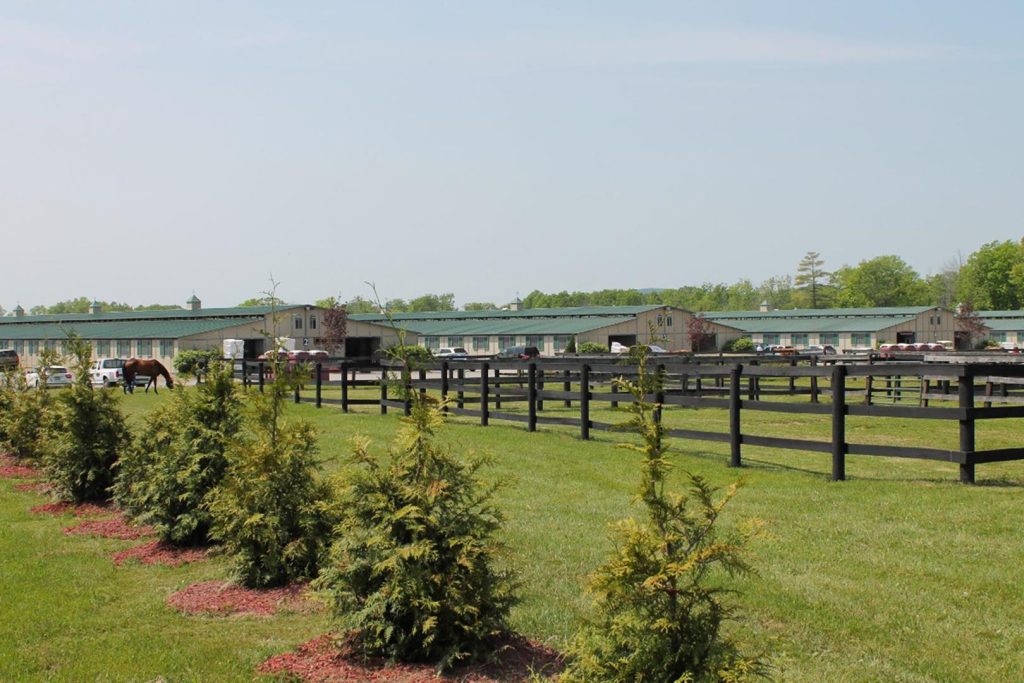
The Tar Heel State’s most prominent competitive horse facility is located in the state capital and anchors the NC State Fairgrounds campus. The 81,000 sq. ft. enclosed indoor arena features 4,748 permanent seats and a main show ring measuring 138 ft. x 248 ft. — built for national and international competition standards.
The complex maintains 5 permanent barns housing 485 stalls, with one additional open-air barn providing approximately 100 temporary stalls depending on event needs. The covered warm-up arena (120 ft. x 240 ft.) and a matching outdoor warm-up area give show managers maximum scheduling flexibility. The facility is governed by the NC Department of Agriculture and Consumer Services, making it a publicly accessible venue with strong institutional support.
Planner notes:
- Best for: regional and state association events, breed shows, and multi-day circuits
- Confirm early: temporary stalling capacity for your specific dates, warm-up ring scheduling, and show office access
HITS-on-the-Hudson — Saugerties, New York
HITS-on-the-Hudson in Saugerties, New York, is one of the most recognizable hunter/jumper show venues in the country — and it earns that reputation with the infrastructure to back it up. Located just two hours north of New York City in the Hudson Valley, the showgrounds span nearly 200 acres and feature 14 permanent barns with over 1,100 stalls, 10 outdoor competition rings (including a main stadium), and extensive exhibitor amenities.
The HITS Hudson Valley Show Series runs from May through September, offering multiple weeks of USEF-rated hunter/jumper and FEI show jumping competition. HITS, LLC has operated the Saugerties facility as its flagship venue since 2004, and the site’s combination of scale, setting, and show management experience makes it a strong anchor for a destination circuit format. The facility also offers facility rental for independent event promoters.
Planner notes:
- Best for: hunter/jumper series formats, destination-circuit schedules, and East Coast summer programming
- Confirm early: stall policies, RV logistics, and ring assignments by division
Brownland Farm — Franklin, Tennessee
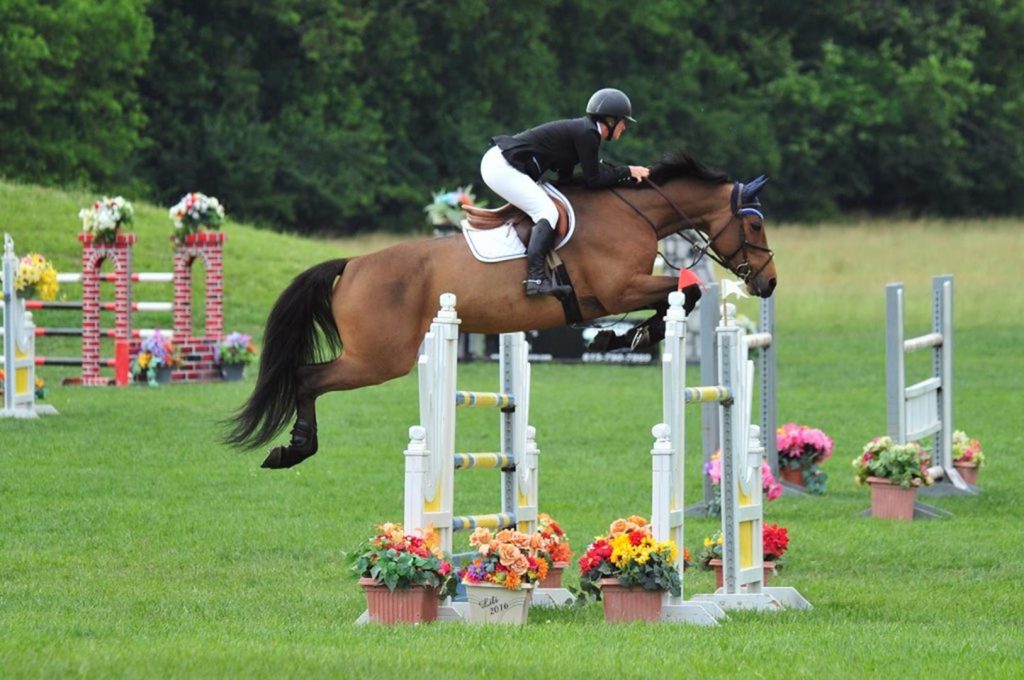
Brownland Farm has been a fixture on the southeastern equestrian circuit for decades, and its reputation is built on something that not every big venue can offer: a genuinely friendly, well-run show atmosphere where the horse comes first. Located in Franklin, Tennessee — one of the most appealing destination cities in the South — the farm sits on nearly 200 acres and features four show rings and four schooling rings, giving both competitors and show managers substantial room to breathe.
The show schedule runs from spring through fall and includes multiple USEF-rated hunter/jumper shows per year. The facility’s management team is known for operational consistency — reliable stabling, well-maintained footing, and the kind of week-to-week cadence that keeps exhibitors coming back season after season. Franklin’s proximity to Nashville adds a strong destination layer for traveling competitors.
Planner notes:
- Best for: recurring series events where exhibitor experience, southern hospitality, and a clean operational cadence are priorities
- Confirm early: stabling blocks, vendor areas, and scheduling availability around existing anchor shows
You can also search our directory of Equestrian Centers to find facilities across the country: Search Equestrian Centers
Fox Lea Farm — Venice, Florida
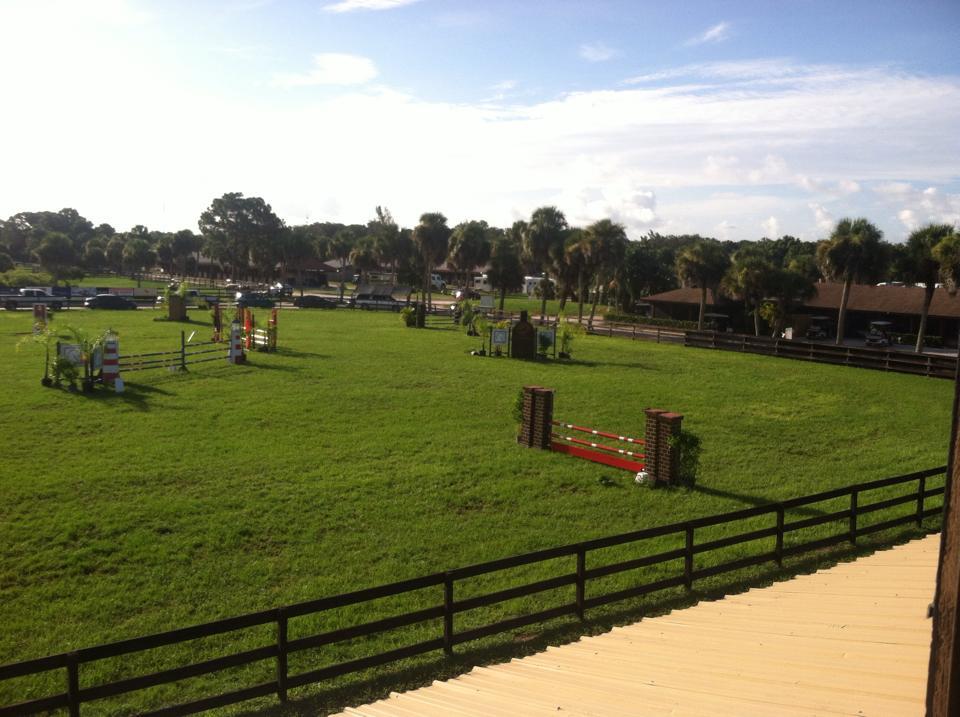
Fox Lea Farm has been one of Florida’s most respected privately owned horse show facilities since its founding in 1983. Located in Venice — a Gulf Coast destination that combines an equestrian setting with easy access to beaches, dining, and Sarasota-area amenities — the 50-acre facility hosts over 40 equestrian events per year, with a strong emphasis on hunter/jumper programming at every level.
Fox Lea Farm is home to the “Grassroots to Grand Prix” Hunter/Jumper Show Series, a format designed to serve everyone from USHJA Outreach competitors to USEF National-rated exhibitors. The facility includes multiple outdoor arenas, a covered arena, concessions, and experienced on-site event staff. Its boutique scale and family-friendly atmosphere are a deliberate differentiator from larger, more anonymous show venues — and competitors notice.
Planner notes:
- Best for: winter/spring hunter/jumper circuits, multi-week series formats, and exhibitor-focused weekend shows
- Confirm early: current stabling totals, ring map, and trailer/RV parking rules
The Colorado Horse Park — Parker, Colorado
For major competition in the Mountain West, The Colorado Horse Park in Parker, Colorado, is the destination of choice. Set on 148 acres with unobstructed views of the Rocky Mountains, the park hosts world-class competitions across hunter/jumper, dressage, eventing, and western disciplines throughout the show season.
Founded in 1992 by Helen Krieble and frequently cited as the largest horse park west of the Mississippi, the Colorado Horse Park has operated under new ownership since 2022, when it was acquired by a group of veterinarians and local equestrian stakeholders. The facility remains fully operational with an active 2026 competition calendar, including the Colorado Jumping Tour. For event planners building summer circuits or destination weekends targeting the Rocky Mountain region and Western-state competitor base, there is no comparable alternative.
Planner notes:
- Best for: summer circuits, destination weekends, and regional events for Western U.S. competitors
- Confirm early: current competition footprint (rings/stabling) and event calendar availability
Sandy Point Stables — Portsmouth, Rhode Island
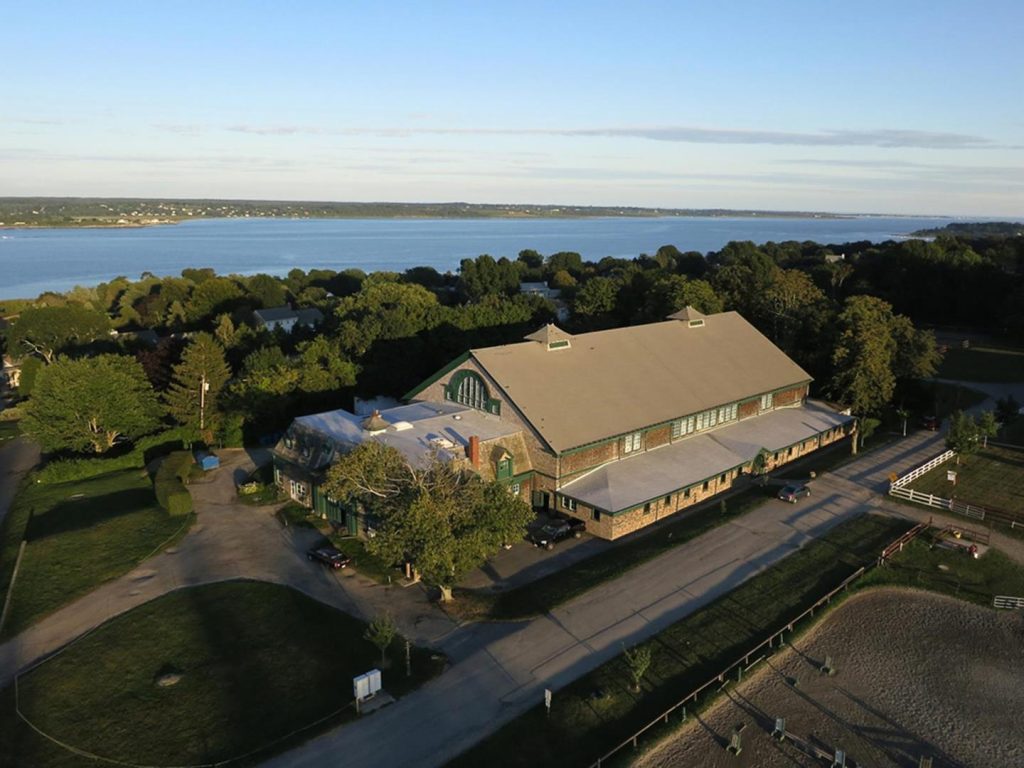
Sandy Point Stables occupies one of the most historically significant equestrian properties in New England. The facility was originally built in 1902 for Reginald Claypoole Vanderbilt — the founding president of what is now the US Equestrian Federation — and the property retains that era’s craftsmanship: a 30,000+ sq. ft. stable complex with 24 stalls, a 15,000 sq. ft. indoor riding arena, and multiple cupolas crowning an impressive 60-foot central structure.
The facility is located at 30 Sandy Point Farm Road in Portsmouth, Rhode Island, within easy reach of Newport’s hotel infrastructure and coastal destination appeal. Note for planners: The property changed ownership in late 2024 following an auction sale. Contact the facility directly to confirm current show schedule availability and event booking status before planning a program around this venue.
Planner notes:
- Best for: regional circuits where a heritage setting and New England destination appeal are part of the draw
- Confirm early: current operator contacts, available show dates, and any site restrictions under new ownership
Kentucky Horse Park — Lexington, Kentucky
It is nearly impossible to write about the best equestrian facilities in America without centering Lexington, Kentucky — and the Kentucky Horse Park is the crown jewel of that ecosystem. Set on more than 1,200 acres just off I-75, the park is simultaneously one of the most comprehensive competition venues in the country and a fully developed visitor destination, positioning itself as an “Equine Theme Park” that pairs competition infrastructure with live equestrian shows, extensive museums, and barn-to-barn horse encounters.
The park hosts a year-round competition calendar across disciplines including show jumping, dressage, hunter/jumper, eventing, and breed shows. The National Horse Center — comprising nearly 30 equine organizations located on the campus — adds a depth of institutional and industry support that few venues in the world can match. For planners organizing large-scale events that benefit from Kentucky’s broader equine ecosystem, hotel density, and fly-in accessibility through Lexington’s Blue Grass Airport, the Kentucky Horse Park operates at a category of its own.
Planner notes:
- Best for: large-scale multi-discipline events that benefit from Kentucky’s equine ecosystem and destination infrastructure
- Confirm early: peak-season blackouts, campus-wide traffic and parking planning, and vendor rules
Midland County Horseshoe — Midland, Texas
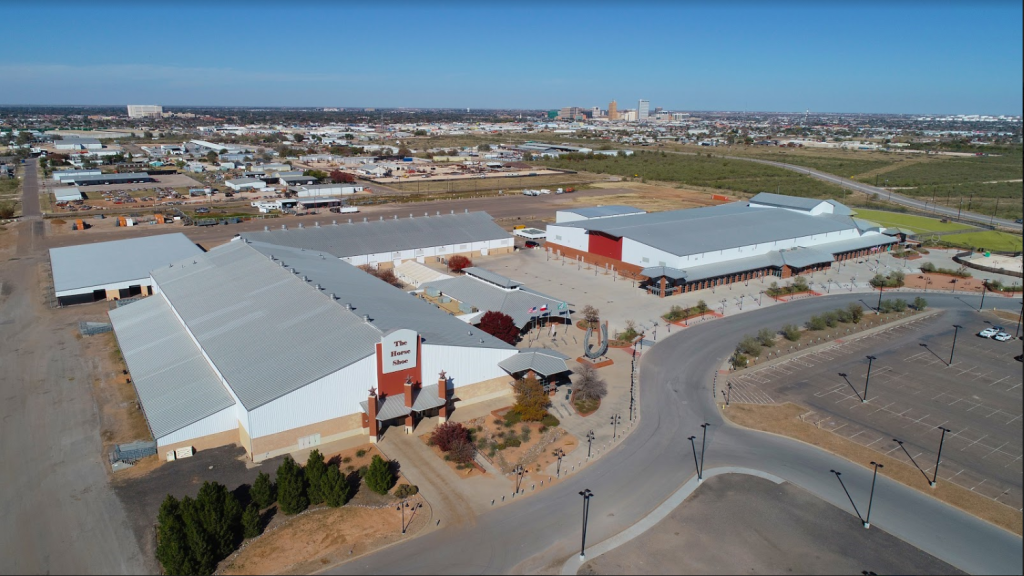
The Midland County Horseshoe is West Texas’s largest premier multipurpose event venue, built to accommodate everything from rodeos and livestock shows to concerts and large-scale expos. The campus spans 100 acres and is anchored by a 1,000+ seat enclosed arena (arena floor: 300 ft. x 128 ft.), one of the largest covered pavilions in Texas, and an outdoor amphitheater.
For equestrian and western sports event planners, the Horseshoe offers a flexible indoor footprint, pavilion space for exhibitors and sponsors, and an open-air terrace that works well for presentations and outdoor activations. The facility markets to rodeo, cutting, roping, and western expo formats, and its scale supports events that need both competitive space and large public attendance draws.
Planner notes:
- Best for: western equestrian sports, rodeo formats, and equine-adjacent expo footprints in the West Texas market
- Confirm early: on-site stalling options (or partner facilities), arena conversion timelines, and pavilion availability
Great Plains Coliseum — Lawton, Oklahoma
The Great Plains Coliseum is a multi-purpose indoor arena in Lawton, Oklahoma, with approximately 3,000 seats (with additional floor capacity for up to 1,400 using portable seating). The venue hosts local sporting events, concerts, and has a history of accommodating rodeo and western equestrian formats given its flexible dirt floor arena.
For planners targeting southwestern Oklahoma with events that don’t require large dedicated equestrian infrastructure, the Coliseum offers an affordable, accessible indoor venue with strong local market support from Lawton’s military community (Fort Sill is adjacent) and surrounding region. It is best suited to smaller-format shows, single-discipline events, or western events where spectator draw and indoor reliability are the primary requirements.
Planner notes:
- Best for: smaller-format or western equestrian events with an indoor footprint requirement in southwestern Oklahoma
- Confirm early: stalling options (likely off-site partner facilities), arena conversion timeline, and any on-site vendor restrictions
Central States Fairgrounds — Rapid City, South Dakota
Located at 800 San Francisco Street in Rapid City, South Dakota, the Central States Fairgrounds is a year-round event campus that hosts over 700 events annually, including rodeos, horse and livestock shows, AQHA-rated competitions, auctions, and motocross. The fairgrounds provide 360 permanent enclosed stalls and 150 portable stalls (510 total capacity) for horse events, and the facility publishes detailed stalling policies — including health certificate requirements and stall office procedures — that make logistics planning straightforward for show managers.
The Black Hills setting and Rapid City’s regional draw make this an attractive destination for northern plains competitors, and the facility’s experience managing high-volume livestock and horse events is evident in its infrastructure and operational policies.
Planner notes:
- Best for: fairgrounds-style equine and western sports events needing indoor/outdoor flexibility in the northern plains region
- Confirm early: current stalling capacity for your specific dates, any biosecurity requirements, and seasonal event conflicts
Wellington International — Wellington, Florida
Formerly known as the Palm Beach International Equestrian Center (PBIEC), the venue rebranded to Wellington International in 2022 — and the new identity reflects a facility that has evolved well beyond its origins. Located at 3400 Equestrian Club Drive in Wellington, Florida, Wellington International is the premier destination for elite equestrian sport in North America.
The venue is home to the Winter Equestrian Festival (WEF), the longest-running hunter/jumper horse show in the world, which runs 13 weeks of FEI-sanctioned international show jumping from January through March with over $16 million in prize money. The Adequan® Global Dressage Festival (AGDF) runs concurrently, delivering 10 weeks of internationally recognized dressage competition. The Annual Series continues from May through October at the adjacent Equestrian Village location (13500 S Shore Blvd), which features a grass derby field, multiple rings, and a covered arena.
In June 2026, Wellington International announced a significant expansion with the launch of Wellington International South, growing the total footprint to 215 acres. The venue draws participants from all 50 states and more than 34 countries each season, with VIP hospitality areas, luxury shopping, and extensive sponsorship programming available.
Planner notes:
- Best for: premium circuits, FEI-level competition, high-profile spectator events, and sponsor-driven hospitality programming
- Confirm early: which showground location (main campus vs. Equestrian Village), specific venue spaces, and what seating/VIP inventory is available for your event dates
Evergreen State Fairgrounds Equestrian Park — Monroe, Washington
For equestrian event planners working the Pacific Northwest market, the Evergreen State Fairgrounds Equestrian Park in Monroe, Washington, is the most capable dedicated facility in the region. The Equestrian Park centers on a 60,000 sq. ft. indoor arena with a 26,000 sq. ft. dirt show ring and 2,734 permanent bleacher seats — making it one of the larger covered equestrian venues in the western United States.
Multiple outdoor arenas, on-site stalling infrastructure, RV hookups (287 available on the fairgrounds campus), and year-round operations make Monroe a practical choice for shows that can’t rely on outdoor-only facilities given the Pacific Northwest climate. The facility hosts Northwest horse shows, trade shows, and other events year-round. Snohomish County’s location — between Seattle and Stevens Pass — provides convenient access to the metro market while maintaining a true rural, horse-country atmosphere.
Planner notes:
- Best for: Pacific Northwest horse shows, circuits that benefit from indoor reliability, and year-round programming
- Confirm early: stall blocks, RV/trailer parking rules, and indoor/outdoor ring scheduling priorities
Louisville Equestrian Center — Taylorsville, Kentucky (Louisville area)
Louisville Equestrian Center positions itself as a full-service venue designed for the dedicated equestrian — not the large-scale public show, but the focused training environment, clinic, and smaller competitive event. The facility features 78 matted stalls, wide barn aisles, two wash stalls, six indoor grooming areas, and both a huge indoor riding arena and outdoor riding space, giving show managers everything needed for a well-run smaller event.
The facility is located at 6720 Mount Washington Road in Taylorsville, Kentucky (Spencer County), approximately 25 miles southeast of downtown Louisville — and a second location has opened at 3114 Rock Creek Drive in Louisville’s St. Matthews neighborhood. Both locations serve the greater Louisville metro equestrian community. The proximity to the Kentucky Horse Park ecosystem and Louisville’s strong hotel and hospitality infrastructure makes this an appealing option for planners managing clinics, training programs, or smaller rated shows.
Planner notes:
- Best for: smaller rated shows, clinics, training-focused formats, and events where an intimate atmosphere matters
- Confirm early: spectator capacity, parking flow, and how farrier/vet access is handled on event days
North Jersey Equestrian Center — Pompton Plains, New Jersey
For East Coast equine events that demand indoor reliability and strong horse care infrastructure within striking distance of New York City, North Jersey Equestrian Center in Pompton Plains, New Jersey, is the Tri-State area’s premier option. The facility’s indoor complex totals 66,000 sq. ft., housing New Jersey’s largest climate-controlled indoor arena (135 ft. x 300 ft.) with 103 matted 12×12 stalls arranged around the arena perimeter.
Horse care amenities are above average: heated wash racks, a full ventilation system, a sprinkler system, fly control system, automatic waterers, two observation arenas, two round pens, a 20×60 meter dressage ring with USET-designed footing, a grass Grand Prix field, and 30 outdoor turnouts. The facility is located at 1 Carlson Place, approximately 20 miles outside New York City, and serves as home to the William Paterson University Equestrian Team. For planners needing Northeast indoor consistency with genuine horse care quality, NJEC checks every box.
Planner notes:
- Best for: Northeast events needing indoor consistency, strong on-site horse care infrastructure, and proximity to the New York metro market
- Confirm early: show-day parking limits, spectator flow, and outdoor ring availability by season
Frequently Asked Questions: Planning Equestrian Events in America
1. What makes an equestrian venue “tournament-ready”?
Reliable stabling with adequate wash racks and tack space, multiple rings including dedicated warm-up areas, safe and logical trailer and pedestrian circulation, clean restrooms and concessions, and on-site or readily accessible vet and farrier services. The best equestrian event venues also have experienced show staff who understand the cadence of a competitive horse show.
2. How far should hotels be from an equestrian center for a multi-day show?
Ideally within a 10–15 minute drive so exhibitors and families can maintain their routines between rounds. If a venue is in a more rural setting, identify the closest hotel cluster early and negotiate group rates before the event is announced — rooms in equestrian destinations can fill quickly during peak show season.
3. What’s the biggest hidden risk in equestrian event logistics?
Trailer and pedestrian flow. A facility can have excellent rings and stabling and still create serious problems if trailer parking, load-in/out routing, and golf cart circulation aren’t mapped and communicated clearly before move-in day. Request a current site map and walk the grounds with the facility manager well before show week.
4. What should a rights-holder request before signing a venue contract?
A current facility spec sheet listing all rings, stall counts, and warm-up areas; a detailed site map; clear documentation of staffing responsibilities (what the venue provides vs. what the promoter must supply); insurance requirements; exclusivity clauses for catering and vendors; and cancellation terms. For larger events, also request references from comparable shows hosted in the previous 12–24 months.
5. How do you validate venue capacity claims?
Request official venue documentation or published facility specs rather than relying on marketing materials alone. For stall counts in particular, clarify the difference between permanent stalls and temporary stalls, and confirm what is included in your rental. If a venue can’t provide a current spec sheet, treat all figures as unverified until confirmed in writing.
You can also search our directory of Equestrian Centers to find facilities across the country: Search Equestrian Centers