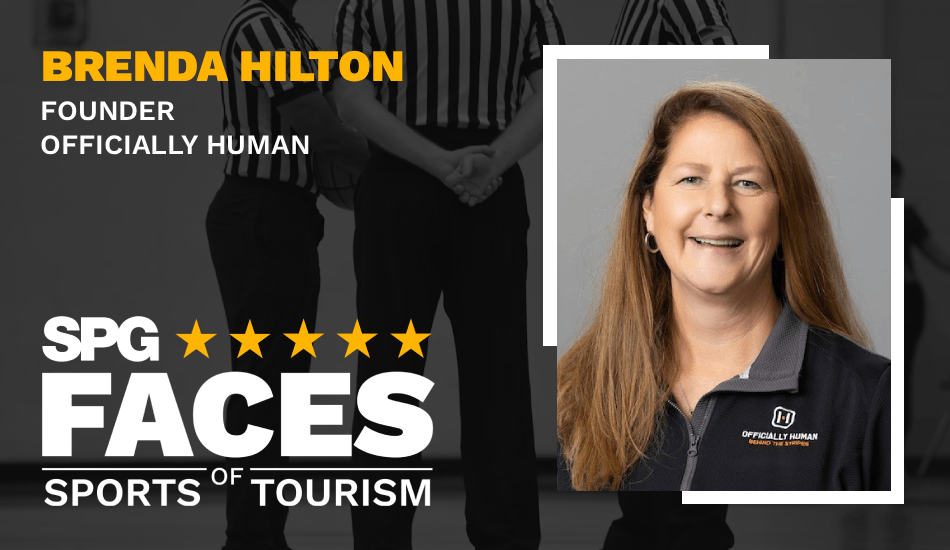
How Officially Human Founder Brenda Hilton is confronting the officiating crisis and calling for accountability across youth sports
From coordinating officials at the highest levels of Division I athletics to launching a national movement aimed at changing behavior in the stands, Brenda Hilton has seen firsthand not just a workforce shortage, but a cultural problem that threatens the foundation of sports competition.
As the founder of Officially Human, Hilton is working to address a growing crisis in officiating, one driven by retention challenges, fan behavior and a lack of accountability across youth and amateur sports. Her message is direct: If the industry does not change how it treats officials, the entire system, from local leagues to large-scale tournaments, will feel the impact.
In this latest edition of the Faces of Sports Tourism series, Hilton shares her path through college athletics, the realities of officiating today and why event organizers, destinations and communities must take a more active role in shaping behavior and protecting the people who make games possible.
Learn about the latest trends in the sports tourism industry at Sports Planning Guide.

Tell us about your background
I’ve worked in college athletics for almost 26 years, always in the officiating space. I was doing anything related to the courts and fields from an administrative standpoint, whether that was scheduling, coordinating or helping behind the scenes with assignments.
What really drew me in was trying to understand how officials actually move through the system. How do they get assigned? How are they evaluated? Back then, evaluation systems weren’t nearly as sophisticated as they are now.
I spent 11 years at a mid-major conference, and then I got a call from the Big Ten when they were forming a consortium for men’s basketball officiating. They needed someone to manage the administration behind the scenes. I didn’t interview or send a resume. They just said, call Brenda Hilton.
From there, my role evolved. I worked in men’s basketball and later transitioned into football. That opened my eyes to how different each sport is. In basketball, officials can work up to six days a week. In football, they work once a week. Completely different perspectives, different training, different lifestyles.
What sparked your interest in the officiating ecosystem?
I became fascinated with how everything works logistically. For example, in soccer, officials often travel in pods. You might have a group of referees going on a 10-day trip, working college games, youth tournaments and even high school matches along the way.
When schools are spread out, like in the Midwest, that becomes the most efficient way to cover games. It’s something most people don’t even realize is happening behind the scenes.
We also conducted a survey in 2019 that received 19,000 responses. One of the most important takeaways was that 70 percent of officials said they do not do it for the money. They do it for the love of the game.
That really tells you everything you need to know about why retention is such a critical issue.
What does the pathway look like for someone who wants to become an official?
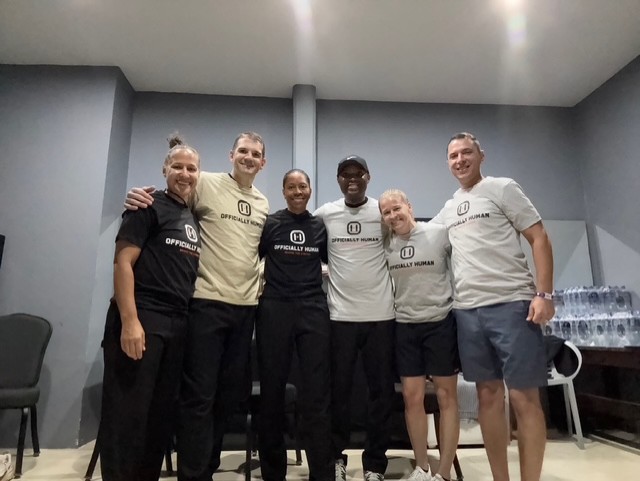
Typically, you start at the local level. You contact your park district or find a training program, maybe at a high school tournament or a local camp. You take an online test, get certified and then you just start working games.
It’s repetition. Game after game after game.
One of the biggest things I tell people is to find the right mentor. Not just someone who teaches rules, but someone who helps you develop leadership skills. Some of the best officials were not the best rules interpreters. They were great at managing people, managing coaches and controlling the game environment.
If you don’t have organizational skills, if you can’t communicate or if you can’t handle pressure, you’re not going to make it.
What traits define a successful official?
You have to be confident without being arrogant. You need strong communication skills, organization and the ability to admit when you make a mistake. A lot of it comes down to life skills. How you handle people will take you farther than just knowing the rules.
On the flip side, the people who struggle are the ones who avoid communication, who can’t manage interactions with coaches or who don’t have their lives organized. At higher levels, background checks and professionalism matter too. You have to be truthful and accountable.
What is driving the current officiating shortage?
It’s happening across every sport, and none are immune.
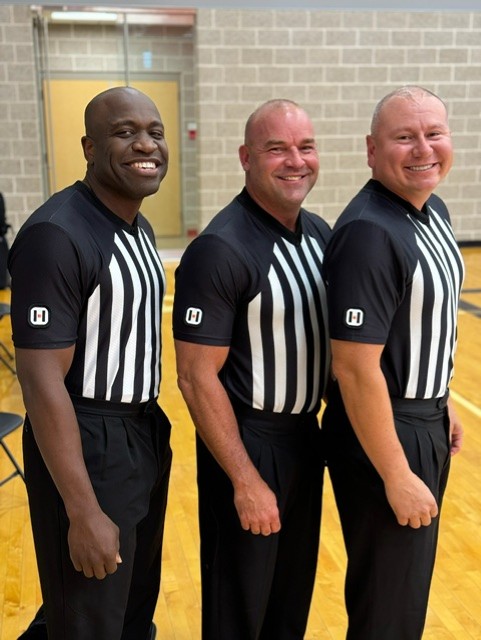
One of the biggest issues is that there’s a strong push to recruit officials, but not enough focus on retaining and developing them. You might bring in 100 new officials, but if only 30 stay, you’re constantly rebuilding the pipeline.
That leads to another problem. We’re moving officials up too quickly before they’re ready. That impacts the quality of games and creates more frustration for everyone involved.
You also see overuse. At some tournaments, officials are working six or seven games a day. That’s not sustainable. At the lower levels, this isn’t a full-time job. It’s a side gig. People have careers, families and other responsibilities. That makes retention even more difficult.
Discover case studies. guides and planning resources to help ensure your event is a success.
You’ve spoken about behavior toward officials. What have you witnessed firsthand?
There are two stories that really stayed with me:
One official lost his wife to breast cancer. He came back to work a tournament as part of his healing process. During a game, a fan yelled at him to go home and think about his wife while sitting in his recliner. In another situation, an official was walking off the court at halftime and a fan spat on him.
Officials are expected to go out and call a perfect game after that happens. There isn’t a human being who could do that. These are the kinds of experiences that push people out of officiating.
Why has this behavior become more common?
There are a lot of factors. The cost of youth sports plays a role. When parents are paying significant money, they feel entitled to have an opinion.
There’s also the influence of social media. People feel like they can say anything without consequences, and that mentality carries over into live events. [In 2020], I said that when sports came back, behavior would get worse—and it did. You had parents already under stress, and that frustration often gets directed at officials.
At the end of the day, we haven’t done a good job holding people accountable.
How does this issue impact sports tourism and events?
Officiating is often treated as an afterthought. It’s the last thing people want to deal with, even though it’s essential to the event.
You have event organizers under pressure to deliver a great experience for teams and families who are paying hundreds or thousands of dollars to participate. But if officials are treated poorly or leave the profession, the entire event structure starts to break down.
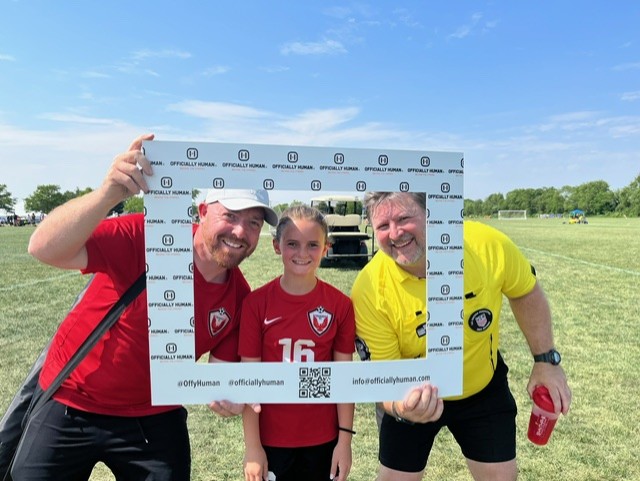
Facilities and organizers have an opportunity to set the tone. Simple things like signage, public service announcements and clear codes of conduct can make a difference. But those policies only matter if they’re enforced.
What led you to start Officially Human?
In 2018, I had to make a decision between continuing in basketball officiating administration and taking on a different role. When I stepped away, several people told me I couldn’t leave because I understood the business too well. That made me start thinking more seriously about the issues in officiating. I already knew there was a shortage. I knew the treatment was poor. I knew retention was a problem.
One weekend, I wrote a business plan. I presented it to my husband, and he said if I could deliver that message in front of 100 people, it would work. Within a week, we had a name and a logo, and then it was, “Okay, now what?” Because at the time, people didn’t even realize how big the problem was.
How does Officially Human work with the industry today?
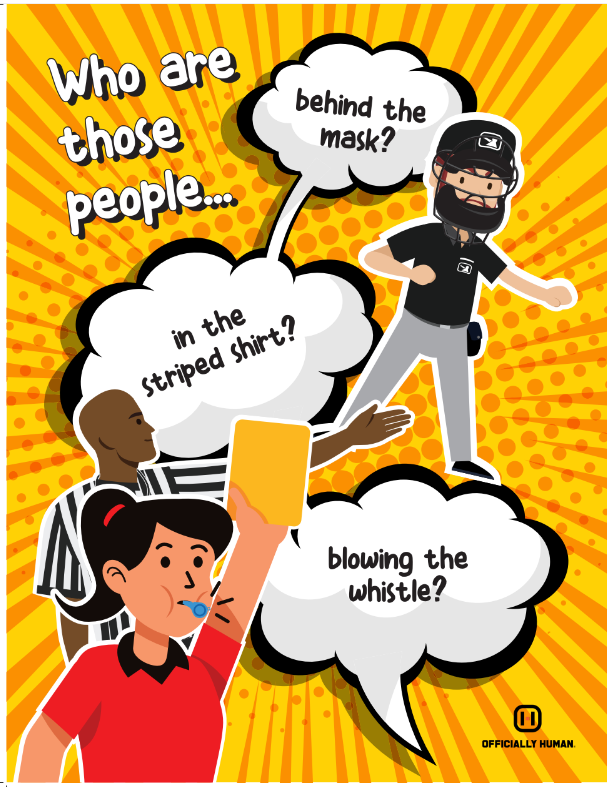
We focus on humanizing officials and raising awareness, having developed educational programs, public service announcements and media kits that are now used by conferences and organizations across the country. We have partnerships with dozens of conferences, and our content is being shown during broadcasts and at events.
The goal is to reach people where they are. Whether that’s through signage at a facility, messaging during games or educational materials for parents and athletes.
We’re not trying to train officials. We’re trying to change behavior and create an environment where officials are respected and want to stay in the profession.
What role should event organizers and destinations play in solving this?
They play a bigger role than they realize. They can set expectations through communication, enforce codes of conduct and create an environment that prioritizes respect.
One of the biggest challenges is accountability. It’s easy to say you have a code of conduct. It’s much harder to enforce it, especially when it involves influential people like donors or repeat customers. But sometimes removing one disruptive person is better for everyone else.
If we want long-term sustainability, we have to be willing to make those decisions.
What gives you optimism moving forward?
There’s more awareness now than there used to be. Organizations are starting to recognize that this is a real issue. We’re also seeing more willingness to have conversations about behavior, accountability and the overall experience at events.
We’re not going to fix this overnight. It’s too big of a problem. But if more organizations take responsibility and start making small changes, it can have a significant impact.
For more in-depth industry interviews, check out our Faces of Sports Tourism series.