Insights from Frisco’s sports tourism leader on driving economic impact, enhancing fan experiences and turning a city into a national sports destination
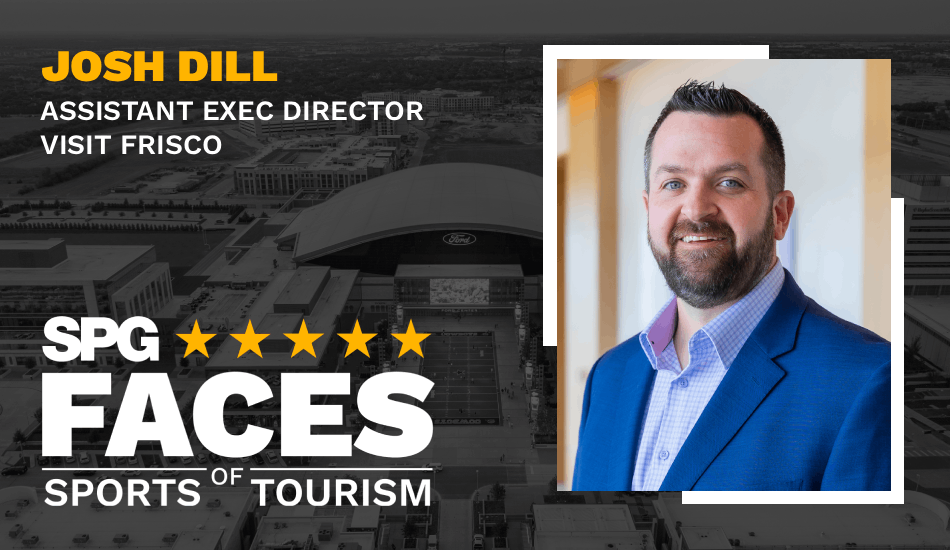
Frisco, Texas, has rapidly built a national reputation as a hub for major sporting events and organizations, and Josh Dill has helped guide much of that momentum. As Assistant Executive Director for Visit Frisco, Dill oversees the destination’s sports, sales, services and research efforts, applying a data-driven, entrepreneurial approach shaped by more than 16 years in the industry. His tenure leading sports for the destination coincided with a 265% increase in sports-related economic impact and included a key role in transformative projects such as the relocation of the PGA of America headquarters.
In this edition of Faces of Sports Tourism, Josh Dill shares insights on Frisco’s evolution as “Sports City USA,” how the destination is preparing to play a role in the upcoming FIFA World Cup 2026, and why collaboration, data and community impact are becoming essential measures of success in modern sports tourism.
Learn about the latest trends in the sports tourism industry at Sports Planning Guide.
What initially drew you to sports tourism and destination marketing, and how has that journey shaped your leadership philosophy today?
Like many kids, I dreamed of being a professional athlete. However, I was rooted in enough reality to realize the business side of sports was a much more likely path for me. In college, I had an internship at Disney World, which taught me about high-level customer service and experience and really opened my eyes to the incredible impact travel and tourism can make on a destination. I was an athlete growing up, and my final project in college was with a minor league hockey team in Lubbock. I realized then that I wanted to work in sports and a friend nudged me to go after a sports position at Visit Lubbock.
About five years later, my wife and I moved to the [Dallas-Fort Worth] area for an opportunity with Visit Fort Worth, where I got the opportunity to help develop it as a sports destination. Meanwhile, Frisco was doing so many impressive things in sports, like bringing the Dallas Cowboys headquarters and practice facility there, and their potential for sports tourism was intriguing for me because it had all the ingredients for strong, mutually beneficial partnerships that support sports business, participation and events.
As a leader, I think we can always be more efficient and more data-driven to build upon the foundation that is here. We can look at the industry through a lens others aren’t, and that forward-thinking and innovative mindset motivates me to lead and build a team that wants to build something great.
How do you define Frisco’s identity as a sports tourism destination, and how has that evolved over time?
Frisco has strategically crafted its image as a thriving, up-and-coming sports-focused destination. A defining factor for Frisco is having representation from all five major sports leagues. Whether it’s headquarters, practice facilities, or gameday facilities, Frisco has that with the NFL, NHL, MBA, NBA, MLS—and that even grew into more opportunities like Major League Volleyball and the UFL, along with housing the PGA of America headquarters.
It has evolved from a velodrome built from a private-public partnership to now having a minor league baseball stadium, an ice hockey and basketball arena, a professional soccer stadium and Ford Center, a facility that is not only the home of the world headquarters of the Dallas Cowboys, but is also available for tourism-inducing events in addition to being a place where Frisco Independent School District athletes, A/V and culinary students get the opportunity to hone their crafts.
How is Frisco preparing its infrastructure, hospitality systems and services to manage the operational and visitor experience demands of a global event like the FIFA World Cup?
As Dallas is one of the host cities for FIFA World Cup 2026, the North Texas region is at the epicenter of the excitement and anticipation for the biggest sport and entertainment event in history, and Frisco is proud to play a significant role. Toyota Stadium is an approved training site, making Frisco a potential base camp for a visiting national team. Frisco has taken part in numerous site visits with potential delegations and worked tirelessly to prepare and position the city and the entire region to maximize this once-in-a-generation opportunity.
Behind the scenes, city departments are working hard to ensure Frisco is ready. Visit Frisco is crafting a game plan to engage businesses, provide destination-specific training and attract visitors to local hotels and shops.
Safety is a top priority. Frisco Police and Fire are leading regional efforts with planning sessions, drills and coordination with state and federal partners.
Transportation upgrades are coming too, with a micro-transit service to connect Frisco with the DART line, plus a downtown circulator for easy access to the Frisco Rail District, Toyota Stadium and Simpson Plaza.
What innovative approaches are you using to elevate the fan experience for both international visitors and residents attending World Cup matches?
FC Dallas and the City of Frisco are teaming up for the FC Dallas Soccer Celebration—a multiweek fan experience at Simpson Plaza with food, music and the energy of the global game. Frisco residents will receive priority access to free general admission tickets and special match viewing opportunities.
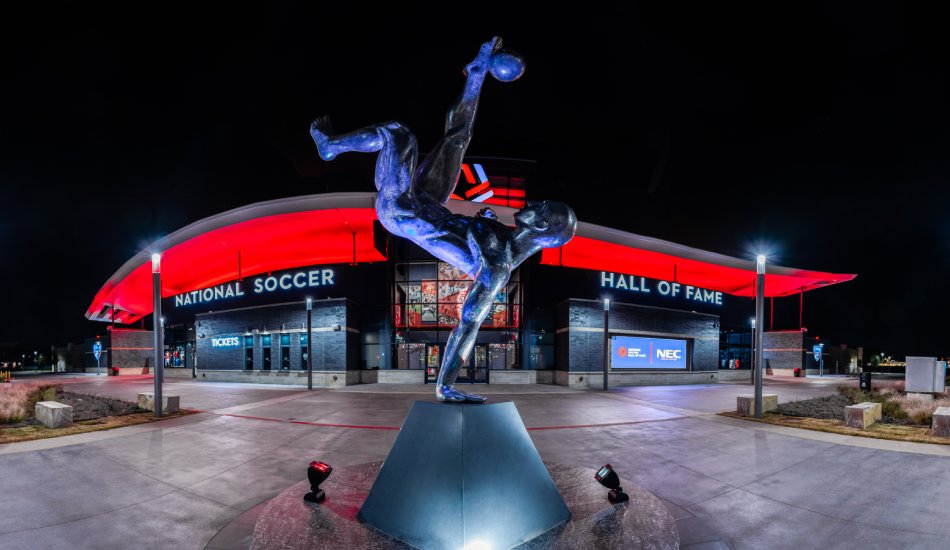
Adjacent to the FC Dallas Soccer Celebration is the National Soccer Hall of Fame, which is an innovative, technology-first experience for fans. You can learn about the history of the game in America, create your own scarf or kit, build your best starting IX and even have fun with virtual reality juggling, passing and goalkeeping.
How is Frisco leveraging the global spotlight of the World Cup to support long-term sports tourism goals, not just short-term exposure?
Putting our thriving sports ecosystem on display continues to pay dividends for our community, particularly in economic development. Companies leverage a strong quality of life for their employees as a way to attract and retain top talent. Employee-focused companies know that being located in a safe, vibrant and diverse destination is important.
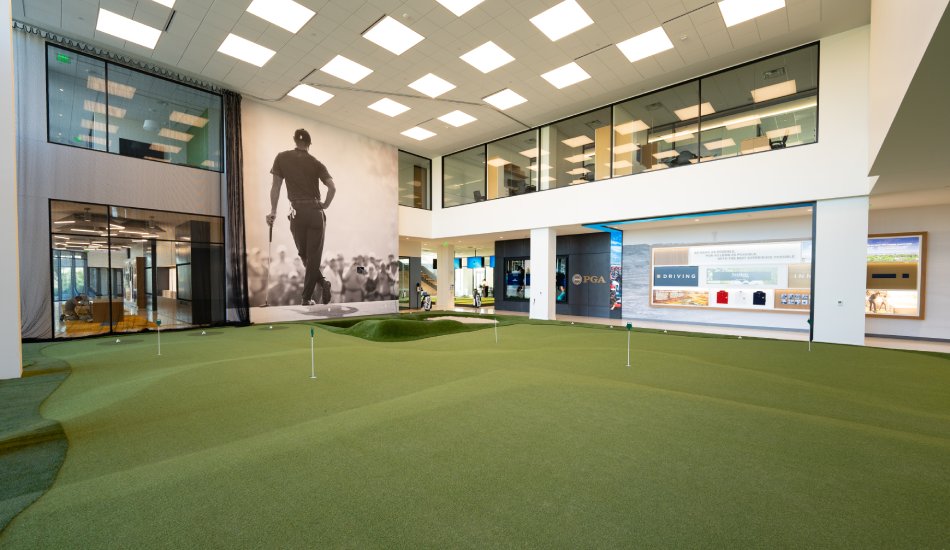
From October 2021 to April 2024, Frisco has been able to capitalize on our reputation as Sports City USA to attract 45 business relocations and expansions, adding more than $950 million to our local tax base and creating more than 7,800 jobs. One of those projects, the relocation of the PGA of America headquarters, brought with it 150-plus new jobs, two championship-level golf courses, a 500-key luxury hotel and a slate of 25-plus future tourism-producing events including multiple PGA Championships.
This has created a halo effect, where other companies that are currently or aspire to be near the business of golf are also drawn to the area. That project alone has been a catalyst for more than a billion dollars of new investment to our destination.
And working alongside our Economic Development Corporation, we’re striving to make this region of North Texas the most tech-forward, innovative sports culture and economy in the country.
Discover case studies. guides and planning resources to help ensure your event is a success.
Are there partnerships with local businesses or cultural organizations that create engagement and impact beyond the games themselves?
We work closely with our community partners like the Frisco Economic Development Corporation, the Frisco Chamber of Commerce, our hospitality and business community and civic and special interest organizations.
All these groups have insight and influence into our community that they bring to the table to ensure that we are thinking about the greatest good and not operating in a silo or echo chamber. It also creates champions for tourism, so the DMO is not solely responsible for sharing the successes and benefits of tourism.
Ultimately, it allows tourism to have a meaningful seat at the table in destination development and management, which all DMOs so desperately want. We no longer have to beg to be included because our expertise is valued and actively sought out.
How do you anticipate the World Cup will impact the local economy both during the event and in the years that follow?
Sports, especially a global, large-scale tournament the entire world is watching, are powerful for community enhancement, offering economic and social benefits that can transform a region. Economic impact and the quality-of-life enhancement for residents are immediate benefits but also foster long-term growth and unity within the community.
Hotels, restaurants, shops and transportation services experience a surge in demand, leading to increased sales and profitability. Jobs in event management, security, hospitality and retail, while often temporary, can provide valuable experience and income for the community.
Being a part of the North Texas region and welcoming fans and visitors prompts the development and improvement of local infrastructure. From creating transportation to move people around the city to upgrading public amenities in our downtown district, infrastructure improvements provide long-term advantages to the community.
Through the FIFA affiliation and hype around our broader Sports City USA culture, we envision all sorts of companies—from tech to sports medicine startups and Fortune 500 companies—considering Frisco as a top market for relocation. Not only this year, but over two, five, 10 or even 15-plus years.
Based on your experiences with large-scale events and learning from other destinations, what strategies are you applying to maximize economic benefits and community well-being?
Visit Frisco brings in large and impactful meetings and events to our destination. Those events may come and go without many of our residents even being aware of their existence. [Conversely], sporting events are unique because they remain highly visible to our residents, giving them a chance to experience the event itself and the impact created with their own eyes. Residents attend these events with their families and friends, and ultimately it helps build that sense of community pride knowing we have the know-how and venues to host special sporting events.
The work we do to advance our Sports City USA culture also complements the work of the EDC, which is recruiting and retaining incredible employers, many of which are household names and Fortune-level operations.
What do you think makes Frisco a compelling and reliable partner for event planners?
Our team at Visit Frisco, the City of Frisco and our partners are intentional about prioritizing what makes events successful for both the destination and the planner.
We focus on events that fit the venues and amenities we offer and match the goals and values of our partners and residents. We can move quickly to successfully host events that need to pivot from other destinations for a variety of reasons, and the spirit of collaboration that exists in Frisco allows us to bring all the key stakeholders to the table to make planning and execution seamless.
What advice would you share with destinations aiming to elevate their sports tourism profile?
Embrace partnerships. We know Sports City USA was not built by one person, one department, one city manager or city council member or even one team deciding to call us home. We welcome city partnerships with sports organizations with open arms. It’s a collaborative process where ideas and ongoing communication flow, so we all know what drives good business and helps us all rise together.
Find out what your sports partner’s KPIs and goals are, what they need, who they want in their building, what works best for them and then truly care about how to help deliver that.
Looking ahead, what trends in sports tourism do you believe will be most important for destinations and event planners to watch over the next five to ten years?
The default scoreboard for sports tourism has always shown traditional measurements of success like room nights and economic impact. While these metrics are always going to be central to the business of tourism, sporting events offer a broader value proposition to our community. In Frisco, Texas, we value resident quality of life, community pride, partner sentiment and media value.
Measuring resident and partner sentiment and media value isn’t a trend, but it’s incredibly impactful in telling the success story of sports tourism. Data-driven insights help inform a scorecard we built to help us make decisions that prioritize the quality and impact of events over quantity of business.
At the end of the day, we care about how our hotels and venues are doing, how much tax and economic impact is being generated and we continue to focus on optimizing the meetings, sports and leisure tourism business for Frisco. We have an incredible roster of partners, city-wide, helping us carry out this work.
For more in-depth industry interviews, check out our Faces of Sports Tourism series.