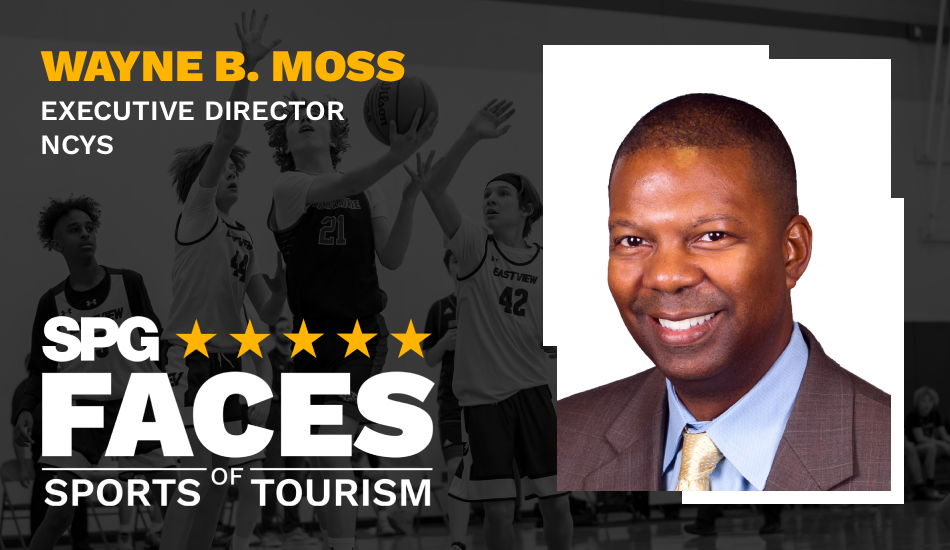
How NCYS Executive Director Wayne B. Moss Is Advancing Safety, Access and Community Impact Through Youth Sports
From midnight basketball leagues that reduced neighborhood crime to national initiatives reaching millions of young athletes, Wayne B. Moss has spent his career seeing youth sports at every level and understanding what’s at stake when communities get it right or wrong. Now serving as Executive Director of the National Council of Youth Sports (NCYS), Moss brings a rare blend of professional sports experience, community recreation leadership and nonprofit scale to a moment when the youth sports industry is more influential than ever.
In this Faces of Sports Tourism interview, Moss shares how safety, standards and access are becoming non-negotiable, why youth sports tourism must be about more than weekend tournaments and how destinations and communities can build systems that put young athletes first.
Learn about the latest trends in the sports tourism industry at Sports Planning Guide.
Tell us about your background
I’ve spent my career in youth development, community recreation, non-profit and professional sports working at the local, national and professional levels. I started in pro sports with the Detroit Lions, which gave me a deeper appreciation for sport brands, media and community relations.
I later moved into community recreation systems with the City of Cleveland and DeKalb County (GA) where sports weren’t just activities. They were one of the strongest tools we had to build healthier youth, safer neighborhoods and stronger communities. In Cleveland, we were one of the first cities to operate a Midnight Basketball League in some of the most challenging communities. We saw a 35% reduction of crime in those communities during program hours.
From there, I spent 15 years with Boys & Girls Clubs of America, where I led national sports, fitness and recreation initiatives and helped scale programs that reached millions of young people. Today, I serve as the Executive Director of the National Council of Youth Sports, where we deliver resources to organizations and focus on safety, access and standards across the youth sports landscape. Across every role, my north star has stayed the same which is helping people, young people in particular, grow through sports.
How has your experiences in community recreation, professional sports front offices and national youth-serving organizations shaped your understanding of what youth sports can be in American communities?
Looking back, each of those areas taught me something different about what youth sports can be for communities. Community recreation taught me that youth sports is one of the most powerful tools for community well-being. It’s often where young people find structure, friendships, confidence and adult role models outside the classroom, especially in communities where opportunities can be limited.
Professional sports helped me understand the importance of teamwork, storytelling and infrastructure. It reinforced how deeply sport is tied to local identity and economic impact.
National youth-serving work taught me how to scale quality. Outcome intentions aren’t enough. We need training, standards, systems and accountability so that every child has a safe, positive experience no matter where they play.
Put it all together and I’m convinced youth sports isn’t just a nice extra. When we get it right, it’s fundamental to how healthy our communities are.
Stepping into the role of Executive Director at NCYS in 2018, what drew you to the organization at that moment and what did you see as its greatest opportunity?
I was drawn to NCYS because of its reach, scale and growing understanding that systems are one of the most important interventions in sports. I spent a good part of my career developing programs. Programs are important. But they are just a piece of the system that involves the individual organization, community and policy. NCYS has a long-standing legacy as a trusted voice for youth sports organizations, and it sits in a unique position. We work with everyone, not for any one organization or league. That position lets us deliver practical resources, help raise standards and influence policy across the board.
The youth sports landscape has been shifting quickly. More families are feeling cost pressure. More organizations are struggling with volunteers. Training gaps and safety concerns were becoming more visible across the country. I saw NCYS as an opportunity to help the entire ecosystem move in the same direction.
The biggest opportunity I saw was helping organizations strengthen their duty of care, not just talk about it, but do it in ways that are realistic and doable. This goes beyond just talking about what should happen, but helping leagues, coaches and parents implement the basics that prevent incidents, protect young people and keep them in the game.
From your vantage point, how has the youth sports landscape changed over the past decade, particularly in terms of participation, expectations and pressure on families?
Youth sports have gotten way more complex over the past decade and have become more stressful for a lot of families. We’ve seen more monetization in youth sports which has created higher expectations around performance, recruiting and year-round participation especially at young ages. At the same time, costs have increased dramatically, schedules have intensified and the youth sports experience is often more demanding than it needs to be.
I’m a youth sports professional and have felt the pressure myself. My son is now 23-years old and came up through the youth sports system. As a parent, there’s enormous pressure not to let your child miss out so you want them to participate in all the sports, the training, the tournaments and have the best equipment too so they can be the best they can be. But we have to keep asking ourselves as parents and league administrators: What is all of this on behalf of? If it’s not for young people’s growth and development and a pathway to being active for a lifetime, we’ve missed the boat.
Youth sports is a $70 billion dollar industry, according to WinterGreen Research. That’s larger than the NFL, MLB, NHL and NBA combined. That’s staggering. Sports tourism now accounts for a significant share of travel spending and is projected to keep growing through the next decade. And now with NIL, it likely will continue.
How do you view the connection between youth sports, sports tourism and community impact?
Youth sports and sports tourism are deeply connected. When communities get it right, it can be a win for everyone. Youth sports events bring families together, generate revenue for hotels and restaurants and create positive energy in communities. But the real opportunity is bigger than a weekend tournament. Done well, sports tourism can strengthen local sports infrastructure, improve access to quality playing environments and build long-term partnerships that benefit youth athletes year-round.
The best destinations don’t just host events. They create experiences that put young athletes first. That includes safety readiness, well-run venues, clear communication, welcoming community support and intentional planning that makes families want to return.
Communities that view youth sports tourism as part of a broader strategy of health, recreation, economic development and family experience are the ones who will win long-term.
Discover case studies. guides and planning resources to help ensure your event is a success.
How has NCYS worked to elevate safety, quality experiences and access and why are they critical to the long-term sustainability of youth sports?
At NCYS, we focus on three big priorities including safety, quality and access because without them, participation declines and trust break down. We elevate safety by helping organizations strengthen the fundamentals including coach education, emergency readiness, injury prevention and responsible screening practices. We also work with national partners and subject-matter experts to ensure the guidance we share is credible and practical but not overwhelming.
We elevate quality by promoting an athlete-first experience. That means positive coaching and developmentally appropriate play and organizational practices that help young people to experience the benefits and outcomes all youths should have.
We elevate access by advocating for affordability and inclusion because when sports become a luxury, young people miss out. If we get this right, participation rises and everyone benefits, from local leagues to destinations to the broader sports economy.
One side note on my own experience: As my son would participate in overnight or out-of-state camps, I regularly would ask the providers if they had an Emergency Action Plan. Most often, they would look at me like I had two heads. An EAP is a basic tool that all organizations should have in case of the unthinkable when minutes sometimes matter most.
What role do the event organizers play in shaping life skills and positive outcomes through youth sports?
Event organizers play a bigger role than they sometimes realize. They don’t just schedule games. They shape the culture of the experience. The way events are designed impacts sportsmanship, stress levels, safety and whether youth athletes leave the weekend feeling proud or discouraged. Organizers set the tone through spectator behavior standards, communication, medical readiness and how they respond when something goes wrong.
When organizers prioritize an athlete-centered environment with clear rules, respectful conduct, safety protocols and positive messaging, youth sports become a platform for life skills including confidence, teamwork, resilience, leadership and accountability.
The best events don’t just crown champions, they create moments that build young people.
From your experience, what are the biggest challenges communities face when trying to grow or host youth sports programs and events?
Facilities are huge. Many communities don’t have enough quality fields or courts and even when they do, keeping them maintained and scheduled is tough. Then there’s the workforce piece. Youth sports run on volunteers, but those volunteers need real training and support. And we’re seeing a serious shortage of referees, which ties directly to the problem of unruly fan behavior. Safety and risk management keep coming up too. Some communities get that emergency preparedness and injury prevention aren’t optional anymore but figuring out how to implement those systems can feel overwhelming.
And affordability hits everything. When families can’t afford fees, travel or equipment, young people don’t participate. That hurts community health and long-term growth.
Where do you see the most promising solutions emerging?
The most promising solutions are emerging where communities are building partnerships between parks and recreation, schools, healthcare systems, sport commissions and trusted nonprofits. We’re also seeing progress with better training models that help organizations implement safety and quality standards. We also need meaningful support from foundations and corporate brands because ultimately, it’s in the best interests. Sports is fun and games. But it’s more than that.
Looking ahead, what trends in youth sports should event planners and destinations be paying closer attention to over the next five to ten years?
A few trends stand out:
- Athlete safety and duty of care expectations will continue to rise
- Destinations that can demonstrate preparedness
- EAPs
- AED access
- Medical planning
- Trained staff
Family experience will matter more than ever. If we’re spending money to travel, how can the overall experience be better at the venues but also the overall opportunities surrounding the event? For in-venue activity, communication, scheduling efficiency, venue quality and overall hospitality will influence event loyalty and repeat travel.
Access and affordability will shape the future market. There’s a prevailing view that youth sports are recession-proof. I don’t subscribe to that. We will definitely spend money on our children. Even money we sometimes don’t have. If the rate of inflation continues, we should be mindful. Events and destinations that price families out will face pressure. It may require creative solutions like community partnerships and scholarships to continue to grow.
We’ll see more attention to athlete workload, heat safety, concussion protocols and preventing burnout especially as awareness increases. This should impact smarter scheduling and competition models.
Data and standards will become differentiators. Destinations are already steeped in this as they justify events. Organizations will increasingly want metrics, best practices and verification. The ability to standardize data will be important for Destinations.
When you think about the future of youth sports in this country, what does success look like and what gives you optimism that we’re moving in the right direction?
For every child, success—no matter their income or background—is having access to safe, positive sports experiences that help them develop. It means coaches who are trained to support youth athlete’s real developmental needs. Parents who let coaches coach and refs do their jobs. Fewer preventable injuries. Less burnout. More young people staying in the game longer.
It means a youth sports system that’s more collaborative and connected. One where we all recognize what sports actually do for young people, which includes helping them be healthier physically, mentally and socially. Doing better in school. Building leadership skills. Those things translate to everything: better school outcomes, workforce readiness, even military readiness. Right now, about 70% of qualified recruits don’t meet the requirements for our armed services. Fix youth sports participation and development and our entire nation gets healthier.
What gives me optimism is that the conversation is changing. More leaders are willing to address safety, mental well-being, inclusion and affordability head-on. Communities and destinations are starting to understand they don’t just host games. And we’re seeing more partners step forward who want to build something sustainable, not just successful for a weekend. If we keep aligning with safety, quality and access, the future of youth sports can be stronger than its past.
For more in-depth industry interviews, check out our Faces of Sports Tourism series.