New domes, stadiums, mixed-use districts and high-tech facilities signal a new chapter for community sports investment
Across the country, major sports infrastructure projects are moving forward with a common theme: venues are no longer being planned as stand-alone fields, courts or arenas. Many are being built as year-round community anchors that combine sports, entertainment, hospitality, wellness, training and mixed-use development.
Major sports infrastructure projects are advancing because destinations are using sports facilities to drive tourism, serve local athletes, support youth development and create year-round economic activity.
From indoor domes in cold-weather markets to immersive entertainment venues and recovery-focused collegiate facilities, these projects show how sports development is evolving across the United States.
Stay ahead of the game and discover cutting-edge innovations in the latest sports facility news.
Proctor, Minnesota, advances NXS National Complex, a major 90-acre sports and tourism development
Proctor, Minnesota, is moving forward with one of its most significant sports tourism investments in decades as plans take shape for the NXS National Complex. This three-phase, 90-acre development will add a multi-sport dome, housing, restaurants and a hotel to land near the city’s existing ice arena. Groundbreaking for Phase One is expected in spring 2026.
The centerpiece of the development is a 156,000-square-foot indoor sports dome designed to support year-round amateur athletics, including softball, soccer, basketball and other indoor programming. For Northland teams that routinely travel early in the season because of weather, a year-round indoor venue could create a major local advantage.
The surrounding mixed-use district is planned to add apartments, dining, retail and lodging, creating a more complete sports tourism destination for the Duluth-area market. Community leaders have framed the project as a way for Proctor to participate more meaningfully in regional tourism, rather than sending athletes and families elsewhere for training and tournament play.
Planner takeaway: NXS National Complex reflects a cold-weather sports tourism strategy: build indoor capacity, connect it to lodging and dining, and turn local demand into year-round regional visitation.
Cosm to anchor new Rock Block Entertainment District in Cleveland, Ohio
Downtown Cleveland, Ohio, is taking a major step into the future of sports and entertainment as Cosm, Bedrock and Rock Entertainment Group move forward with plans for an immersive venue anchoring the new Rock Block development near Rocket Arena. The venue will sit at the intersection of East 4th Street, Prospect Avenue and Huron Road in the city’s Gateway District.
Cosm Cleveland is planned as a four-story, 50,000-square-foot experiential entertainment venue built around shared-reality programming, including live sports, entertainment and immersive content. The project officially broke ground in April 2026 and is slated to open in 2027.
For Cleveland, the project is about more than one venue. Cosm is intended to activate a key downtown site, complement the city’s existing arena district and support additional mixed-use development around sports, dining, hospitality and entertainment.
Cosm Cleveland shows how sports infrastructure is expanding beyond traditional stadiums. Immersive viewing venues can create new fan experiences and generate event traffic even when a city’s teams are playing elsewhere.
Planner takeaway: Rock Block demonstrates how cities can use technology-driven sports entertainment to create new event inventory and downtown activity beyond live games.
Bonney Lake moves forward with new multi-sport complex in Pierce County, Washington
A long-envisioned sports destination in east Pierce County is moving closer to reality as Bonney Lake prepares for a new multi-sport complex led by Mt. Rainier Futbol Club. The project has been described as a public-private partnership designed to expand year-round recreation for local families.
The plan includes a covered pickleball pavilion with 10 courts, two grass fields for soccer and lacrosse, and an educational trail connected to the Foothills Trail. The project gained momentum after the Washington State Recreation and Conservation Office awarded $2.7 million in grants, providing an early funding foundation for the development.
The upcoming land sale is a critical next step. Once the property process advances, project partners expect design and engineering work to continue, with pickleball courts planned first and field development to follow.
For local residents, the complex is designed around access as much as competition. For sports planners, it reflects a growing trend: smaller communities are using public-private partnerships to create flexible recreation assets that can also support tournaments, camps and regional programming.
Planner takeaway: Bonney Lake shows how community recreation, pickleball growth, soccer demand and trail connectivity can come together in one multi-use sports project.
Lubbock Game Changers announce plans for a new indoor sports facility in Lubbock, Texas
Upgrade your planning process by exploring fresh insights and best practices in sports facility news.
Lubbock, Texas, is positioning itself for a larger role in youth sports with a proposed indoor sports facility led by the nonprofit Lubbock Game Changers. The organization is developing The HUB Youth Sports & Event Center as a place for West Texas youth to train, compete and access stronger local sports opportunities.
The Lubbock City Council approved an agreement to reserve 20 acres at Bill McAlister Park for the project. Current reporting describes the proposed facility as roughly 140,000 square feet, with plans for indoor courts and a major youth-sports event environment.
Planned elements include basketball courts, volleyball courts, a championship or exhibition arena, food and concessions, player and parent lounges, a sports medicine clinic, video game space and significant parking capacity.
For Lubbock, the project addresses a familiar youth sports challenge: families often travel to larger markets for tournaments, exposure events and high-quality facilities. A new indoor complex could help keep more activity local while also drawing visiting teams to West Texas.
Planner takeaway: The HUB Youth Sports & Event Center shows how mid-sized markets can use indoor court facilities to compete for youth basketball, volleyball and multi-sport events.
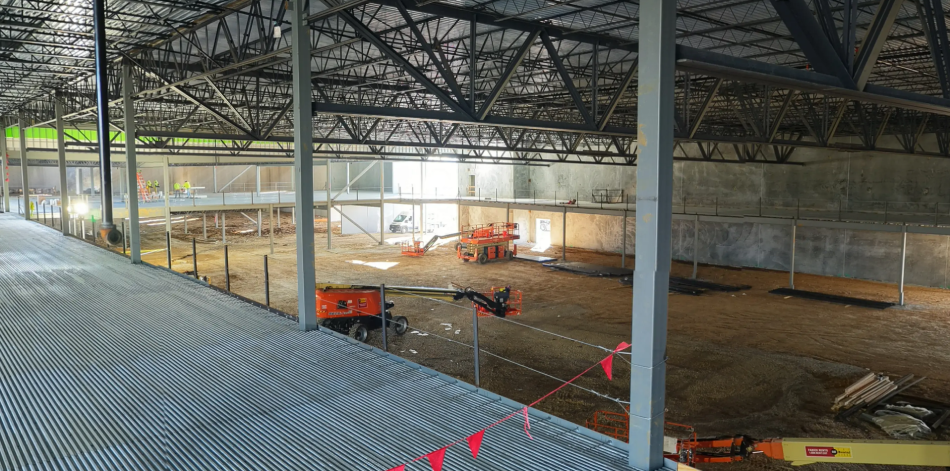
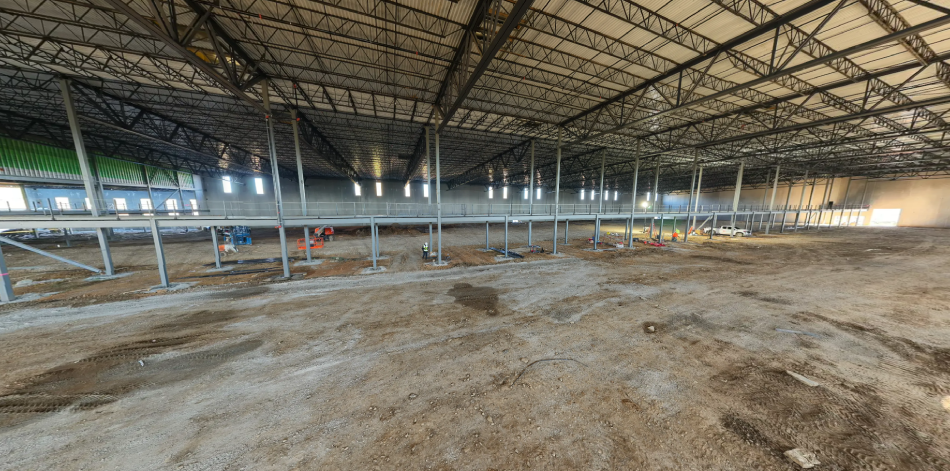
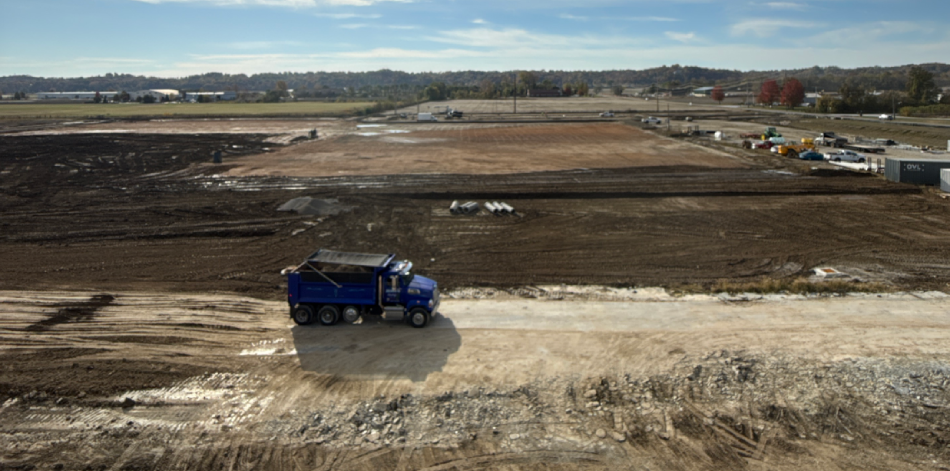
Construction progress on the upcoming CarShield Sportsplex in Chesterfield, Missouri
Construction on CarShield Sportsplex in Chesterfield, Missouri, continues to gain momentum as the future youth sports complex moves toward its anticipated 2026 opening. The project is being built on a 33-acre site in Chesterfield Valley.
When complete, the facility is expected to include four indoor turf soccer fields, two full-size hockey rinks, three outdoor turf soccer fields, locker rooms, training space, a pro shop, restaurant and spectator areas.
The development is designed around the needs of CarShield’s growing soccer and AAA hockey programs, but its impact could reach beyond one organization. With indoor turf, ice, outdoor fields and family-oriented amenities in one location, the Sportsplex is positioned as a year-round youth sports destination for the St. Louis region.
CarShield Sportsplex is significant because it combines ice, indoor turf and outdoor fields on one campus, giving youth sports programs a more complete training and tournament environment.
Planner takeaway: CarShield Sportsplex reflects the next generation of youth sports complexes: multi-sport, indoor-outdoor, amenity-rich and built around both athlete development and family experience.
TCU unveils $50 million recovery center in Fort Worth, Texas, featuring the nation’s first snow room
Texas Christian University has opened one of the more distinctive recovery facilities in college athletics with the Simpson Family Restoration and Wellness Center. The center is part of TCU’s larger $50 million Athletics Human Performance Center project, which includes several facilities built or renovated to support student-athlete performance.
The headline feature is a snow room, described by local reporting as the first of its kind on a college campus. The center also includes additional recovery and wellness tools designed to help student-athletes reset between workouts, practices and competitions.
For college athletics, facilities like this are increasingly tied to recruitment, wellness, injury prevention, recovery and long-term athlete support. TCU’s investment shows how sports infrastructure is expanding beyond competition venues and training rooms into dedicated recovery environments.
Planner takeaway: TCU’s recovery center highlights a growing priority in sports facility development: athlete wellness is becoming infrastructure, not an afterthought.
Cincinnati, Ohio, advances on $830 million plan to transform Paycor Stadium by 2029
Cincinnati, Ohio, is moving forward with a major modernization plan for Paycor Stadium, the home of the Bengals. Hamilton County and the team finalized a new lease agreement in 2025 that keeps the Bengals at Paycor Stadium through June 2036, with an option to extend through 2046.
The agreement includes a $470 million renovation plan, with Hamilton County contributing $350 million and the Bengals contributing $120 million. Earlier planning documents also outlined a broader long-term renovation and modernization program that could total approximately $830 million, depending on future scope and funding.
Renovations already underway include updates to club seating areas, suites, concessions and stadium infrastructure. Bengals coverage in April 2026 noted that the team’s $120 million project and Hamilton County’s $350 million contribution are touching the stadium’s 26-year-old superstructure while expanding and modernizing key fan areas.
For Cincinnati, the project is both a stadium investment and a riverfront strategy. Rather than replacing Paycor Stadium with a new venue, the city and team are working to modernize the existing facility while preserving its role as a downtown sports and entertainment anchor.
Planner takeaway: Paycor Stadium shows how legacy NFL venues can remain competitive through phased modernization, premium-space upgrades and infrastructure improvements rather than full replacement.
What These Projects Say About the Future of Sports Infrastructure
These developments vary widely in size and purpose, but they point toward several shared trends shaping sports infrastructure across the United States.
Cities, universities and private partners are investing in facilities that can do more than host games. The strongest projects are designed to serve athletes, families, visitors, sponsors, students and residents throughout the year.
Across these projects, several themes stand out:
- Indoor capacity is becoming essential in cold-weather and weather-sensitive markets.
- Mixed-use districts are turning sports venues into broader economic development tools.
- Youth sports facilities are being designed around both athletes and families.
- Recovery and wellness spaces are becoming core parts of athletic infrastructure.
- Immersive technology is creating new ways to experience live sports.
- Public-private partnerships are helping communities build facilities that might otherwise be out of reach.
- Existing stadiums are being modernized instead of automatically replaced.
The next generation of sports infrastructure is multi-use, year-round and community-focused. The most successful projects combine competition spaces with training, entertainment, hospitality, wellness and local economic development.
For planners, these projects show why facility evaluation is changing. It is no longer enough to ask how many fields, courts or seats a venue has. The better question is how well the facility supports the entire event ecosystem, including athletes, families, sponsors, visitors and the surrounding community.
FAQ
What is sports infrastructure?
Sports infrastructure includes the physical facilities and support systems used for athletic competition, training and events. That can include stadiums, arenas, fields, domes, courts, recovery centers, parking, lodging connections and mixed-use districts.
Why are communities investing in sports infrastructure?
Communities invest in sports infrastructure to support local athletes, attract tournaments, create tourism activity, improve quality of life and strengthen economic development. Many projects are also designed to serve residents year-round, not just visiting teams.
What should planners look for in a new sports complex?
Planners should look at field or court count, surface type, weather protection, parking, concessions, restrooms, hotel access, technology, spectator flow, medical support and the operator’s experience hosting events of similar size.
Why are indoor sports facilities growing?
Indoor facilities help communities extend playing seasons, reduce weather cancellations and support year-round programming. They are especially valuable in cold-weather markets or places where spring and summer storms can disrupt outdoor schedules.
How do mixed-use sports districts benefit events?
Mixed-use districts can keep athletes and families closer to dining, lodging, entertainment and retail. That improves the visitor experience while helping destinations capture more spending around tournaments and events.