Slow-pitch and fast-pitch softball are pushing for growth
The state of softball has seen participation fluctuate since 2018, but is that actually a determining factor of the sport’s popularity? The short answer is “no,” but there are a few issues that need to be addressed for the long-term health of the game at multiple levels and age groups.
How many people play softball in the U.S.? SFIA estimates 2023 participation (age 6+) at 2.3M fast-pitch and 6.4M slow-pitch, about 8.7M combined. (USTA)
Fluctuating participation is not an indicator of decline
While 2020 negatively impacted many sports, softball participation as a whole, slow-pitch and fast-pitch, had already been shifting in the years leading into the pandemic. More recent SFIA participation tracking shows the story is less “decline” and more “movement” between formats and regions:
- Fast-pitch softball: 2.1M (2022) → 2.3M (2023) (USTA)
- Slow-pitch softball: 6.0M (2022) → 6.4M (2023) (USTA)
“The resilience of the slow-pitch softball community has been remarkable,” said Manuel T. Ferrero III, commissioner and founder of International Slow Pitch Softball. “Since 2021, we’ve seen a vibrant return to play, with participation levels rebounding and, in some areas, even exceeding pre-pandemic numbers. This resurgence is a testament to the passion that players, coaches and enthusiasts have [for the game].”
The return to regular play is an obvious piece of the rebound, but there has to be more to keep young players engaged in both slow-pitch and fast-pitch. This is where convention and visitor bureaus (CVBs) and rights-holders are coming into play with more initiatives and events that pull teams in, and keep them coming back.
Is high school softball still big? Yes, NFHS reports 344,952 girls participated in fast-pitch softball in 2022–23 (5th among girls’ programs). (assets.nfhs.org)
CVBs and rights-holders are helping keep demand strong
“[Quad Cities is] working with the state of Iowa on a sports marketing grant to help bolster a softball event in June of 2024, as this is one of the sports that we’d like to see grow further in the area,” said Joan Kranovich, vice president and business growth and director at Sports Quad Cities. “Our tournament rights holders and directors are telling us that numbers are strong for travel teams, especially those from Chicago, wanting to play softball in the Quad Cities.”
Putting together big events, or drawing in existing ones via a bid process, helps drive participation and room nights. The bigger the event (or the more dates you can host), the more the sport draws, along with the destination. That’s why CVBs are critically important: not only for visitor growth, but also for helping a sport expand locally, regionally, and even nationally. Draw in the right planner and everything can take off.
What are some of the issues softball is facing?
The high school vs. travel team squeeze
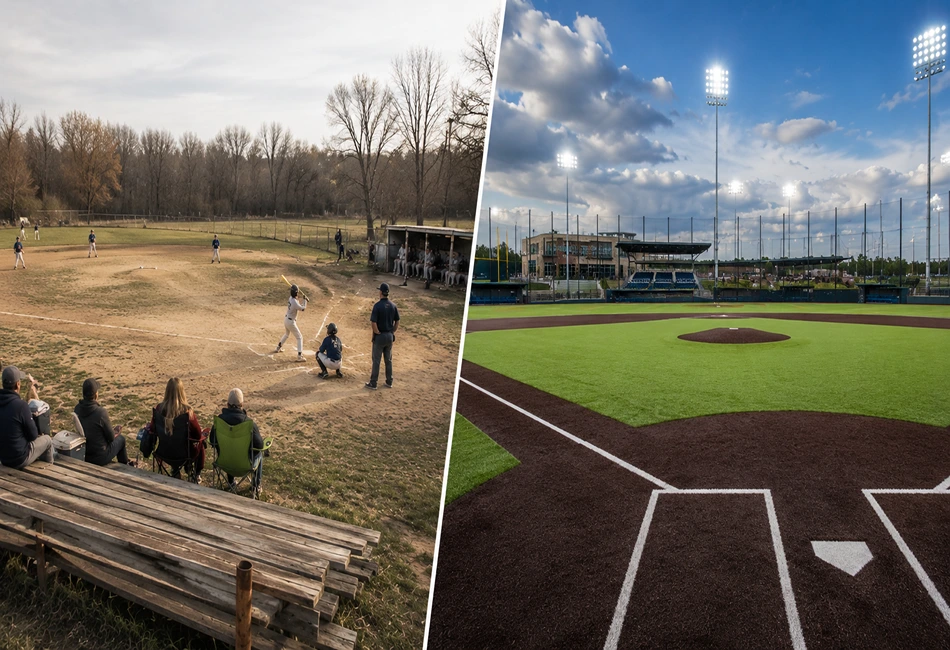
As travel teams become more of the norm for girls’ softball, high school softball in particular continues to feel pressure, often tied to funding and facilities. When traveling teams become the more attractive option, out-of-pocket costs increase for families. If a family can’t afford travel ball and the school program isn’t receiving the resources it needs to thrive, the options narrow quickly.
Schools will always put more funds toward programs that receive the highest amount of interest. If softball is not receiving enough funding, the answer is to find ways to support local high schools in need, often through community partnerships, donor support, and public decision-making that prioritizes equitable athletics.
Limited outdoor seasons and “field supply” in northern markets
For destinations that lack the weather to host more tournaments, cold seasons and rainouts, facility inventory may not keep up with demand as playable dates fluctuate. For destinations in the Midwest and Northeast, this is a common concern.
“I’ve been in this industry for more than a decade and I have seen a shift in the softball community,” said Kranovich. “We used to have a lot of ASA/USA Softball teams coming through the Quad Cities. We’ve become a strong USSSA market, but it has become tough to sanction outdoor USSSA softball events [here] due to the amount of softball events happening during the Midwest’s limited season of outdoor play.”
The umpire pipeline—and the sportsmanship problem
Softball is also dealing with umpire availability. Speaking with David Rocha, owner and general manager of Fastpitch Nation Park, the game is growing, but softball is losing more umpires each year than the sport is gaining.
“[Softball has] a serious trend that will hinder growth and may force the game to get smaller over the coming years, that being a serious lack of qualified umpires,” said Rocha. “The primary reason umpires are leaving is out-of-control parents…”
That concern shows up across high school sports more broadly: NFHS reported that about 50,000 individuals discontinued service as high school officials since the 2018–19 season. (NFHS) And even with softball’s strong officiating infrastructure, recruiting and retention remain ongoing needs, USA Softball notes its umpire program includes 12,000+ officials actively involved each year. (USA Softball)
Planner note: This is one of the few “growth blockers” that event organizers can directly influence with policy: publish and enforce a spectator code of conduct, empower site staff to intervene, and protect officials with clear consequences for abuse.
The call to action is for people to let the children play and enjoy their limited time in the spotlight with their teams, win or lose. These athletic experiences, minus the aggro shouting at officials, help young athletes grow into adulthood with communication and teamwork skills, healthier bodies and minds, and a stronger ability to adapt to change.
Softball’s push for changes and improvements highlights a healthy future
Slow-pitch and fast-pitch softball are still among the most popular sports in the United States. However, if we wish for the game to grow, there’s certainly plenty to improve. The fact that we’re aware is critical, and we’re already seeing efforts being made by CVBs, local communities, tournament planners and more.
One more tailwind worth watching: professional softball is pushing for greater visibility. In 2024, MLB invested in Athletes Unlimited’s new softball league ahead of its planned debut, another signal that softball’s top tier is working to expand its footprint. (AP News)
For the love of the game, it’s important to signify to schools, officials, and others that softball is critically important, and that its future relies on the concerted efforts of a whole, not just a few.
By Christopher D. Silbernagel
FAQ
1) How many people play softball in the U.S. right now?
SFIA’s 2024 topline report estimates 2023 participation at 2.3M fast-pitch and 6.4M slow-pitch (age 6+). Together, that’s about 8.7M participants.
2) Why do travel softball tournaments keep growing even if local programs struggle?
Travel teams concentrate competitive play into fewer weekends and destinations, which can strengthen tournaments even when local school funding and field access vary by district.
3) What’s the biggest operational challenge for large softball tournaments?
Field supply + schedule resiliency. Weather compression, limited daylight, and turnover time between games create cascading delays unless a site has enough diamonds and a realistic buffer plan.
4) Why is the umpire shortage becoming a bigger deal?
Across sports, recruiting and retention are pressured by sportsmanship issues and workload. NFHS reported ~50,000 officials discontinued service since 2018–19, which affects scheduling capacity.
5) What can a CVB do to support softball growth locally?
Support bids, help secure multi-year dates, coordinate hotel and transportation planning, and invest in field improvements that extend playable seasons and reduce rainout risk.