Updated for 2026
Dedicated facilities, varsity teams and student-led production programs are helping push collegiate esports forward.
Collegiate sports and campus clubs have long helped students build teamwork, communication and leadership skills. University esports programs can support many of those same outcomes while also creating pathways into technology, media production, coaching, event operations, game design and digital marketing.
University esports programs are growing because they combine competitive gaming, campus community, career development and inclusive participation. The best programs give students places to compete, create content, broadcast matches, build friendships and explore careers connected to gaming and technology.
For sports planners, universities and community partners, the growth of esports also creates new event opportunities. A strong campus esports facility can host varsity matches, club events, high school competitions, summer camps, recruiting events and community tournaments.
This list is not exhaustive. Instead, it highlights a range of university esports facilities and programs, from early national leaders to newer spaces that show how quickly the collegiate esports landscape is developing.
Illinois Wesleyan University
Bloomington, Illinois
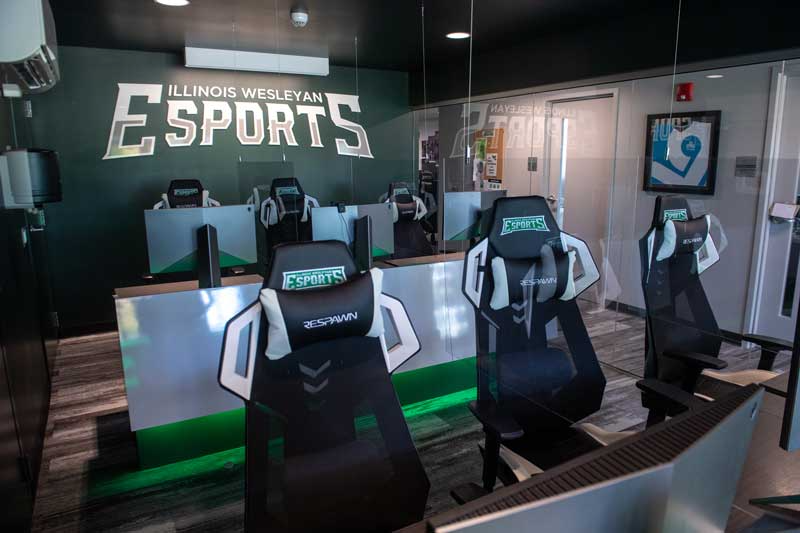
Illinois Wesleyan University has built one of the more complete collegiate esports environments in the Midwest. Its esports facility includes 54 gaming PCs, a Coliseum competition room, two practice rooms, the HyperX Broadcast Studio, a conference room for film review, and offices for coaches and student workers.
The Coliseum is the centerpiece, giving top competitive teams a dedicated space for tournaments and practices. The facility also includes production and content spaces where students can participate in casting, streaming, graphic design and esports media.
That broader approach matters. A strong university esports program is not only about who wins matches. It also creates opportunities for students who want to learn production, broadcasting, social media, event operations and team support.
Planner takeaway: Illinois Wesleyan shows how an esports facility can support competition, student media, community building and career exploration in one connected space.
Miami University
Oxford, Ohio
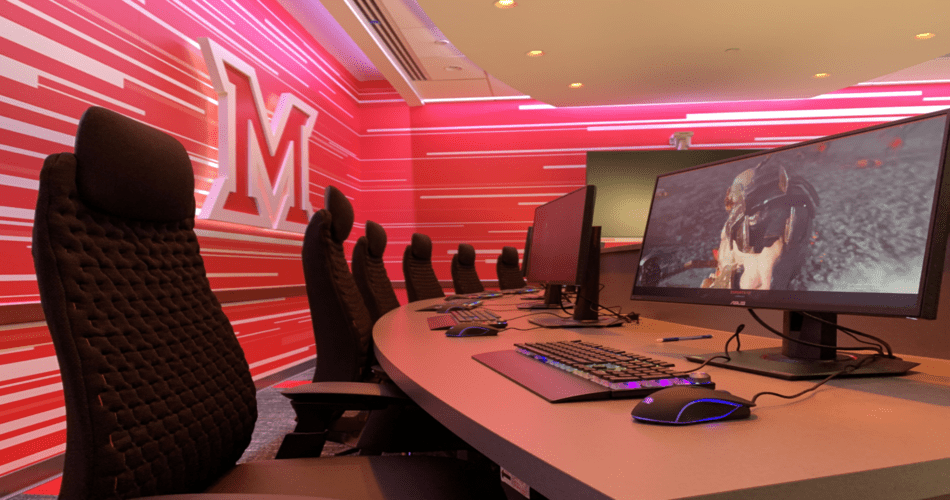
Miami University is widely recognized as a collegiate esports leader and describes its varsity program as the nation’s first Division I varsity esports program. Current competitive titles include Overwatch 2, Rocket League, Super Smash Bros. Ultimate, League of Legends, VALORANT and Street Fighter 6.
Miami also supports esports beyond varsity competition. Its Armstrong Esports Lounge and Arena can host meetings, tryouts, practices, tournaments and other approved events. The lounge is available for student drop-in recreation during normal hours, while event and practice reservations can be requested in advance.
The program also connects students to the broader esports ecosystem through the Forge Program, which includes opportunities in social media, graphic design, media production, broadcast and community outreach.
Planner takeaway: Miami is a strong example of a university esports model that combines varsity competition, campus recreation, student production and professional development.
Northern Illinois University
DeKalb, Illinois
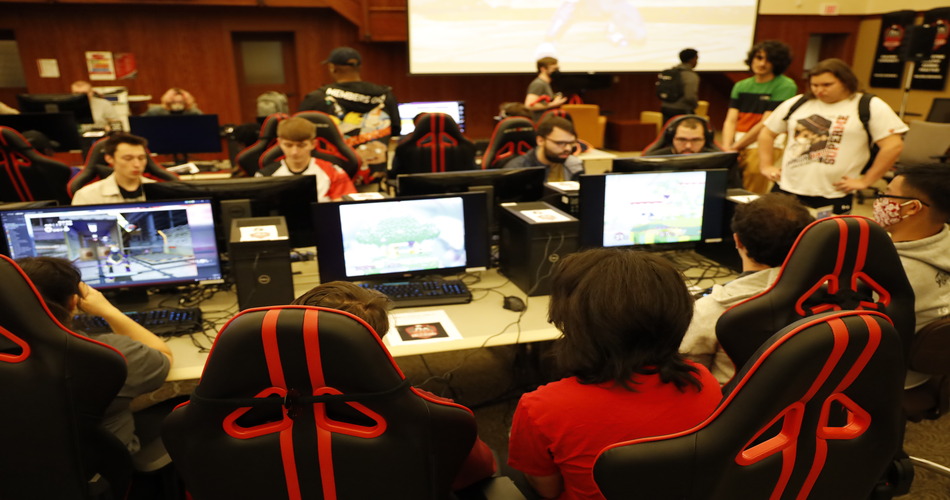
Northern Illinois University’s esports program gives students several levels of participation, from casual gaming and open play to club competition and varsity teams. The NIU Esports Arena is located in Altgeld Hall, Room 100, and is open for student play when school is in session.
The arena supports open play on gaming PCs and consoles, while varsity teams practice and compete in the same dedicated campus environment. NIU also broadcasts varsity competition through its Twitch channel, giving students experience with shoutcasting and esports production.
Located inside one of the university’s most recognizable historic buildings, the arena blends campus tradition with modern gaming culture. That combination helps position esports as part of the broader student experience rather than an isolated activity.
Planner takeaway: NIU is a good model for schools that want one esports space to serve open recreation, varsity competition, community events and student broadcasting.
Purdue University Northwest
Hammond, Indiana / Westville, Indiana
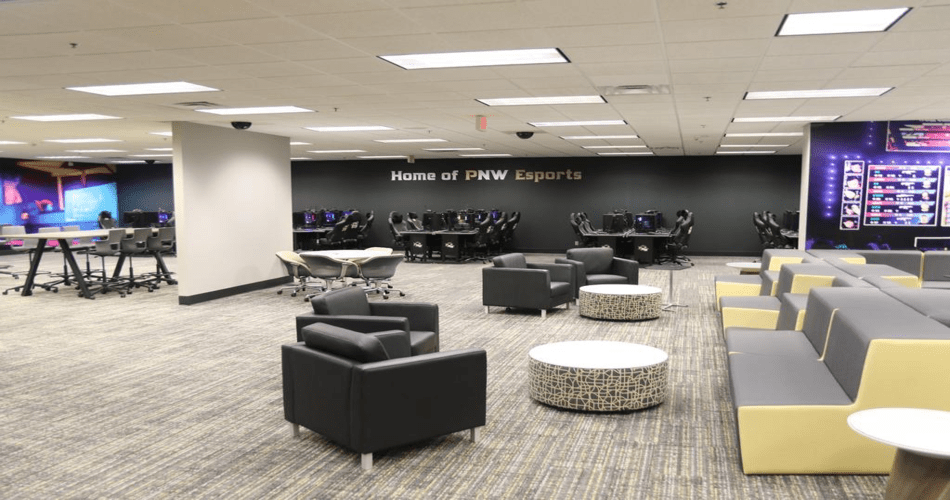
Purdue University Northwest has dedicated esports arenas on both its Hammond and Westville campuses. The university opened the Hammond arena for students, faculty and staff in 2022 and later celebrated grand openings for esports arenas at both campus locations.
PNW has positioned esports as both an athletic and student-engagement opportunity. The university notes that its arenas foster teamwork, resiliency and strategic thinking, while its esports program has included varsity and club-level participation.
The Westville Campus Esports Arena is available for PNW students, faculty and staff, with reservations encouraged and walk-in use allowed when computers are available. That kind of access helps the space function as both a competitive venue and a campus community hub.
Planner takeaway: PNW demonstrates how multicampus institutions can use esports arenas to support varsity teams, student recreation and regional engagement.
University of Akron
Akron, Ohio
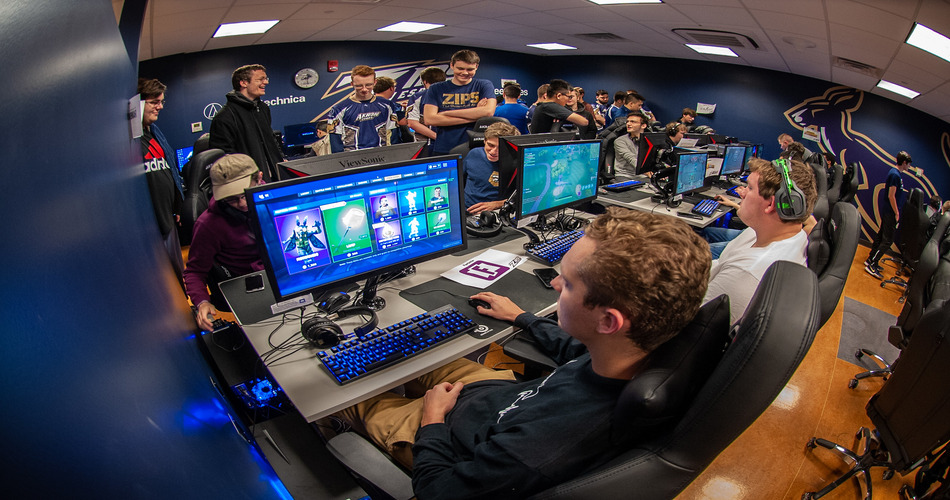
The University of Akron was among the first 50 universities in the country to compete at the varsity esports level. Today, Akron Esports includes varsity, club and recreational gaming opportunities, with varsity teams competing in titles such as League of Legends, Overwatch, VALORANT, Call of Duty, Rocket League, Rainbow Six Siege, Fortnite and Super Smash Bros. Ultimate.
Akron has also invested in dedicated esports spaces. Its facilities include a varsity gaming arena at InfoCision Stadium-Summa Field, a student center esports space for club and recreational players, and a recreational gaming café within the Honors College.
The program is especially notable for its scale and structure. It gives competitive players, club participants and recreational gamers defined places to participate, while also supporting broadcasting, spectatorship and student connection.
Planner takeaway: Akron shows how a university can build esports across multiple participation levels, from varsity teams to casual gaming and club-based community.
University of California, Irvine
Irvine, California
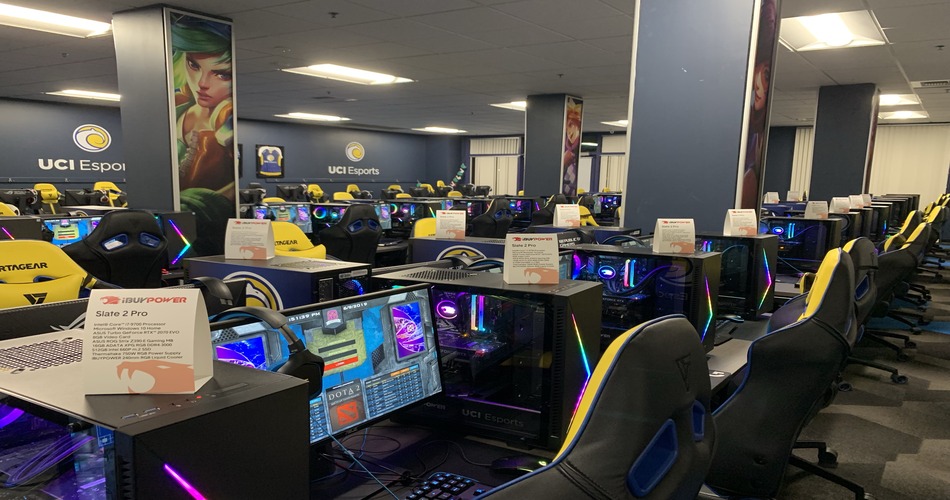
UC Irvine remains one of the signature names in collegiate esports. The university describes its program, launched in 2016, as the first public-university esports program in the nation.
The UC Irvine Esports Arena is located at the Student Center Terrace and is open to students, staff, faculty, alumni and guests. The 3,500-square-foot space includes 36 high-end computers, Logitech gear, gaming chairs and a Console & Community Corner for campus clubs and organizations.
UCI’s program is built around more than play. It emphasizes competition, research, community and careers, with students involved in broadcasting, arena operations, content creation and esports-related academic inquiry.
UC Irvine is important to collegiate esports because it helped set an early public-university model: a dedicated arena, varsity teams, student jobs, research connections and a campus-wide gaming community.
Planner takeaway: UC Irvine is a leading example of esports as an academic, competitive, research and career-development ecosystem.
University of Mary Washington Stafford
Fredericksburg, Virginia
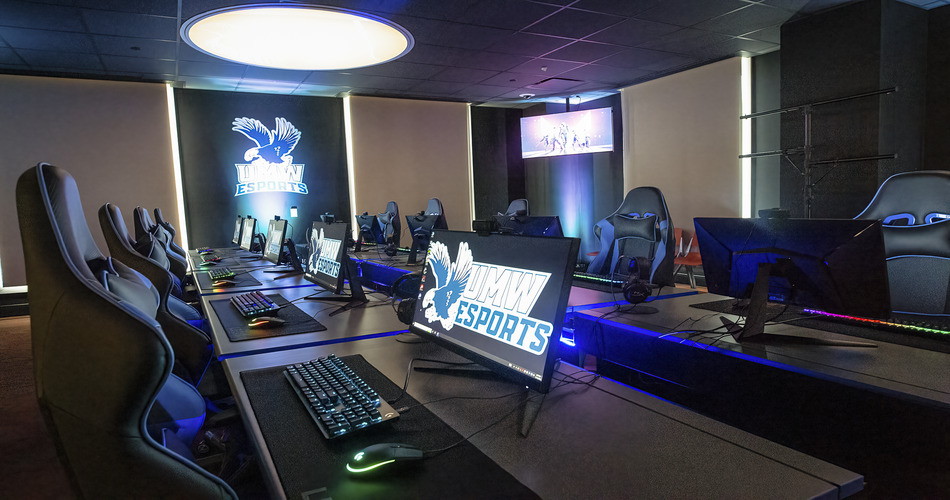
The University of Mary Washington’s esports program continues to develop as a competitive and career-focused campus offering. Its official esports program describes a mission to help student-athletes compete with excellence while growing as leaders, creators and global citizens.
UMW has also used esports as an event platform. In late 2024, the university hosted its first large-scale collegiate esports tournament, transforming the Cedric Rucker University Center’s Chandler Ballroom into a competitive digital arena for teams from across the Mid-Atlantic.
The program’s value extends beyond varsity rosters. Esports events can give students opportunities in production, livestreaming, tournament operations, communications and hospitality. For smaller universities, that makes esports a flexible way to combine athletics, student life and professional learning.
Planner takeaway: UMW shows how a growing esports program can use campus event space to host regional tournaments and build visibility beyond its own student body.
University of North Carolina Greensboro
Greensboro, North Carolina
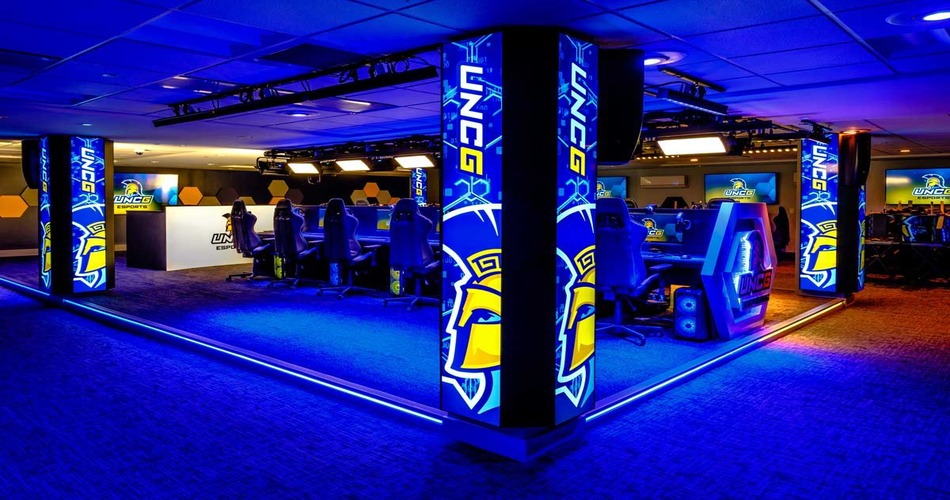
UNCG’s esports arena opened in April 2022 and is centrally located in Moran Commons. The 3,300-square-foot facility is designed to engage students both socially and academically, with opportunities tied to event planning, broadcast production and content creation.
The arena includes 48 PCs, with 12 positioned on a competition platform for livestreamed play, along with console bays and virtual reality equipment.
UNCG’s program also emphasizes community. The university’s Gaming and Esports Club began as a League of Legends club and has developed into a student-run organization that competes across multiple game titles and hosts LAN-style events with schools from across North Carolina.
Planner takeaway: UNCG is a strong example of esports as a campus engagement tool that supports competition, production skills, student clubs and academic exploration.
University of North Dakota
Grand Forks, North Dakota
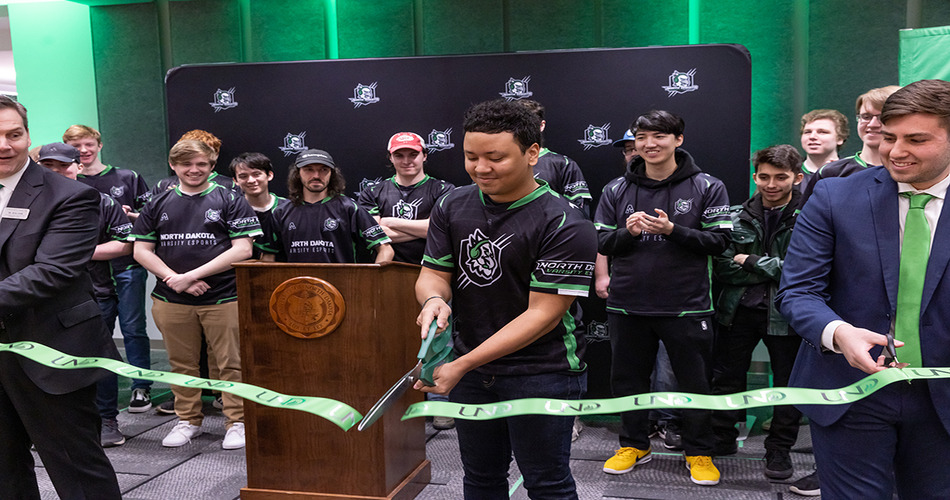
The University of North Dakota offers competitive varsity gaming, recreational gaming and a bachelor’s degree in esports for students interested in the industry. UND describes its esports program as a place to play, compete and learn, with opportunities for students of different skill levels.
UND’s varsity program provides competition at varsity, junior varsity and developmental levels, supporting students who want collaborative, competitive and educational experiences through gaming.
The university also supports recreational gaming through the Nexus Esports facility at the UND Wellness Center, which is free for enrolled UND students and Wellness Center members. That split between varsity and recreational access gives the program multiple entry points for students.
Planner takeaway: UND is a useful model for universities that want esports to connect athletics, academics, recreation and career preparation.
University of Oregon
Eugene, Oregon
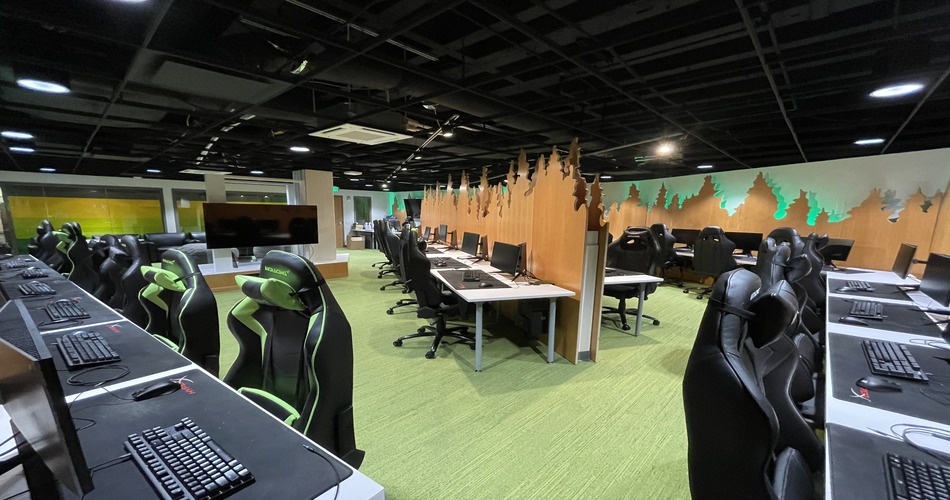
The University of Oregon traces its esports roots to a League of Legends club formed in 2012, with the club becoming officially recognized in 2017. The university later developed a dedicated esports lounge in the Erb Memorial Union.
Today, the UO Esports Lounge includes 25 high-end PCs, PS5s, Xbox consoles and Nintendo Switches. The lounge is located in the EMU underground and serves both competitive players and casual gamers.
The facility is also available for reservations, including team-building events, community gatherings and other group uses. The university describes the lounge as more than 1,100 square feet, with 25 gaming stations and three console stations.
Planner takeaway: Oregon shows how an esports lounge can support student life, casual play, event rentals and competitive community in a highly visible campus union setting.
Waukesha County Technical College
Waukesha, Wisconsin
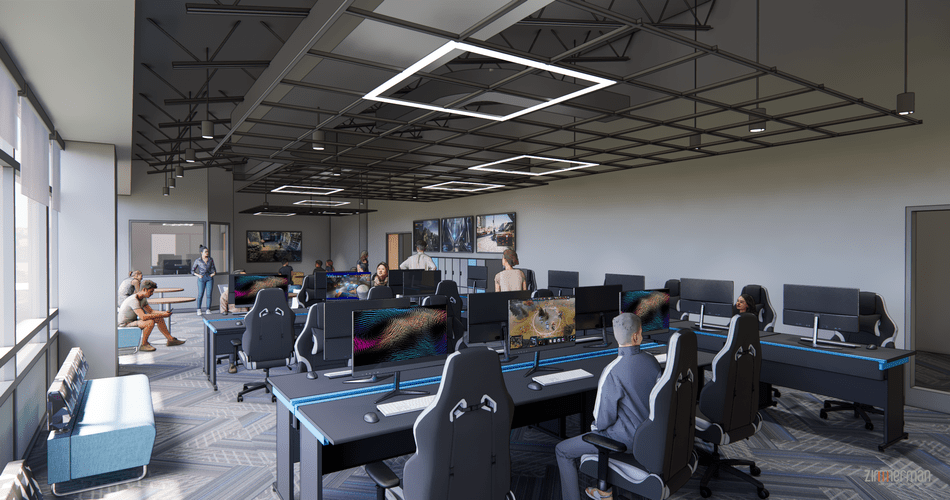
Waukesha County Technical College shows that collegiate esports growth is not limited to four-year universities. WCTC opened its esports lab in September 2023 inside Building B on its Pewaukee campus.
The lab features 18 Alienware Aurora R15 gaming stations with liquid-cooled PCs, RTX 4080 GPUs and Intel i5 13600KF CPUs. It also includes Alienware monitors, gaming headsets, mechanical keyboards, mice and a dedicated Smash Bros. gaming area with a Nintendo Switch OLED and an 85-inch monitor.
WCTC’s esports space is designed for competition, student engagement and academic connections. The college has noted that esports can help students build relationships, strengthen retention and connect with fields such as IT, security and marketing.
Planner takeaway: WCTC demonstrates how technical colleges can use esports to support student engagement, workforce pathways and competitive gaming in a smaller but well-equipped facility.
Why University Esports Facilities Matter
University esports facilities are not just gaming rooms. The strongest spaces function as flexible campus venues that support competition, recreation, production, academic programs and community outreach.
Direct Answer: A strong university esports facility should support competitive play, casual access, livestreaming, team practice, student production, coaching, community events and career development.
For sports planners, CVBs and school partners, university esports facilities can offer several opportunities:
- Collegiate tournaments
- High school esports championships
- Recruiting events
- Summer camps
- Community gaming nights
- Broadcast and production training
- STEM, IT and media education programs
- Corporate or nonprofit gaming events
- Regional esports festivals
The most effective programs also recognize that esports is not only for varsity players. Students can participate as broadcasters, coaches, shoutcasters, graphic designers, social media managers, event staff, analysts, photographers, videographers and community organizers.
That is why university esports continues to grow. It gives students a place to compete, but it also gives them a place to belong, create, learn and prepare for careers connected to a rapidly changing digital economy.
What Sports Planners Should Look for in a University Esports Venue
Planning an esports event requires more than access to computers. Venue quality, network reliability, broadcast capacity and participant flow all affect the experience.
When evaluating a university esports facility, planners should ask about:
- Number of gaming PCs and console stations
- Internet speed and network stability
- Approved game titles and licensing rules
- Broadcast and livestreaming capabilities
- Shoutcasting and production space
- Seating for teams, spectators and coaches
- Practice rooms and warm-up areas
- Food and beverage policies
- Campus parking and wayfinding
- Accessibility and visitor access rules
- Event staffing and technical support
- Security, check-in and student supervision policies
University esports facilities are becoming valuable assets for campuses and communities alike. As programs mature, these spaces will continue to support not only competition, but also student engagement, digital media training, workforce development and sports tourism.
FAQ
What are university esports programs?
University esports programs are organized campus gaming programs that may include varsity teams, club teams, recreational play, academic courses, broadcasting and student production opportunities. They can function like a mix of athletics, student life and digital media training.
Why are universities investing in esports facilities?
Universities are investing in esports because the facilities support recruitment, retention, student engagement, competition and career development. Esports spaces can also connect students to fields such as technology, media, event management, marketing and game design.
Can university esports facilities host outside events?
Some can, but policies vary by campus. Planners should ask about reservations, public access, technical support, game licensing, staffing, spectator capacity, parking and whether the facility can support high school, community or regional tournaments.
What should planners look for in an esports venue?
Planners should look for reliable internet, enough gaming stations, broadcast capability, seating, tech support, game availability, check-in procedures, food and beverage rules, accessibility and clear event staffing.
Are esports programs only for competitive players?
No. Many university esports programs also support casual players, broadcasters, content creators, coaches, analysts, event staff and students interested in technology or media careers.