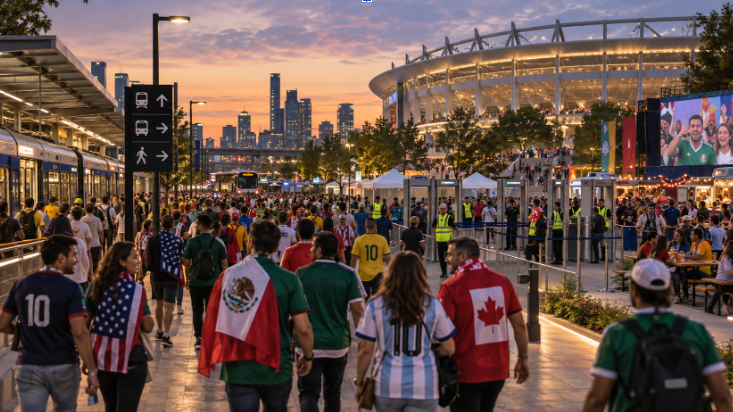
The 2026 FIFA World Cup put host cities through a stress test few events can match. Over 39 days, 104 matches took place in 16 cities. The most useful lessons came from moving tens of thousands of people after matches, serving fans without tickets, keeping digital systems running, and coordinating schedules of separate agencies. For a global event, those basic systems can make or break the experience.
Parking Lost the Transport Argument
Los Angeles offered one of the clearest post-event transit figures. Metro’s expanded World Cup service recorded 212,865 rides to and from Los Angeles Stadium and 15 parking or transit hubs across Los Angeles and Orange Counties during the eight matches. Metro also reported 26,265,480 rides systemwide in June, roughly 9% more than in June 2025. The agency attributed that broader increase to a mix of World Cup activity, concerts, museum visits, expanded service and other leisure travel.
Toronto saw a comparable jump. TTC routes serving Toronto Stadium and the Fan Festival carried more than 1.1 million customer trips across the six match days, 42% more than during the same period a year earlier.
Explore more destinations, facilities and sports tourism ideas in the latest Sports Planning Guide.
The Stadium Was Only Half the Event
Cities also learned that supporters without match tickets can create venue-scale demand. FIFA recorded more than 9.017 million visits to official Fan Festivals across 13 host cities, with 263,972 people attending eight festival sites for the July 19 final. Toronto’s festival alone drew more than 350,000 visitors over 23 event days, compared with approximately 250,000 spectators at the city’s six World Cup matches. Fan zones therefore need their own security perimeter, transit capacity, medical cover, toilets, food service and weather planning rather than being treated as decorative extensions of the stadium.
One Match Can Behave Differently From the Next
New Jersey’s after-action report described its eight matches as delivering mobility services equivalent to eight Super Bowls within one 39-day period. The operating problem was not simple repetition: matches landed on different weekdays, began at different times, and interacted with commuter traffic, weather, audience profiles, and other regional events. NJ TRANSIT, the New Jersey Turnpike Authority, NJDOT, the Port Authority, and Amtrak worked from a shared regional plan while adapting it match by match; NJ TRANSIT says it moved more than 370,000 event-related passengers. The lesson is practical: Tuesday at 5 p.m. cannot be managed as if it were Saturday afternoon.
The Second Screen Became Part of Venue Infrastructure
Digital demand became a physical operations issue because the same phone carried tickets, transit instructions, live scores and entertainment. By July 8, before the quarterfinals, FIFA reported that tournament and broadcast networks had transported 13 million gigabytes of data, supported by about 161,000 kilometers of fiber, while tournament video had generated 20 billion views across platforms. A supporter checking lineups, directions, or football betting (Arabic: مراهنات كرة القدم) may be competing for connectivity with thousands of people retrieving digital tickets or finding an exit. Live odds still respond quickly to goals, dismissals, and penalties, so a preset bankroll keeps that second-screen activity separate from transport and ticket spending.
Accreditation Is a Transport System for People
The workforce numbers show why event planning does not stop at spectator gates. FIFA reported more than 43,000 volunteers and 73,700 accredited security personnel, with security operations totaling more than one million shifts and accreditation systems processing over five million scans. Teams generated 11,337 recorded movements, while nearly 300,000 accredited personnel supported operations across the tournament footprint. Credentialing, staff transport and access control therefore need the same precision as spectator routing because a bottleneck at a workforce entrance can disrupt broadcasting, security and stadium operations before fans notice anything.
The Useful Legacy Is an Operating Playbook
A new stadium may be the least important thing a host city leaves behind. Toronto’s early research found that nine in ten visitors surveyed expected to return for a leisure trip within two years. On match days, foot traffic around Toronto Stadium rose by 70% to 160%, while traffic on the Gardiner Expressway fell by 10% to 30%. Los Angeles, for its part, had completed its eight-match enhanced-transit operation by July 10, giving Metro a working major-event playbook well before LA28. The lesson for future hosts is practical: make transit the priority, treat the fan festival as a second venue, stress-test digital access before the crowds arrive, and leave room to manage each match as its own event.