Every sports tournament organizer aspires to deliver an event that is as impressive in appearance as it is in execution. Professionalism shines through in every detail, from sports event staff apparel and event staff identification to seamless participant experiences. This article explores how to structure your operations, define key volunteer roles, and implement practical strategies that elevate both the look and the performance of your next tournament.
Creating a sports tournament that appears polished while operating smoothly requires careful planning and attention to both function and form. Participants and guests notice organization immediately—tournament staff uniforms, volunteer shirts, and efficient check-in set the stage for a professional atmosphere. By thoughtfully assigning responsibilities and integrating branded event apparel throughout, you signal competence to coaches, athletes, and spectators alike. This approach not only drives efficiency but also builds trust and confidence that the event is in capable hands.
Defining volunteer roles for a seamless tournament experience
The backbone of a professionally run tournament is a clear structure for volunteers and staff. Without well-defined roles, even dedicated helpers can unintentionally miss steps, causing quick delays or overlooked duties such as lost-and-found, hydration stations, or equipment setup. For consistent event staff identification, provide role sheets that match stations and shift times. Precise job descriptions eliminate ambiguity and empower each team member to perform efficiently.
For example, create teams with designated functions: registration volunteers expedite check-in; field operations staff set up and monitor playing areas; scorekeepers capture results in real time. A common setup for a youth soccer tournament might include two check-in volunteers per station, a field manager per field, and runners who transport score sheets. This granular approach ensures that all bases are covered and that both participants and coaches can easily get answers from visible custom team uniforms.
Visual cues: Apparel and signage that enhance professionalism
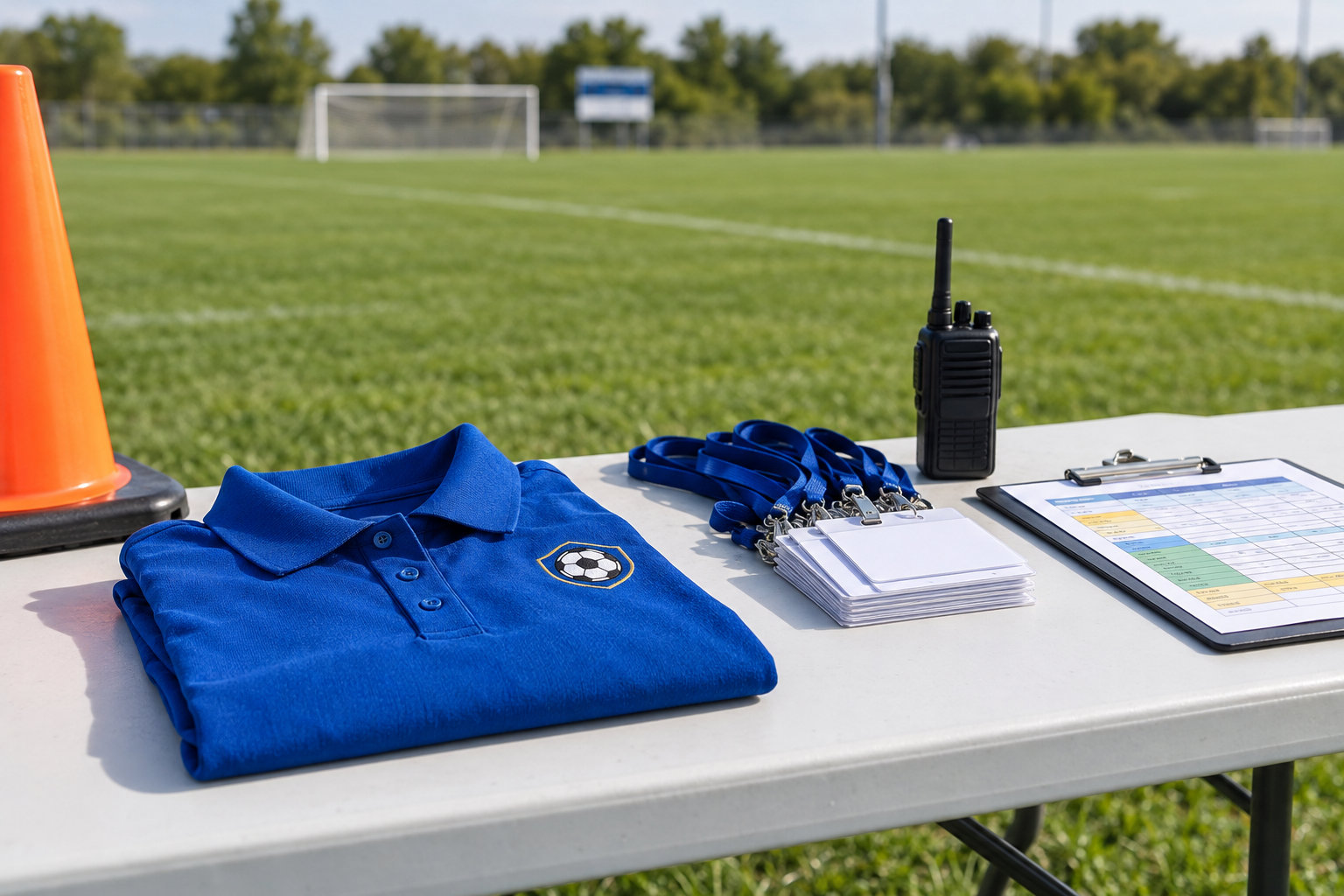
The visual impression of your staff directly impacts how professional your tournament appears to insiders and visitors alike. Use clear name tags, branded event apparel, and jackets with logos to help everyone spot staff quickly, which becomes crucial when welcoming large crowds or directing traffic. Large signboards indicating check-in zones, field numbers, and information points reinforce your event’s organized appearance.
Within the second third of your event planning, consider integrating distinctive uniforms or shirts for volunteer staff. Not only do embroidered polo shirts with logo help signal authority and approachability, but they also support coordination and attendee comfort. To keep the look consistent, many organizers issue team logo polos for key stations such as registration and information. For example, offering volunteers brightly colored apparel with clear logos allows even new visitors—such as parents or first-time players—to immediately identify those who can assist, resolving questions more efficiently and projecting a consistent, high-quality event image.
Get more sports tourism intelligence delivered directly to your inbox. Subscribe to InSite from SPG.
Optimizing staffing and workflow for operational excellence
Right-sizing your volunteer crew is critical for maintaining smooth flow and reducing visible hiccups on tournament day. The number and type of staff should always be tailored to the event’s size and venue. For instance, a multi-field event might require at least one manager and one scorekeeper per field, while a smaller indoor tournament may prioritize wayfinding and check-in over outdoor parking support. If you coordinate travel teams and partner venues, sports tourism planning can also influence staffing needs and arrival windows.
Prevent volunteer fatigue through planned shift rotations, sensible schedules, and back-up contingencies. Example: Rotate hydration station staff every few hours and schedule breaks for check-in volunteers to keep service consistent throughout the day. Distinct tournament staff uniforms remain key here, ensuring personnel can be recognized even as roles and shifts change. This strategy sustains professionalism in appearance and operation, reinforcing your tournament’s reliable reputation.
Training, communication, and post-event improvements
Comprehensive training and clear communication are non-negotiable for an event that appears as organized as it is. Equip volunteers with concise checklists, escalation instructions, and scenario responses relevant to their assigned duties. Daily briefings with communication tools—such as group messaging apps or two-way radios—keep everyone in sync and reinforce operational unity. When volunteers and supervisors wear volunteer shirts consistently, it reduces confusion during escalations.
After the tournament, gather your team for a debrief to review what worked and what could be improved. For example, recap challenges in volunteer-to-field ratios or signage clarity with your core staff. If you hosted visiting clubs, include notes on sports tourism planning so next year’s logistics are smoother. For sideline leadership, consider coach polo shirts that match the on-site look while remaining comfortable through long match blocks. You can also standardize embroidered logo polos for staff leads so they stand out without interrupting the overall brand. Show appreciation through thank-you messages or certificates and record observations for future tournaments. This commitment to improvement lays the groundwork for a stronger, more visibly professional team at your next event, including custom team uniforms for returning volunteers and refreshed coach polo shirts for staff who represent the tournament in public-facing roles.
To keep branding cohesive, many organizers stock team logo polos in multiple sizes and issue them alongside volunteer shirts at check-in. For premium stations, embroidered logo polos can double as long-term attire for repeat tournaments and sponsor meetups. In addition to sports event staff apparel, choosing practical layers and weather-appropriate gear helps your crew stay comfortable while maintaining a consistent look. When budgets allow, branded event apparel can also be offered as a retention perk for returning helpers, strengthening continuity across seasons.