Esports is no longer just a competition format. It is a fan-engagement model that blends live spectacle, digital interactivity, and always-on community touchpoints into one experience. For event planners and destination partners, that is the real lesson: esports does not rely on a single match to hold attention. It creates multiple ways for fans to participate before, during, and after play.
Esports engages fans differently because it gives them more than a seat in the stands or a stream on a screen. Fans can travel to purpose-built events, interact with live broadcasts, unlock rewards for watching, and stay connected to teams through membership and loyalty platforms between tournaments. (Esports Stadium)
Action-Filled Live Events
Live esports tournaments remain compelling because the venue itself becomes part of the show. Esports Stadium Arlington describes itself as a 100,000-square-foot, turnkey facility built specifically for esports events and productions, while the IOC positioned Olympic Esports Week in Singapore as a multi-day festival at the Suntec Singapore Convention & Exhibition Centre. Together, those examples show why esports events can become destination draws rather than simple one-off competitions.
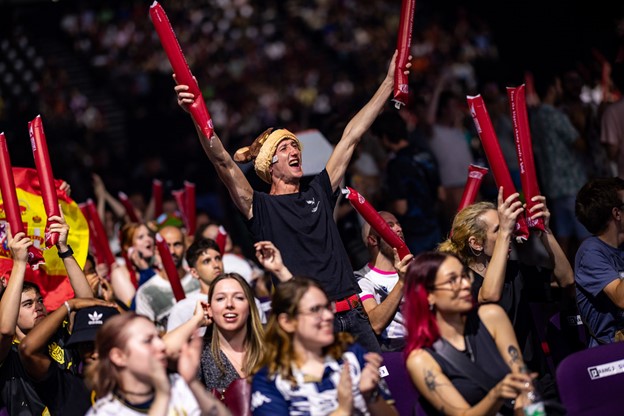
For fans, attending in person changes the relationship to the game. Stage production, crowd energy, sponsor activations, and the shared atmosphere create a version of fandom that is difficult to replicate at home. For planners, that is the sports tourism takeaway: esports works best when the event feels experiential, not merely scheduled.
Interactive Streaming Viewership
Streaming is just as important, but esports has pushed digital viewing beyond passive consumption. Twitch describes Extensions as tools that can sit inside the viewing experience and add overlays, leaderboards, live information, and other interactive elements that let viewers do more than just watch. (Twitch Developers)
That interactivity has practical value. Research on a Dota 2 Twitch extension found that adding live statistics, analysis, and highlight tools directly into the broadcast helped make spectators more active participants during competition. In esports, the stream is often part broadcast, part interface. (Game Analytics Resources)
Rewarding Fans for Watching Live
Another reason esports holds attention is that viewing itself can unlock benefits. Riot’s LoL Esports rewards pages explain that logged-in viewers can earn drops, icons, emotes, and other digital rewards tied to live viewing and key tournament moments. That approach gives fans a reason to show up live, stay engaged, and keep returning throughout a tournament window.
For organizers, this is more than a game mechanic. It is a retention strategy. Rewarded watch behavior turns a one-time audience into a habit-based audience, which is especially useful when the goal is to grow repeat viewership, sponsor exposure, and cross-platform engagement around a series of events. (LoL Esports)
Rewarding Fans for Loyalty
Teams are also extending engagement beyond match day. Team Liquid’s MyBlue platform offers quests, rewards, event tickets, activations, and leaderboard-based participation, while Fnatic’s membership program highlights perks such as private digital and physical events, meet-and-greets, shop discounts, and exclusive benefits by tier. These programs show how esports organizations keep fandom active between tournaments instead of waiting for the next championship cycle.
That matters because esports fans are not only consuming a result. They are joining an ongoing ecosystem. The strongest teams give supporters reasons to return regularly, identify publicly with the brand, and feel rewarded for staying close to the action. That persistent relationship is one of the clearest reasons esports fan engagement can feel unusually strong. (Team Liquid)
What Sports Event Planners Can Learn from Esports
For SportsPlanningGuide.com readers, the lesson is straightforward. Esports engages fans well because it layers the experience: a travel-worthy live event, a more interactive remote product, and a loyalty loop that continues after the final match. That same framework can inform venue design, sponsor packages, destination marketing, and year-round audience development across other sports properties as well. (Esports Stadium)
FAQ
What makes an esports event worth traveling for?
The strongest esports events offer more than a bracket. Purpose-built venues, festival-style programming, and a high-production live atmosphere make the event itself part of the attraction, which is why destination-hosted esports can overlap so well with sports tourism.
How do esports streams keep remote fans engaged?
They often add interactive layers on top of the broadcast. Twitch Extensions, live stats, and reward systems help turn the viewing experience into something fans can participate in rather than simply watch.
Why do loyalty programs matter in esports?
Because they keep fans connected between events. Team-based reward systems and memberships give supporters ongoing reasons to return, engage, and identify with a brand outside the tournament window.
What can traditional sports event organizers learn from esports?
Esports shows the value of layered engagement. When organizers combine a strong in-person event, a more interactive digital product, and post-event loyalty touchpoints, they create a more durable fan relationship.