
Go beyond the game with a visit to some of America’s most haunted football stadiums, campuses and sports landmarks.
Football stadiums are built for noise, tradition and spectacle. Fans fill the seats, bands echo across campus and generations of athletes leave their mark on the field. But some of these iconic places carry stranger stories too, from campus ghost lore to documented historic sites with darker chapters beneath the bleachers.
Haunted football stadiums are popular with fans and group travelers because they combine sports history, campus tradition, local legends and a more unusual reason to explore a destination beyond game day.
Some of the stories below are based on documented history. Others belong firmly in the world of campus folklore and stadium legend. Either way, they give fans a different way to experience football culture and the places where it lives.
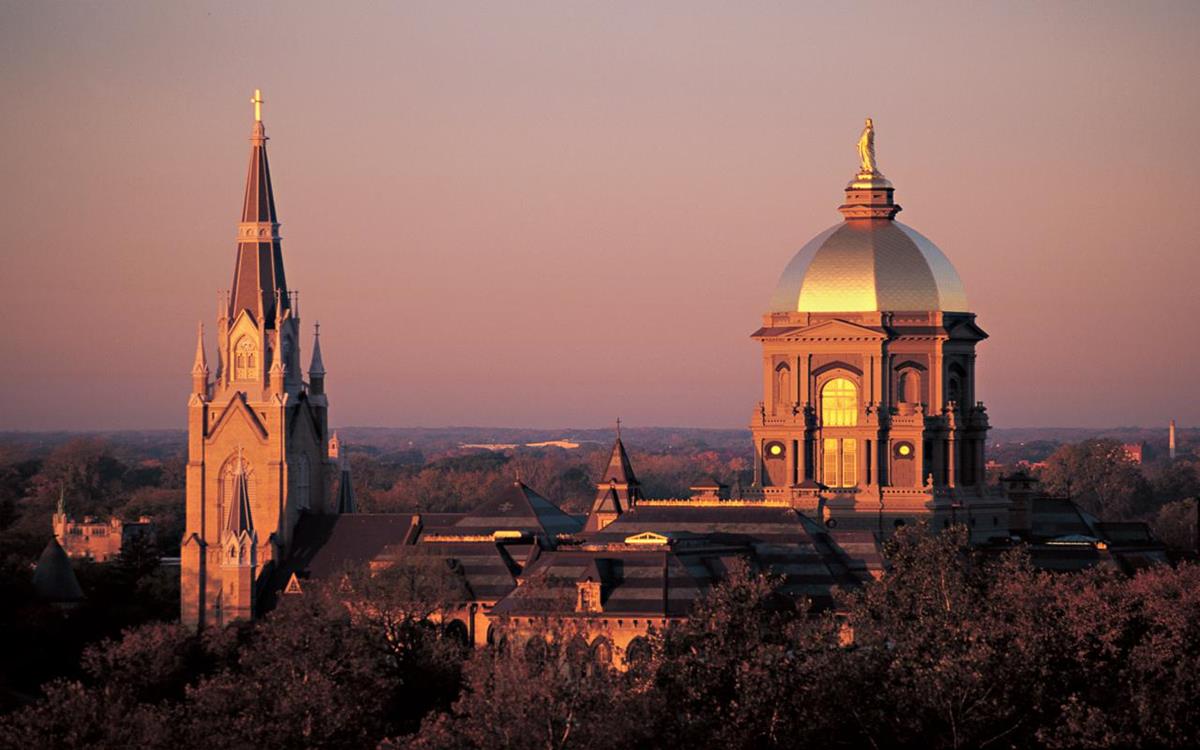
Notre Dame and the Legend of “The Gipper”
South Bend, Indiana
The University of Notre Dame has one of the richest traditions in college football, and George Gipp remains one of its most legendary figures. Gipp, the first Notre Dame player to earn All-America honors, died in 1920 after becoming ill during his senior season. His story later became part of Notre Dame football mythology through Knute Rockne’s famous “Win one for the Gipper” speech.
The ghost story tied to Gipp is usually centered not inside Notre Dame Stadium, but at Washington Hall. Campus lore says students and visitors have reported strange sounds, rustling papers, footsteps and music late at night. Some versions of the legend even describe Gipp riding a white horse near the building, a spectral nod to Notre Dame’s famed Four Horsemen.
For football fans, this is one of the best-known ghost stories in college sports. A trip to South Bend can combine a Notre Dame football weekend with a walk through campus, where history, architecture and legend all overlap.
Group travel note: Notre Dame is a strong fit for football-focused groups that want more than a stadium visit. Build time into the itinerary for campus landmarks, bookstore stops and historic photo locations.
Indiana University and the Mystery of Michael Plume
Bloomington, Indiana
Indiana University’s Memorial Stadium has its own haunting legend, tied to a tragic death before the stadium was even complete. In 1960, 19-year-old Michael Plume was found dead at the construction site of Memorial Stadium. His death was ruled a suicide at the time, though later reporting has noted that his family continued to question that ruling.
Over the years, the story became part of IU’s haunted campus lore. Some versions claim Plume’s presence still lingers around the stadium, with sightings or uneasy feelings connected to the area where he died.
Because this story involves a real person and a real tragedy, it is best treated with care. The legend may draw curiosity, but the documented history behind it deserves respect.
Group travel note: For groups attending an IU football game, Bloomington offers a classic college-town setting. Keep any ghost-themed angle secondary to the broader campus and game-day experience.
Kansas State University and “Nick” at Purple Masque Theatre
Manhattan, Kansas
Kansas State University has a long-running ghost story centered on “Nick,” a spirit said to haunt the Purple Masque Theatre. The theatre was historically located in East Stadium, part of K-State’s World War I Memorial Stadium complex, before later moving to West Stadium. Kansas State itself has acknowledged the campus legend, noting reports of doors slamming, equipment moving and a hazy white presence behind curtains.
The football connection comes from older versions of the story, which describe Nick as a football player who died after an injury. Whether that detail is campus myth or embellished retelling, the legend remains one of K-State’s best-known haunted tales.
Today, the story works less as a stadium scare and more as part of Kansas State’s layered campus personality: athletics, theater, war memorial history and student folklore all sharing the same ground.
Group travel note: This stop works well for groups interested in college traditions and campus storytelling, especially when paired with a Wildcats game weekend.
Detroit, the Giants and the Jimmy Hoffa Stadium Legend
Detroit, Michigan and East Rutherford, New Jersey
Some football ghost stories are tied less to apparitions and more to urban legend. Jimmy Hoffa, the powerful Teamsters leader, disappeared in 1975 after being last seen near Detroit. His body has never been found, and speculation about his fate has fueled decades of rumors.
One of the most persistent sports-related legends claimed Hoffa’s remains were buried under the old Giants Stadium in East Rutherford, New Jersey. The rumor became famous enough that MythBusters tested it for television, though the claim was not proven.
The Detroit Lions connection is more folklore than documented stadium history. Some stories claim Hoffa’s voice can be heard cheering for his beloved Lions, but that part of the legend is difficult to verify. The stronger, more widely repeated sports myth remains the Giants Stadium burial rumor.
Group travel note: This story is best framed as a stadium urban legend rather than a confirmed haunting. It can work as a sidebar for football history, true-crime interest or old NFL venue lore.
University of Wisconsin-Madison and Camp Randall
Madison, Wisconsin
Camp Randall Stadium is one of the most atmospheric settings in college football, and its history reaches far beyond the Badgers. Before it became a football landmark, Camp Randall served as a Civil War training site for Wisconsin troops and briefly as a prisoner-of-war camp for Confederate soldiers. More than 1,200 Confederate prisoners were held there in 1862.
That documented history gives the site a powerful sense of place. Today, fans know Camp Randall for “Jump Around,” packed student sections and Big Ten Saturdays. But beneath the modern game-day energy is a location tied to military training, wartime imprisonment and memorialization.
Stories of ghostly soldiers are part of the stadium’s haunted reputation, but the historical record is compelling on its own. Even without a confirmed apparition, Camp Randall is one of the most hauntingly layered football sites in the country.
Camp Randall is considered one of the most historic college football stadium sites because it was once a Civil War training camp and prisoner-of-war camp before becoming home to Wisconsin football.
Group travel note: A Wisconsin football weekend can easily include campus history, Camp Randall Memorial Park and downtown Madison attractions.
Lee Williams High School and the Pioneer Cemetery
Kingman, Arizona
Not every haunted football story comes from a college or professional stadium. In Kingman, Arizona, Lee Williams High School is tied to one of the most unusual football-field legends in the country. The school’s football field sits on the site of the former Pioneer Cemetery, which was used from about 1900 to 1917 and later abandoned.
The story became more than folklore when human remains and suspected coffin fragments were discovered during construction work near the football field in 2010. Local reporting at the time noted that bones and coffin fragments were found in a trench near the field.
Over the years, stories of figures, voices and uneasy feelings around the school grounds have become part of the site’s haunted reputation. Whether visitors believe the ghost stories or not, the cemetery history gives the football field a uniquely eerie background.
Group travel note: This is a sensitive site connected to burial history, so it should be approached respectfully. It is better suited for local history context than casual ghost-hunting.
Why Haunted Football Stadiums Fascinate Fans
Haunted football stadiums and campuses appeal to fans because they add another layer to places already filled with tradition. Stadiums are emotional spaces. They hold memories of wins, losses, rivalries, marching bands, student sections and hometown pride. When ghost stories enter the mix, those places become even more memorable.
For group travelers, haunted stadium stories can add a seasonal hook to a fall football trip. They can also help planners build itineraries that include campus tours, local history, museums, restaurants and walking routes around game day.
When using these stories, keep a few guidelines in mind:
- Distinguish documented history from folklore.
- Be respectful when stories involve real deaths or burial grounds.
- Confirm access rules before visiting campus buildings or stadium areas.
- Avoid encouraging trespassing, late-night exploring or unsafe behavior.
- Use ghost stories as a way to deepen the destination experience, not replace the game itself.
Whether lore or reality, haunted football stories offer a memorable way to look at sports history. On your next football trip, take time to explore the places beyond the field. You may find that the echoes around a stadium come from more than the crowd.