Ashley Whittaker of The Sports Facilities Companies on what separates facilities that thrive from those that struggle
by Jeff Gayduk
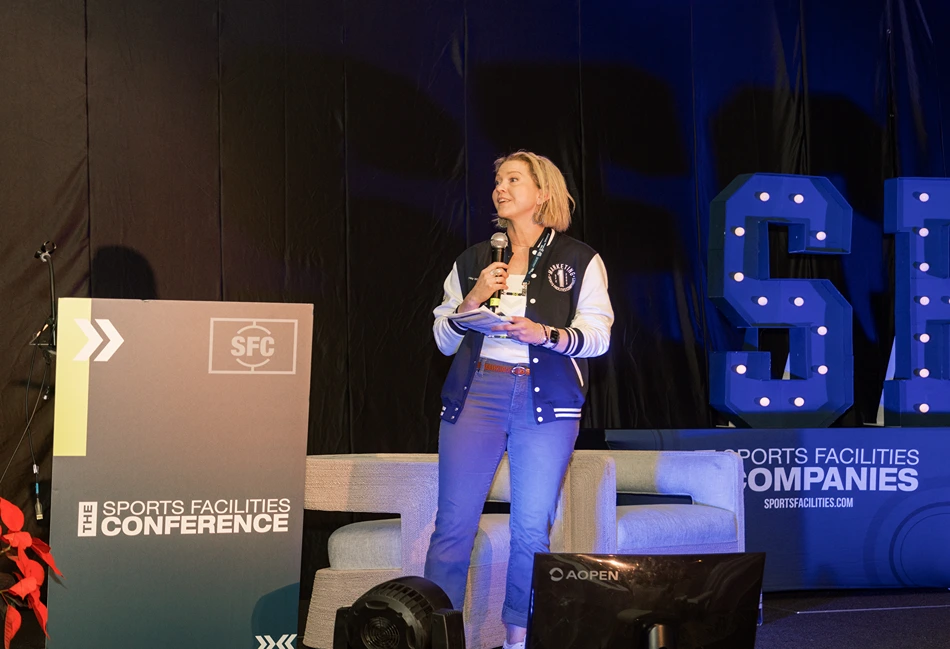
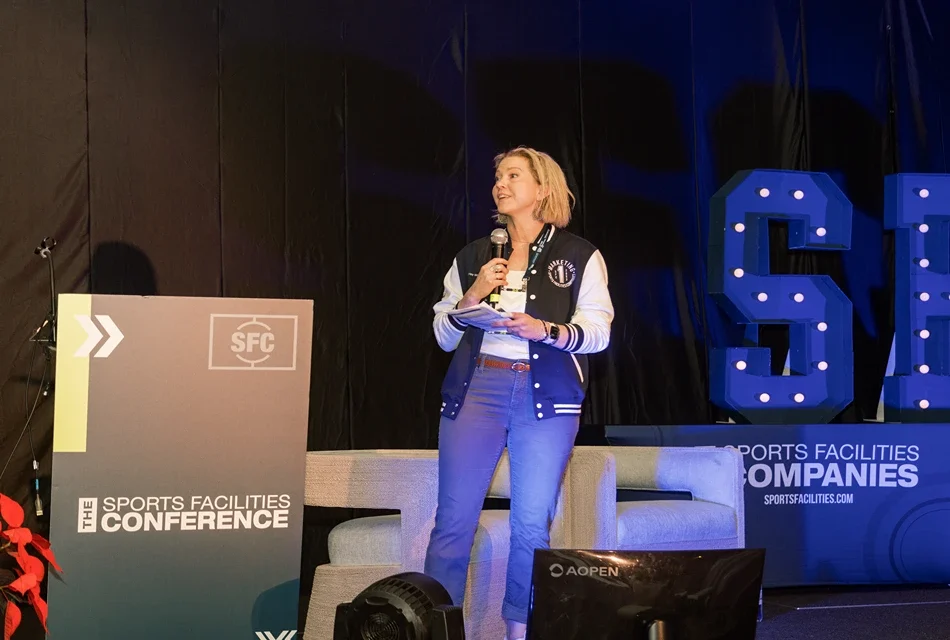
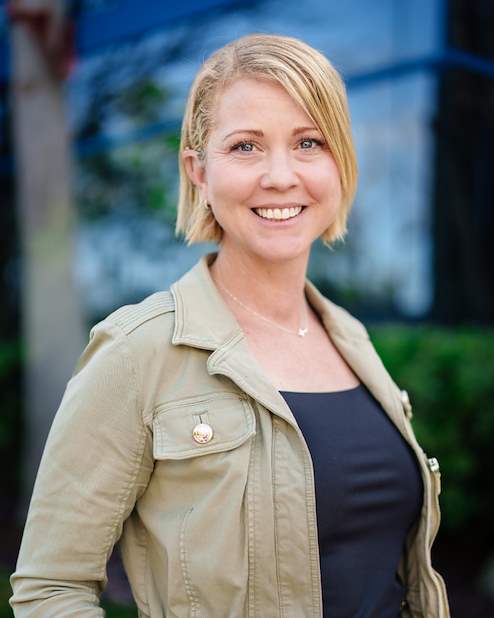
| The sports facility development market has never been more active, or more unforgiving. Municipalities across the country are racing to build competitive assets, fueled by post-pandemic economic ambitions and the very real fear of being left behind as neighboring communities break ground on shiny new sports facilities. But the ribbon-cutting moment, Ashley Whittaker will tell you, is the easy part. Whittaker is a partner and Chief Marketing Officer at The Sports Facilities Companies (SFC), the nation’s leading management and development firm for sports, recreation, wellness and event venues. With 115 managed properties generating nearly $1 billion in annual economic impact, SFC has a unique vantage point: they have seen what works, what fails, and — critically — why. Sports Planning Guide sat down with Whittaker at Sports ETA’s Symposium to discuss feasibility, sponsorship, technology, facility design, and the lessons that stick. | THE SF NETWORK AT A GLANCE – 115 managed venues nationwide – 5,000 team members in the SF Network – $1B annual economic impact generated – 30M+ guest visits per year – 20 ce rinks under management – 11 new venues opening or breaking ground in 2026 sportsfacilities.com |
FEASIBILITY & PERFORMANCE
SPG: We’re seeing enormous interest in facility development driven in no small part by the “I don’t want to get left behind” mentality. What are the mismatches between the feasibility studies in the marketplace and actual facility performance?
Ashley Whittaker: It is highly dependent on your operator. I know that sounds like a self-serving statement, but it really does matter. The things that are hardest about operating these facilities are the ancillary revenue streams: sponsorship sales, food and beverage, retail, and your hotel and lodging relationships. Those are all the pieces that happen around sport, because sport is the anchor. These items are what create a sustainable operation.
If somebody comes to us wanting a best-case reference across multiple categories that’s how you end up in a really tough financial situation, and we don’t want that for anyone. It’s bad for the industry, it’s bad for everybody. We prefer a conservative financial outlook – one that is based on real-world performance metrics. We regularly see our properties outperforming our economic impact forecasts because of that conservatism. If you built it to perform on a financial model that makes sense for the community, and you outperform that, everyone wins.
“Sport is the anchor. Financial sustainability is built through great ancillary revenue — sponsorship, F&B, retail, lodging — .”
SATURATION VS. BLUE OCEAN
SPG: Are there sport types approaching saturation, or sectors where you’re actively pushing municipalities toward underserved opportunity?
Whittaker: It’s so market-dependent. We’re letting the market data dictate. Someone will stand up in a meeting and say there aren’t enough pools and there’s a million swimmers — which is probably right. But pools are also a fortune to build and maintain. Same with ice. Let the data tell you.
In Alabama, we have several properties. We’re intentional about not cannibalizing the markets: baseball here, softball here, soccer here. That’s a regional collaboration strategy. When you’re going into a community, we ask what their goals are, study the market, and say: ‘Here’s the financial reality. If you want a competition lap pool? That’s great — and here’s what it looks like to operate one.’ Our job is not to tell them what to do. It’s to tell them the impact of what they want.
TIMING THE MARKET
SPG: From the moment shovels are in the ground, how early should a facility begin programming and event procurement?
Whittaker: Typically, we get engaged eighteen months to two years prior to grand opening — and often earlier, because we’re on the development side as well. You want your operator in that conversation from the beginning. It is shocking how niche our industry really is. Put volleyball courts too close together and you can’t run a tournament because you need adequate clearance on both sides. We got into one project where the architect had misaligned the ceiling-suspended curtain, dividing the courts incorrectly. That is a very expensive mistake.
A feasibility study gives you the ingredients to the pie — but it’s your job to cut it up and make sure it’s right for your market. There may be a great volleyball club already operating nearby. You don’t want to cannibalize them. You want to collaborate — offer them an incredible new home and come in with a built-in audience. Those partnerships take time. You cannot build them in the last ninety days while construction is still moving around you.
We really start booking a year out, particularly once steel starts going up, because that’s proof of concept for event owners that this is actually happening.
“A feasibility study gives you the ingredients to the pie. But it’s your job to cut it up and make sure it’s right for your market — and that takes time you simply don’t have in the last 90 days of construction.”
THE EVOLUTION OF FACILITY DESIGN
SPG: How has the facility landscape changed over the last five years, and where is it heading?
Whittaker: Rocky Top (Gatlinburg, TN) is a unique example — they already had the hotel inventory, every restaurant and attraction. The facility is fuel for their existing economy. They didn’t need the rest. Sand Mountain (Alabama), on the other hand, had none of that. Now they have this Mecca, and economic development has followed. They’re on their third or fourth hotel. They proved that if you anchor it with a sports facility, the development comes.
I also think we’ll continue to see flexibility of use — the merging of convention space, sports space, and ballrooms. David Joyner at Rocky Mount Event Center (North Carolina) has described having a monster truck rally in the arena, a wedding upstairs, and a corporate banquet downstairs — simultaneously, with no sound bleed. What an incredible asset for a community.
THE BIGGEST MISTAKES CITIES MAKE
SPG: What is the single biggest mistake cities make when approaching a facility build?
Whittaker: An ineffective communication strategy to their community. We’ve seen several really promising projects die because of political misalignment — caused by political turnover, or simply by not getting ahead of the narrative. You have to tell people what this means for them. Do you want a Target in your town? This is how we get that. Do you want your kids to play club soccer without driving an hour? This is what that provides.
And make sure the facility is programmed for the full community, not just tournament sports. Have a senior fitness program. Not everything has to make money. Ten people showing up for something that matters to them can be a win.
People have to understand the economics – and that’s a communication failure, not finance failure. This is going to be paid for mostly by visitors from out of town, or by real estate tax from ancillary development. Depending on the financing model, the project may not end up costing your residents anything — but they have to understand that, or you end up getting lit up at the village board meeting by residents who don’t see the connection.
“You have to tell people what this means for them. People have to understand the economics — and that’s a communication failure, not a finance failure.”
SPONSORSHIP & NATIONAL BRAND PARTNERSHIPS
SPG: Studies indicate that parent engagement during visits to sports facilities is dramatically higher than most other media environments. Where does national brand sponsorship fit into that picture?
Whittaker: I’ll give a shout-out to Base Sports Group here — we are working national partnerships from two angles. They’re working with agencies for big brands that want to come down-market. But if a brand comes into a facility and has a bad experience, it’s not just a bad experience at that facility, it’s a bad experience in youth sports. They may not invest again for a long time.
Because of our density across the country, we’re also finding more and more regional opportunity. I’ll use Huck’s convenience stores as an example. Where is the border of their brand versus a Thornton’s? Where do they want to expand? We have hundreds of thousands of people driving to these locations, it’s a great opportunity for them to be a multi-site sponsor at the edge of their brand or in a target growth area.
Even though TV rights are not a thing and media in this space is not the same, the up-close-and-personal value these sponsors can get — that’s where the magic is. And we’re seeing increased interest.
TECHNOLOGY
SPG: How is technology influencing how facilities are operated?
Whittaker: There are a lot of good ideas and a lot of people trying to get into this space on the tech side. But this is ultimately a service business — a hands-on human business — and the margins are not super high. If your technology is priced out of the market, it’s not impactful.
For us, the focus is our ability to operate at scale. Technologies that allow us to identify trends across 100-plus properties are really important — aggregation of data across the portfolio. And sometimes it’s not a major investment. Sometimes it’s simply using AI tools in your daily work to be better at your role and take on more.
We were at an event last week and witnessed a cluttered marketplace of people repurposing ideas from other industries, trying to make them play. Discernment is going to be one of the best skills in this industry: who is the right partner with longevity, quality, and reputation? We’ll be calling references. We want to see your clients.
THE PROJECTS THAT STAY WITH YOU
SPG: What is one project that changed how you think about this industry?
Whittaker: When you really stop and think about what these facilities do for communities, it never gets old. For me, it would be Sand Mountain and Hoover — both Alabama projects I was close to at critical moments.
Hoover: I was one week into this job when I came to my first Sports ETA. I was like, ‘Holy cow, what did I get into?’ We met their project lead— she was walking around like a total deer in the headlights (so was I), trying to figure out what she was going to do with this facility. From that first conversation to brand development to watching the construction to telling the story — and now watching the results — that end-to-end journey is a really special thing.
And Sand Mountain, because it’s extraordinary what a city of 22,000 people pulled off. The mayor had a vision. He believed it. They found an architect who put real thought into making the space special. That’s a bold vision and it paid off. This man took a gamble and had the political savvy to pull it off. And it worked.
I get to tell these stories. Hearing from clients how many years they dreamed of this, or worked on it — sometimes twenty years. That is a sacred thing in our partnership. And that is their legacy.
The Sports Facilities Companies is headquartered in Clearwater, Florida. Learn more at sportsfacilities.com.
| 6 THINGS EVERY MUNICIPALITY SHOULD KNOW BEFORE BREAKING GROUND |
| Engage your operator early: 18–24 months before grand opening — not after steel is up. |
| Sport is the anchor: Ancillary revenue (F&B, retail, sponsorship, lodging) makes or breaks the financial model. |
| Know your subsidy number: Turf replacement, operating costs, and debt service must be on the table from day one. |
| Market data first: Don’t build to a sport type — build to what the data says your region needs. |
| Operator quality is the variable: The same facility performs dramatically differently depending on who is running it. |
| Community buy-in is non-negotiable: Projects die from political misalignment more often than from bad financials. |