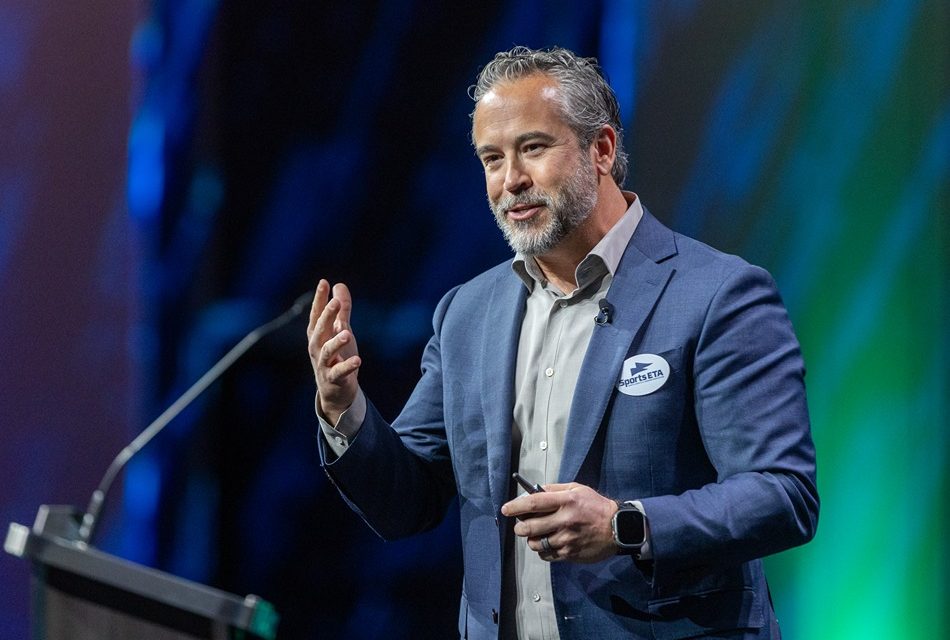
Sports ETA President/CEO John David on affordability, private equity, and building a voice in Washington
By almost any measure, sports tourism is bigger than it has ever been, with more destinations investing in the industry. At the same time, it has never been more scrutinized. Consolidation has redrawn the rights holder landscape. Federal legislation would force private equity divestiture from youth sports while lawsuits take direct aim at stay-to-play arrangements.
To address the state of sports tourism, we sat down with Sports Events & Tourism Association President and CEO John David for our third annual conversation on the state of sports tourism.
Looking for the right venue for your next event? Start your search with the SPG Facility Finder.
Jeff Gayduk: There’s been a lot of negative press around the rising cost of youth sports. The reality is that it’s an expensive proposition for families, many of whom are making difficult choices in this economy. But the positive stories coming out of sports tourism revolve around economic impact, which comes from those same families spending money in destinations. How do you square the two?
John David: It’s a tough one. Travel can be expensive. We used to be able to fly to a trade show for $300. Now that’s $500 all day long. Gas prices are higher. Everything’s higher.
When you talk to rights holders and ask how much they’ve increased registration fees, nobody’s telling you they’ve raised them by 35%. Have they increased those fees? Yes, but in proportion to the cost of officiating, insurance and things of that nature.
There’s something I always want to remind people of: If you have children in sports, you have choices about how far you want to take it. When my daughters were in soccer, I had one who wanted to play travel and one who didn’t. If we didn’t have the means to travel, we had multiple soccer leagues we could participate in right here. If we wanted to go state by state, we could sign up for a travel team. So there’s this misconception that there are no choices. While we’ve certainly seen rec leagues diminish in places, there are still choices based on your family’s finances.
I grew up as a sports tourism kid. My dad and I drove across the country racing motocross. We found a way, and the life lessons of that time with my father were invaluable. So when I see a family invest in taking their children to events, yes, I see expense. We all see expense. But I see moments that most parents and children won’t have.
I’m also seeing more sponsorship activations that focus on affordability, where the sponsor is saying, “How do we reduce costs? If we support you at this level, can there be grant programs for at-risk kids?”
Rights holders understand we have to ensure that our pipeline of new athletes doesn’t dry up. Our NGBs aren’t going to cut off their noses to spite their faces. Even a for-profit organization isn’t going to cut off its future business for what’s happening today.
JG: The Let Kids Play Act was introduced in May. It would force private equity divestiture from youth sports and specifically names stay-to-play arrangements. Do you have a formal position on the bill?
JD: We don’t have a formal position, and I think taking one would probably be inappropriate. Broadly, what we would tell you at this stage, as the bill evolves, is that we can’t throw the baby out with the bathwater. That’s my fear with some of the legislation I’ve seen: the pendulum swinging too far.
Are there some problems we need to fix? Yeah, there are things that need to be cleaned up. But at the same time, one of the questions that has come out of this is: Who’s explaining to these legislators the positive parts of stay-to-play? Who’s explaining these practices and how they’ve evolved? Are they all good? No. Are there some bad actors? Yes. But when you look at the broader benefits of some of the practices being attacked, by and large, they’re actually quite beneficial for the consumer, and certainly for the destination and the rights holder.
That’s where we’ve gone on the offensive in a couple of ways. One of the first things we did was hold a virtual roundtable with our housing and third-party members and hotel companies. We discussed whether documentation or case studies could help articulate those benefits and how the association can be supportive.
Second, the board has recognized that we need to take a deeper dive into governmental affairs. It hasn’t historically been a focus of ours, but we have to start leaning in, and we are. We have two at-large, non-voting board seats, and one of the board members we’re bringing on has great expertise on the Hill.
JG: You have relationships with 3STEP and RCX, both private equity-backed and squarely inside that bill’s definitions. Meanwhile, we’re hearing from destinations losing contacts because the company they used to do business with is now part of a larger conglomerate, and venues losing contracts to consolidation. How do we paint this for the industry?
JD: It’s extremely challenging, and our members have told us everything you articulated. When we looked at the problem, we recognized two immediate issues. One, some of these large organizations had almost created a moat around themselves. It’s hard for a destination to get inside because their 20-year veteran tournament operator is no longer there. Two, that institutional knowledge may not have been passed along.
3STEP was our first pilot program. We went to them and said, “Here’s what we’re hearing,” and we were very candid. We said, one, we think there’s a way we can help you tell your amazing story. Two, we want to make sure there’s no disconnect between destinations, your tournament operators and the people inside the “walls”. Three, we want to teach some of your new team members, who might not have that 20-year history, how to build these relationships and maximize the opportunity that sports tourism creates.
As a result, I’m personally leading webinars for them. We’re taking that 34-year Sports ETA institutional knowledge and sharing it more deeply within their organization and others while creating bridges over that moat to help everybody connect.
JG: Some are saying that the growth of travel sports is negatively impacting rec leagues. But the sports tourism industry only succeeds if the rec leagues are the pipeline. What can we do as an industry to ensure grassroots sports programs are strong?
JD: I look at rec leagues and travel sports as parts of the same ecosystem. They serve different needs, and we want both to be strong. Rec leagues are where so many kids first pick up a ball, join a team and discover a love of the game. Whether they eventually play travel sports or stay in their local league, we want them to have a great experience that keeps them coming back.
As an industry, we’ve got to ask, “What are we doing to help more kids get in the game?” That means supporting our parks and recreation partners, advocating for quality facilities and accessible programs, and building relationships between local leagues and tournament operators. We all have a stake in making sure families have opportunities that fit their interests and budgets.
We talked about this extensively at our Chief Executive Summit, and we’ll keep that conversation going. Whether we’re a destination, a rights holder or an industry partner, we have a role to play. The stronger that local foundation is, the stronger the entire sports ecosystem becomes.
JG: Does rights-holder consolidation create an opportunity for someone to come in on a grassroots level? Is Sports ETA doing anything to incubate that, to bring in a former AD or coach who sees this as a business opportunity?
JD: That’s at the core of who we are and how we were founded, and we’ll never lose sight of it. We created an entry-level individual/student membership for $25. You get all the benefits of membership, including access to research and white papers. Second, our student enrichment program, sponsored by Tanger, brings students into every single event so they can understand the ecosystem and career opportunities in sports tourism.
At a basic level, our team is working hard to find new tournament operators. Who’s out there who just started, has three tournaments and is going to have 10 in two years? We love to introduce them to the industry and share the resources we have to help them grow.
That was me 15 years ago. BMX wasn’t even part of the conversation. We had no idea this space existed, and sports tourism transformed that entire sport.
JG: 80 percent of Sports ETA members lean on parks and rec facilities to host events. Have Sports ETA’s initiatives in park & rec produced any fruit?
JD: It has. At every single one of our events, we’re bringing park and recreation departments into the mix. We see departments that want to come in on their own, and we’re also seeing more come with their DMO partners.
I started in parks and rec and understand their challenges. You’re working hard to have a great facility and take care of your local community. Then you have a weekend tournament with 10 times the participation and usage. There’s cleanup to do, and the fields may need repair. And you’ve got to turn it all around by Monday for local families.
Sometimes that leads to negativity toward tourism. What I love is when a destination brings in that park director and they meet the sports tourism family. I have seen the relationship change instantaneously.
We’re also getting tactical by producing both content and tools that illustrate the incredible benefit when sports tourism and parks and recreation collaborate. For example, we produced a white paper that documents the benefits of parks and recreation’s involvement in sports tourism. To complement the white paper, we created a PowerPoint presentation that a DMO can customize for their park and recreation professionals to illustrate the benefits of collaborating.
JG: Last year you said your educational offerings with expanded tracks would be unveiled within 12 months. Where does that stand?
JD: Our Director of Education and Research, Christina Valasqauez, along with a task force of Sports ETA members, has revitalized the program. At Symposium, we gave everybody a sneak peek at what it would look like. We spent an incredible amount of time mapping out the new course structure. It’s now a three-track system. STS, the Sports Tourism Strategist designation, is the baseline.
STP, Sports Tourism Professional, is our mid-career program. Once we’ve earned our STS, we’re shifting into more complex courses, including some live course requirements. Those are designed for individuals who have been in the industry for five to 10 years.
With STP, we’re introducing assessments. You’ve got to pass a test at the end of the courses, which include multiple cohort sessions.
Our third and highest track is STE, Sports Tourism Executive, which is designed for our industry leaders, with work at a master’s level. It’s an intense designation to earn, with required presentations and an end-of-year project as part of the certification.
We’ve budgeted more for course development than ever before in the organization’s history. We are working with subject matter experts to produce both online and live courses. By Symposium next year (April 2027), the core structures will all be fully open and operational.
Planning your next event? Explore Sports Planning Guide.
JG: You’ve talked before about a sustainability track with certified sustainable members. Where does that stand?
JD: It’s critical. Sustainability is a key issue within sports today, whether you’re a facility, an organizer or a destination, and our commitment isn’t wavering. Rico Solutions is our partner, and we’ve created multiple white papers on sustainability that are free and available to anyone. We also have a Sustainable Sports Event Professional designation that can be earned by completing four online Certificate Playbook Courses. Moving forward, sustainability will be a core component of our new designations and education portfolio.
JG: Last fall you said the travel industry was behind the eight ball on World Cup. We’ve now got results. Hotel occupancy fell year over year in nine of the eleven U.S. host markets, while Airbnb reported record host earnings. What’s your read on what was actually happening with lodging demand?
JD: When you talk to the destinations that have been at this a while, that have hosted major events, things happened basically as they anticipated. It’s impossible with World Cup to predict the amount of tourism when you have no idea who the teams are.
Their lessons learned are: one, we had unbelievable ADR elevation. Two, a massive win on RevPAR. That was really positive. But all in all, was it this widespread, massive number of hotel room nights? No, it wasn’t. And most of the people in the destinations never claimed that it would be.
Where the win lies is when you see what occurred once the matches started. I have never in my lifetime seen the media turn on a dime as they did. Doom and gloom, that’s all we were talking about. And then you start seeing people fall in love with our country. Destinations could not put a dollar value on the seeds that have been planted, the earned media value in what so many people published about the United States. For that to happen leading into LA 28 is a remarkable moment.
With that said, massive lessons learned. Managing expectations, managing the media. We did a webinar with the leaders of the Philadelphia and Kansas City efforts and talked directly about how they managed that media, the lessons about getting proactive, getting in front of it, being intentional. Kansas City literally started saying, “I’m going to give you a news story every single day that’s something positive. Since all you can find is negative, I’m going to get you a positive one.” And it started changing the entire dynamic of the conversation.
How do we take that into LA 28? We’ve got to learn those lessons from media. We’ve got to learn how to manage expectations in a better fashion. But more importantly, we have to maximize the moment. We have a rare opportunity where the world is coming to the United States, and we need to show them the greatness of our hospitality and our desire to host future events.
JG: You’re selling the U.S. as a host at a moment when inbound demand is soft and visa processing is an issue, which was cited as a drag on the World Cup. What are international federations telling you about the U.S.?
JD: Last year we took a delegation of 12 destinations to Lausanne, Switzerland. We’ve got 20 coming with us this year. When we got there and explained who we were and the opportunity, the international federations were blown away, because no one had so directly come to them saying, I’ve got 12 destinations here that want your World Cups, your World Championship events, your Masters Championships.
We brought several of them in as hosted buyers at Symposium. We put the CEO of World Volleyball through 62 appointments. They all said this is genius, the passion and excitement of what you’re creating, and to have it all under one roof.
Are there barriers we have to work through? No question. But that’s when you lean in. We’ve been working hand in hand with both the State Department and the Department of Commerce to showcase the power of who and what we are.
JG: You’ve got four more years on your extension. What must be true in 2029 for you to say mission accomplished?
JD: The opportunity with LA 28 is important. If I’m looking at 2029, I want to look back at 2028 and know we maximized it. I want to know we learned lessons from the World Cup and created a better support system for 2031 and for what’s coming with Utah 2034. That’s on the mega-event side, and that’s critical.
But the core of our business is the tactical tools. I want us to supply our members with real resources and tools that make their jobs easier. Our new tagline is that we’re the winning solution in sports tourism. The win is when anybody in this space has that tough question and thinks, “Let me take a look at Sports ETA. I bet they have a solution for this.”
Get more sports tourism intelligence delivered directly to your inbox. Subscribe to InSite from SPG.