How sports districts are shaping destinations and redefining community value
By Christopher D. Silbernagel
Sports districts are reshaping how cities and destinations think about the role of sports venues in their communities. By connecting the energy of competitions with a broader vision for development, these projects can create new reasons for people to visit, encourage longer stays and generate opportunities that extend beyond the event itself. However, success for sports districts depends on everything from thoughtful design and community connection to measurable economic benefits, all of which play a role in determining whether the projects can become a lasting asset for a destination.
Looking for the right venue for your event? Start your search with SPG Facility Finder.
Why Sports Districts Are on the Rise
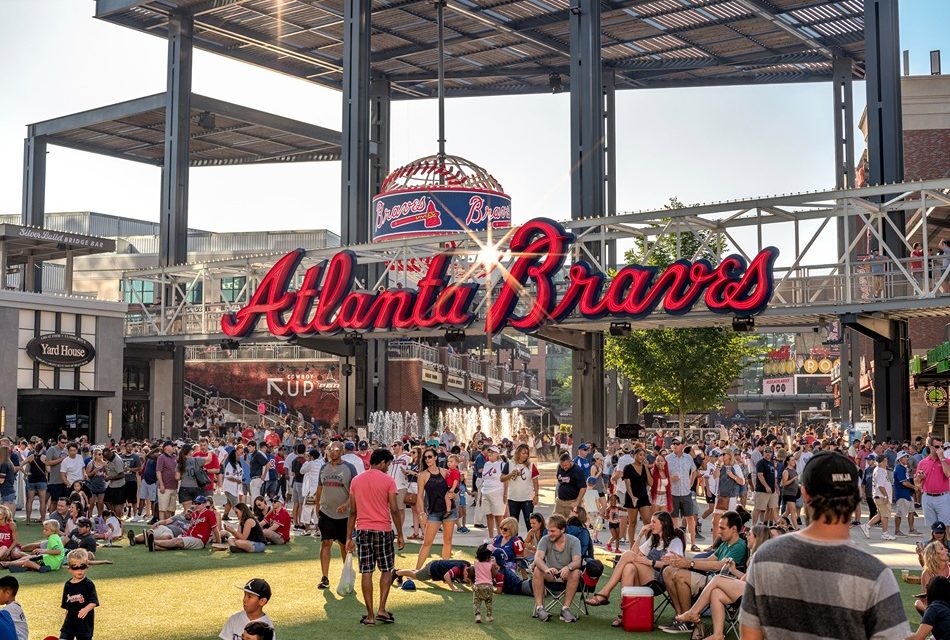
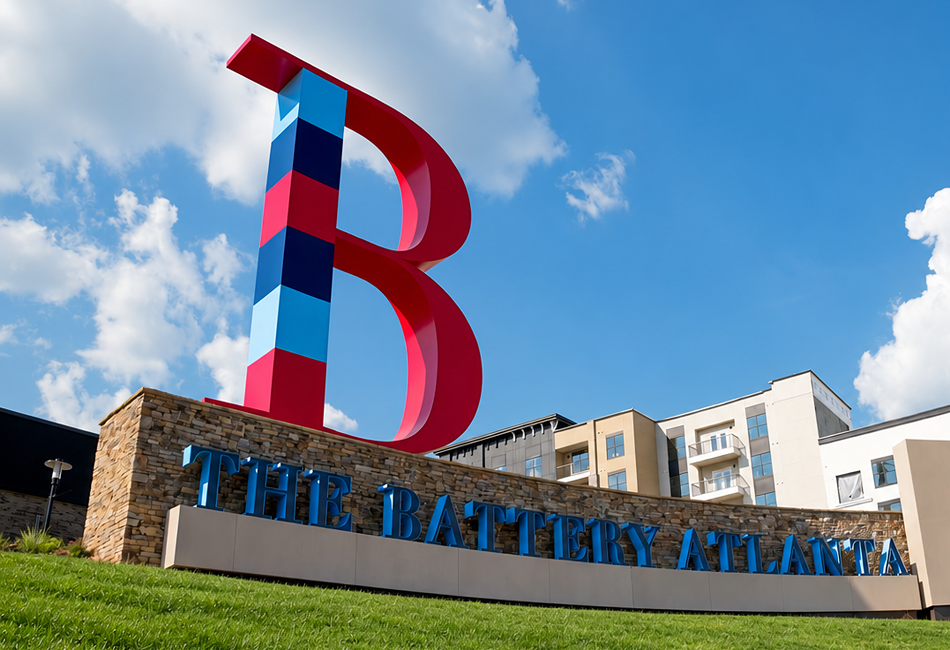
The Battery Atlanta, developed alongside the Atlanta Braves’ Truist Park, helped popularize the sports district concept by bringing retail, offices, residences and entertainment into one sports-anchored location. The model is gaining traction as professional teams look beyond traditional revenue streams, with mixed-use real estate offering franchise owners another avenue to generate income beyond the game.
The scale of the opportunity is substantial. KLUTCH Sports–RBC reported that 20% of 260 venues across the five major North American professional sports leagues are currently situated within sports-anchored, mixed-use districts. Around 40 of these projects were announced across those leagues through 2024, and the report projects more than $100 billion in potential investment over the next 15 years. College athletics is exploring similar opportunities as universities seek new revenue sources amid the changing economics of collegiate sports. Projects like the University of Tennessee’s proposed Neyland Entertainment District, Iowa State University’s CyTown and Wake Forest University’s The Grounds reflect that growing interest. Trent Michels of Momentous Sports described the trend as the next evolution of the arms race for athletic-specific facilities.
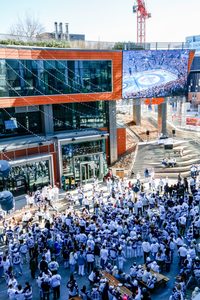
In downtown areas like in Winnipeg’s True North Square, which is built between Canada Life Centre and RBC Convention Centre, development around venues can help bring new activity to the urban core.
“Building Winnipeg’s new arena downtown provided a spark for our city,” said Jim Ludlow, president of True North Real Estate Development. “But our vision with True North Square was to turn event-day energy into something lasting—a year-round destination to bring a new daily rhythm to the heart of downtown.”
For destinations, the opportunity lies in connecting the venue to a larger economic and community strategy, but the goals can differ. A downtown revitalization project may prioritize public space and surrounding investment, while a team-led development may focus more heavily on new revenue. Understanding those priorities is essential to evaluating what a sports district can deliver along with who stands to benefit.
From Sports Venue to Year-Round Destination
A sports district’s value depends in part on how well it draws people outside the event calendar. Yes, restaurants, hotels, offices, entertainment and public spaces can attract different audiences at different times, creating activity that extends beyond game days, but increased foot traffic and longer visitor dwell times are key benefits of mixed-use development. Community spaces and recreational facilities give residents, even those who are not attracted by sports, reasons to visit as well.
Green Bay’s Titletown District is a good example of how these elements can work together. The 45-acre development beside Lambeau Field includes what you’d expect along with residences, a sports medicine facility and a 10-acre park with seasonal recreation and family activities. Since opening in 2017, the district has welcomed nearly one million visitors annually, according to KLUTCH Sports–RBC. The report also cites $75 million in economic impact from local events and conventions along with a $100 million increase in tourism spending among measures associated with the broader Green Bay area. Those figures offer context for the opportunity, though they should not be read as proof that the district alone produced those outcomes.
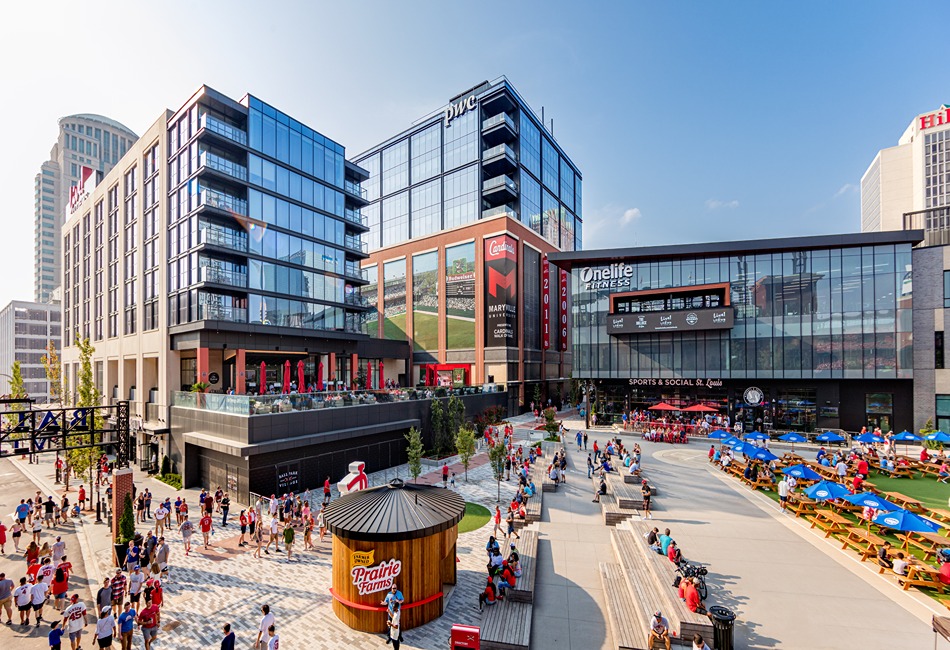
Brian Atchison, chief sales officer for Explore St. Louis, sees Ballpark Village, across from Busch Stadium, as an extension of the event itself.
“When we’re talking with an event organizer, we are not just talking about where the competition takes place,” said Atchison. “We are talking about what athletes, families, sponsors and attendees can do when the competition is over.”
That offering can help destinations compete for tournaments and championships by giving athletes, families and sponsors convenient places to gather before and after competition.
Watch parties, entertainment and private-event spaces provide options that organizers can incorporate into their plans without having to create every experience from scratch or force visitors to travel far from the venue.
The broader opportunity is to encourage visitors to stay longer and explore more. As Atchison puts it, the goal is to give visitors “more reasons to come, more things to do while they are here and more opportunities to experience the city.”
Explore today’s sports tourism headlines.
Building a Place That Belongs to Its Community
Restaurants, residences and entertainment can bring activity to a sports district, but they don’t necessarily give it an identity. That takes thoughtful design—one that reflects the team’s history, the character of the community and the people who will spend time there.
“Every place has a story and every story has a place,” said Chris Wong of Selbert Perkins Design, who sees storytelling as central to that process.
At Ballpark Village in St. Louis, a green plaza, a mini diamond and steps incorporating Cardinals history bring the team’s identity into a shared public space. Fans can connect with the franchise outside the ballpark.
The challenge is making that team identity part of a larger sense of place. “Generating consensus and resonating with the context is key,” said Wong.
That starts with understanding the community. Local history, conversations with residents and input from the people who will actually use the space help shape a development that feels connected to its surroundings. Local artists may bring overlooked stories to life, while community feedback can help developers understand which features will resonate and which might feel out of place.
That work is particularly important in master-planned developments, where buildings and public spaces are designed together rather than taking shape organically over decades. As Wong observes of stadiums that sit unused for much of the year, “when you have a stadium that sits empty for 80% out of the year, it doesn’t make sense”. The surrounding district needs its own reasons for people to visit, whether or not a game or other major event is taking place.
When design connects the excitement of sports with local culture, history and everyday community life, it can give visitors a stronger sense of what makes the destination distinctive.
The Economic Promise and Who Benefits
A busy development doesn’t automatically translate into a strong economic return for the surrounding community. The benefits depend on what the project generates, what it costs and who ultimately receives the returns.
In 2025, Atlanta Braves Holdings reported $97 million in revenue from its mixed-use operations with The Battery Atlanta, primarily from rent, parking and advertising. That figure demonstrates the business opportunity for the organization, but it does not explain how much additional economic activity the district generated for the wider community.
Writing for The Conversation, economist J.C. Bradbury has questioned whether the public investment in Truist Park has paid off for Cobb County, which committed approximately $300 million. Bradbury’s research found that the Braves’ relocation brought some new spending into the county, but not enough to cover their debt service and other obligations. He estimated an annual loss of roughly $15 million.
The issue extends beyond one project. Spending at restaurants, shops and entertainment venues within a district may simply shift dollars away from other local businesses rather than bring new money into the region. A development can draw crowds and generate substantial private revenue while producing a more limited net benefit for the local economy. Meanwhile, public agencies still have to account for the costs of their investment.
That doesn’t mean sports districts cannot benefit their communities. The benefits need to be evaluated carefully and from more than one perspective. Teams and developers may focus on revenue and property performance. Municipalities also need to consider tax receipts, public costs, employment and whether the project creates benefits that would not otherwise have occurred.
The picture that destinations want to paint for visitors matters as well. How many people come from outside the region? Do they book overnight stays, extend their trips or visit other local businesses and attractions? Those measures help show whether a district is generating new spending across the destination or mainly concentrating activity in one place.
Ultimately, a sports district needs both a compelling visitor experience and a credible economic case. The challenge for public leaders is to ensure the return extends outside the venue and its private partners to the broader community helping to support the investment.
The Sports District Legacy
Sports districts are not unique to the United States and Canada, but they mainly benefit nations like them where franchise sports differ greatly from overseas club sports that are more deeply ingrained in their communities. In Madrid, Newcastle upon Tyne and even Wrexham, venues are more often easier to access within the downtown area. The sports district is the franchise owner’s response, and it’s a welcome one, especially for those who would prefer not to cross busy highways to watch a game and then head back to their hotel an hour away.
However, the most successful sports districts will be those that can deliver value outside of sports, by creating places everyone wants to experience—a place where residents feel connected to and local businesses can benefit from. As more communities consider these developments, the opportunity is certainly significant, but even more so is the responsibility to ensure meaningful return on investment.
Find more destinations and facilities in Sports Planning Guide.