How investment is fueling growth across women’s sports
By Kristen Cerney
Women’s sports have seen a staggering growth in the United States, expanding possibilities for event organizers, destinations, and sports facilities. From youth sports to professional leagues, participation and viewership have skyrocketed. This expansion makes it possible for women to find success in their athletic careers and opens doors for breakout sports to gain more support.
Explore the destinations and facilities helping sports events succeed. Get the latest Sports Planning Guide.
Increased Investment in College Sports
The route to success in women’s collegiate athletics has become even wider, allowing more support for rising sports, such as gymnastics and flag football. These additions create opportunities for women to earn nationwide recognition, which in turn could be the difference between finding a career in athletics or having to quit after high school.
In January 2026, the National Collegiate Athletic Association’s (NCAA) Committee on Access, Opportunity and Impact officially added women’s flag football into their Emerging Sports for Women program. This change ensures that colleges sponsoring flag football will now be included into the benchmarks required for championship consideration.
“Having a direct connection with the NCAA is extremely helpful for new sports as they try to grow from a grassroots level,” said Gretchen Miron, NCAA director of education and governance. “They each have dedicated sport leaders who are on the ground advocating, and being able to say that a sport is in the Emerging Sport program is a big achievement as they work with prospective schools, conferences and students.”
The NCAA is creating more fiscal opportunities through media partnerships. The new media rights agreement between NCAA and ESPN is valued at $920 million for over eight years. This shows a 300% increase in value over the previous agreement.
“The package includes 21 women’s championships, guarantees ABC broadcasts for the women’s basketball, volleyball and gymnastics championship games, and is estimated to value women’s basketball at approximately $65 million annually,” said Miron.
The NCAA is propping up these programs with a tenacity that projects to skyrocket student athletes towards successful careers. With the extra investment, time and recognition towards the women in these sports, they are bridging the gap between the gender disparity in both collegiate and professional sports.
Pro Sports Expansion and Reinvention
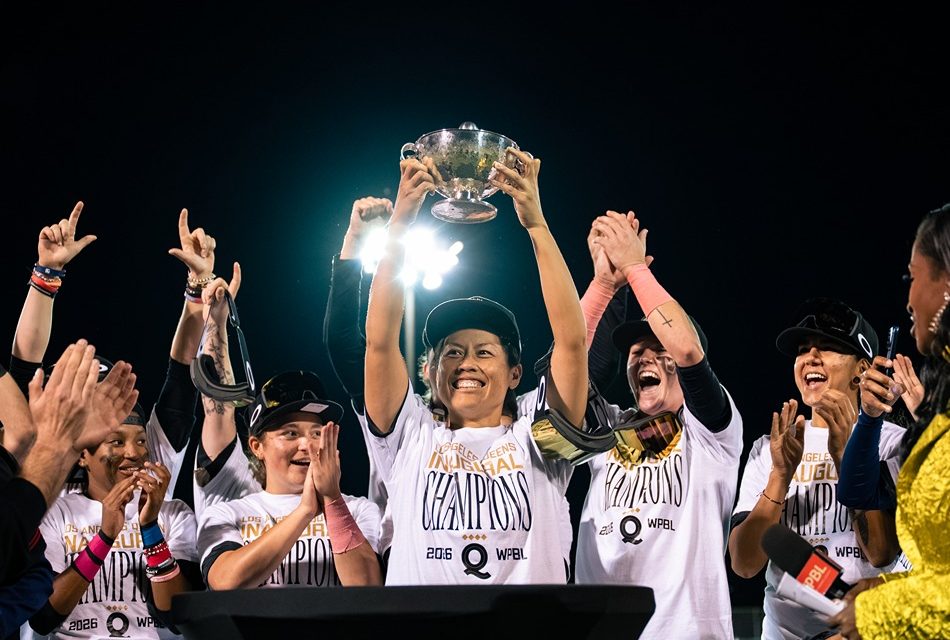
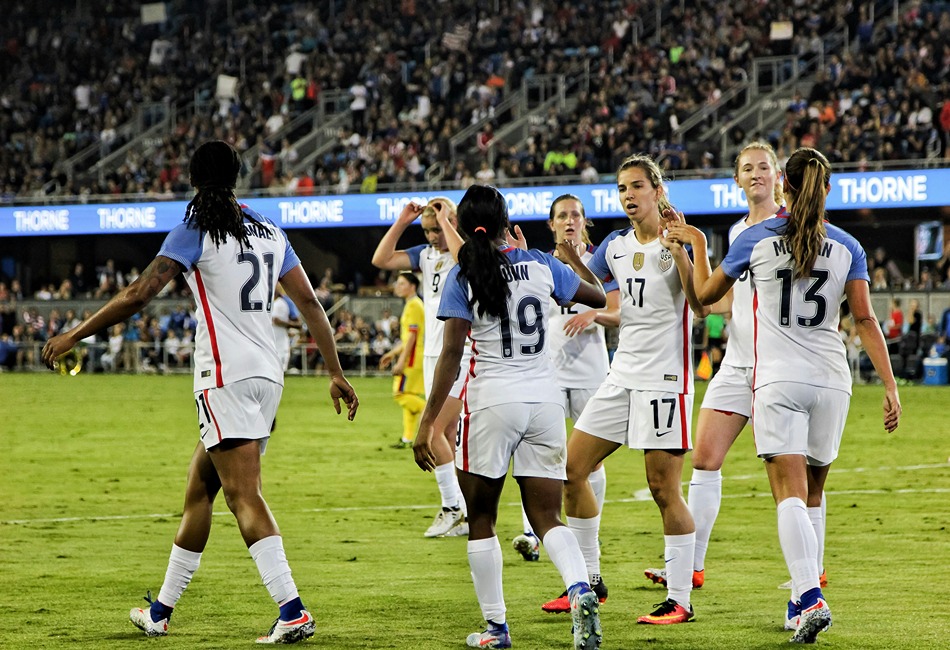
Professional women’s sports are heating up. As participation grows, new leagues expand alongside them. The Women’s Pro Baseball League (WPBL) started its inaugural season on August 1, 2026, with four teams. A year prior, the Athletes Unlimited Softball League (AUSL) launched with six teams. Both have gained enthusiastic fan bases early on, confirming the want for more professional women’s leagues.
Similarly, the Professional Women’s Hockey League (PWHL) began in 2023 with the backing of Chicago-based billionaire financier and high-profile sports and philanthropic couple Mark and Kimbra Walter, as well as the iconic Billie Jean King. The PWHL has twelve teams spanning across North America.
The Women’s National Basketball Association (WNBA) is currently one of the most talked about women’s leagues in the country. Commissioner Cathy Engelbert contributed to this success by helping raise $75 million in capital, the largest in women’s sports history. At the start of 2027, the regular season will expand to a 50-game schedule. The surge in viewership has also been attributed to the record-breaking athletes on the court, such as Caitlin Clark, Angel Reese and A’ja Wilson, just to name a few, becoming household names.
When veteran players Napheesa Collier and Breanna Stewart launched Unrivaled, a 3-on-3 women’s basketball league in 2023, they gave WNBA players an alternative option to playing overseas during the offseason. The duo received accolades for their leadership and influence on the direction of the sport, including the title of Sports Illustrated Innovators of the Year.
Stay ahead of sports tourism. Subscribe to InSite from SPG.
Breakout Superstars to Cultural Icons
The Indiana Fever struck gold when they drafted Caitlin Clark, the former face of women’s college basketball. Whenever Clark hits the court, record viewership is sure to follow. Her presence made Fever-Sky in August 2026 the most-watched WNBA game since 1997 and the third most-watched regular season game of all time, peaking at 3.82 million viewers, according to ESPN. Analysts are dubbing this the “Caitlin Clark Effect,” as she is changing the way people watch, play and invest in women’s basketball.
In college, Clark increased Iowa’s state GDP to the extent of $52.3 million. Now that revenue is flowing towards the professional league with new brand partnerships, league expansions, and investments in franchise ownership in the WNBA. While her stats are nothing to scoff at, many attribute her attitude towards the sport to be the real attraction for fans. Clark’s competitive nature and advocacy towards gender equality in a male-dominated field inspire young athletes to follow in her footsteps.
On the ice, Alysa Liu sparked conversations after her dazzling performances in the 2026 Winter Olympics. Her personal style and relaxed presence took the figure skating world by storm. For a sport that has always been well-known for its strict code of conduct in appearance and rigorous training, Liu made figure skating fun on her own terms.
After stepping away from the sport at 16, she vowed that if she were to return, it would be with strong boundaries–no one could tell her how to look, what songs to choose or who her biggest rival was. Instead, she wanted to come back with the intention of authentically enjoying herself and celebrating her fellow competitors–and in doing so, she became the 2026 Olympic champion in women’s single and team events. That made her the first American woman to take Olympic singles gold since Sarah Hughes’ win in 2002.
Liu doesn’t shy away from discussing the difference in the way men’s and women’s sports have been presented. Her honesty about how misogyny impacts her both on and off the rink is pushing the conversation about gender disparity in the athletic world forward. She encourages young girls to trust the process, do what they love, and never let anyone stop them. Like Liu, snowboarder Chloe Kim found success early in her athletic career. At just seventeen, she became the youngest athlete to win gold in the halfpipe at PyeongChang 2018–though this wasn’t her first rodeo. She began snowboarding at 4 years old and became the youngest Winter X Games Medalist ten years later in 2015. Only a year later at the 2016 Youth Winter Olympics, she became the first American woman to win gold in a snowboarding event.
In her 2018 win, she became the youngest woman to land two 1080-degree spins in a row at the Olympics. She went on to break more records in the 2022 Winter Olympics, winning back- to-back gold medals. A few years later she became the first woman to land a double cork 1080 in a snowboard halfpipe competition at the 2025 Laax Open. She even managed to score a silver medal with a dislocated shoulder in the 2026 Winter Olympics.
Being a second-generation Korean-American, Kim proudly represents both cultures and advocates for Asian-American equality, speaking out against the rise of racism that spread during the COVID-19 pandemic. Her outspoken nature against violence brought many fans to love her, not only as an athlete, but as an advocate.
Olympic Efforts for Equality
The Olympics has made strides in achieving full gender parity and equity in recent years. The Gender Equality Diversity and Inclusion (GEDI) Unit at the IOC is responsible for advocating for and tracking progress for gender equality for the Games. As an advisory committee, the commission aids the IOC Session, Executive Board and President on the best practices to follow to ensure an inclusive lens is applied.
One of the ways the Committee is improving the Games is by asking National Olympic Committees (NOC) that request financial support to have at least 40% women beneficiaries.
“In the end, it’s not about penalties, but it’s about making it happen and creating the right environment, providing the [right] conditions so the NOC’s and international federations can work on it,” said Christian Klaue, director of the IOC’s Corporate Communications and Public Affairs Department.
Alongside this, major internal and external changes have been made to the media’s operation for the Games. The IOC offers guidelines to make sure male and female athletes are depicted in a fair, balanced and unsexualized manner; competition schedules are organized so that both men and women’s sports have prime-time features; leadership roles are filled with diverse voices and staff are properly trained.
“These are all the things that the IOC can do to promote gender equality…” said Charlotte Groppo, head of the GEDI Unit at the IOC. “It goes with this overall ecosystem. And if the IOC is doing it throughout the Olympics, it’s giving examples to other sports competitions.”
Finding Community in Youth Sports and Organizations
One of the key elements to ensuring women’s sports continues to bloom is offering young girls ample opportunities to get involved with sports. The Women’s Sports Foundation (WSF)- another program backed by Billie Jean King–has been working on this since 1974. The Foundation funds research, pushes for policy change, and creates nationwide leagues for youth to enjoy.
As noted earlier, flag football’s participation rates have skyrocketed, and NFL FLAG Football is there to make sure the sport has enough backing to support this growth. With over 830,000 participants and more than 1,800 leagues across 50 states, the organization is creating an environment where young girls can find their footing. Their Females in Flag initiative was integral to working with the National Association of Intercollegiate Athletics (NAIA) and RCX Sports to make flag football a sanctioned college sport.
“Low barriers to participation in these sports with equipment, leagues and geography also make it easy for new athletes to try these sports or transition to them later in high school or even college,” said Miron.
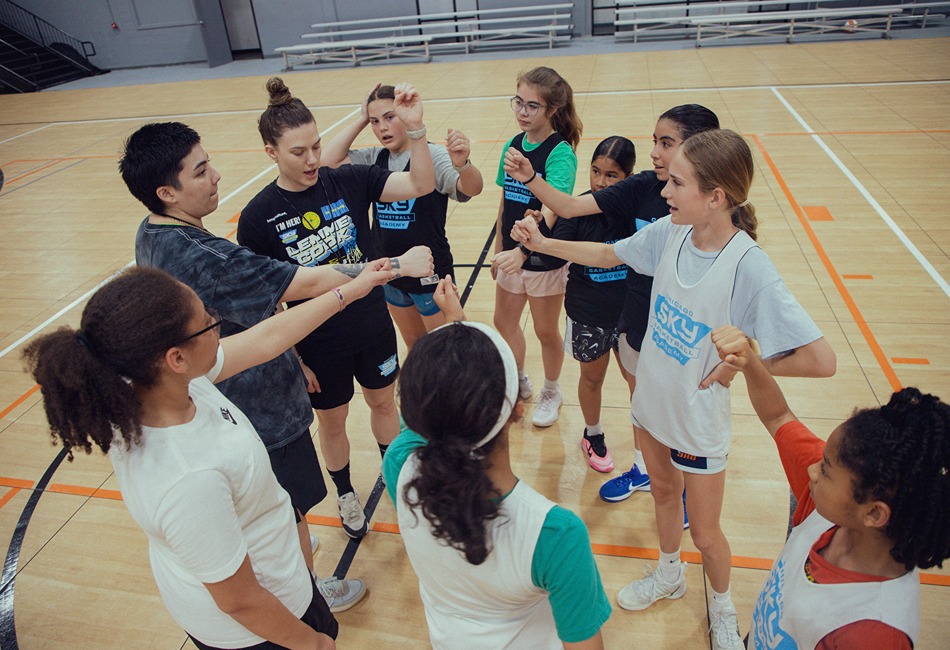
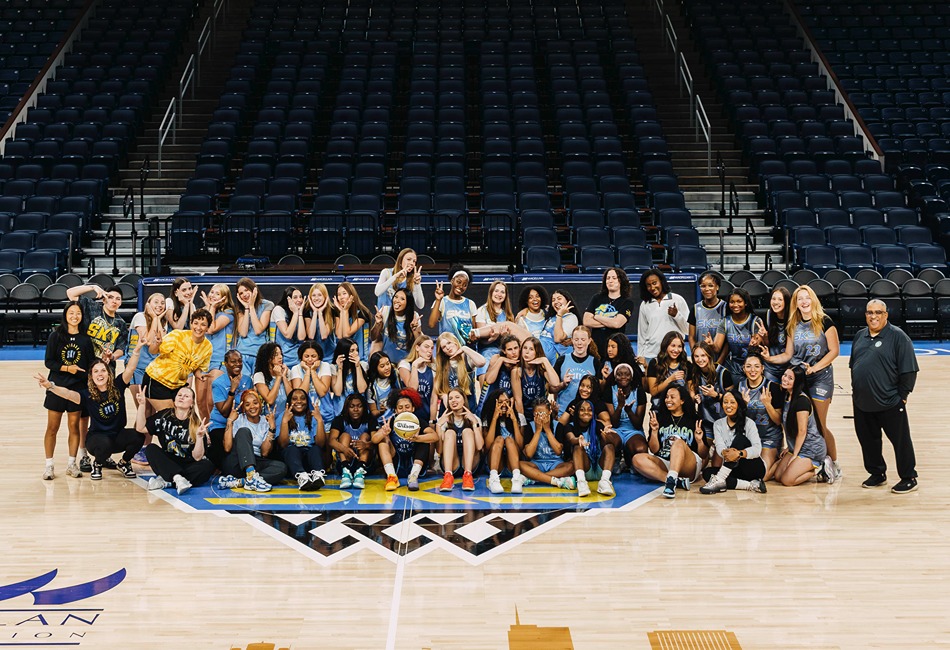
Basketball is attracting lots of youth to the court, and Chicago Sky Basketball Academy (CSBA) is meeting that excitement with training classes, travel teams and camps for girls ages 7-18.
“Basketball is a great sport for girls because it builds confidence and resilience. It is a physical sport, so it shows them that they are strong and capable of doing physically demanding things,” said Simona Sidaugaite, Academy Director and 16U Head Coach.
At CSBA, building lifelong confidence through good coaching is a given. For the fall and winter programs of 2026, the coaching staff is made entirely of female coaches–most of whom have played in college or professionally. The philosophy at CSBA is to uplift their athletes and help them recognize their own strengths.
“Personally, I try to be the coach I wish I had had at their age, by being someone they feel comfortable coming to about anything, on or off the court,” said Sidaugaite.
What are sports tourism professionals talking about now? See the latest trending stories.