Event tech tries to simplify planning and attending youth sports tournaments, creating a better experience for all sides
By Matt Swenson
Twenty years ago, Eugene Tichenor stepped on the University of Florida campus and became an instant starter for the Gators’ Club Volleyball team. As a senior, he earned All-American honors at Nationals. Little did he know his work in the classroom would tie in so well with his passion for the sport.
Tichenor graduated in 2011 with a Computer Engineering degree, giving him a rare understanding of how technology can help alter the landscape of sports. The eventual result was a company called SportsWrench, a digital fix-it for an industry still reliant on manual processes in the mid-2010s.
About a decade later, in an increasingly common scenario, a larger entity, OTTO SPORT AI, made SportsWrench part of its portfolio in 2026. Tichenor remains very hands-on as general manager and remains, by and large, the public face of the platform now known as OTTO EVENT.
Even to this day, with all the advancements in technology, organizing an event with dozens, if not hundreds, of teams playing multiple times over the course of a weekend is incredibly hard – and that’s without fear of a rainout or heat advisories altering schedules. “If we can schedule volleyball, we can schedule any sport out there,” Tichenor said, half-jokingly.
In many ways, Tichenor’s journey is the quintessential story for the changing world of sports tourism, an industry increasingly influenced by two mega trends: implementation of AI and other emerging technologies, and mergers and acquisitions by private equity firms and other companies. As this article will address, the tech and big money involved in youth sports are not mutually exclusive. Oftentimes, it is the tech suppliers consolidating in multi-million-dollar deals, as with the case with Tichenor’s company.
Stay ahead of the trends shaping sports tourism with the Sports Planning Guide InSite newsletter.

Show Me the Money
The upshot of technological advancements is a chance to scale business—tournaments, registrations, sponsorships, revenue—at rates that were previously unheard of.
On the planner side, the promise (perhaps not yet attained) is to create almost foolproof platforms for parents, athletes, coaches, referees, and other officials so that registration, housing, and operations can all be completed automatically. With less time in the weeds, sports organizers have the ability to incorporate more teams into tournaments, improve marketing strategies, and of course, create a better overall tournament experience.
“The goal is to create a more seamless and accessible experience from registration through the event itself,” said Herley Pellew, Director of Volleyball at the Amateur Athletic Union (AAU), who adopted OTTO SPORT in September. “Athletes and coaches will benefit from improved scheduling and real-time information, while families and spectators will have a more streamlined experience with digital ticketing, live scoring, and better access to event information.”
For tech companies merging, and there is a slew of them, the benefits result from financial backing and additional resources to serve many more events.
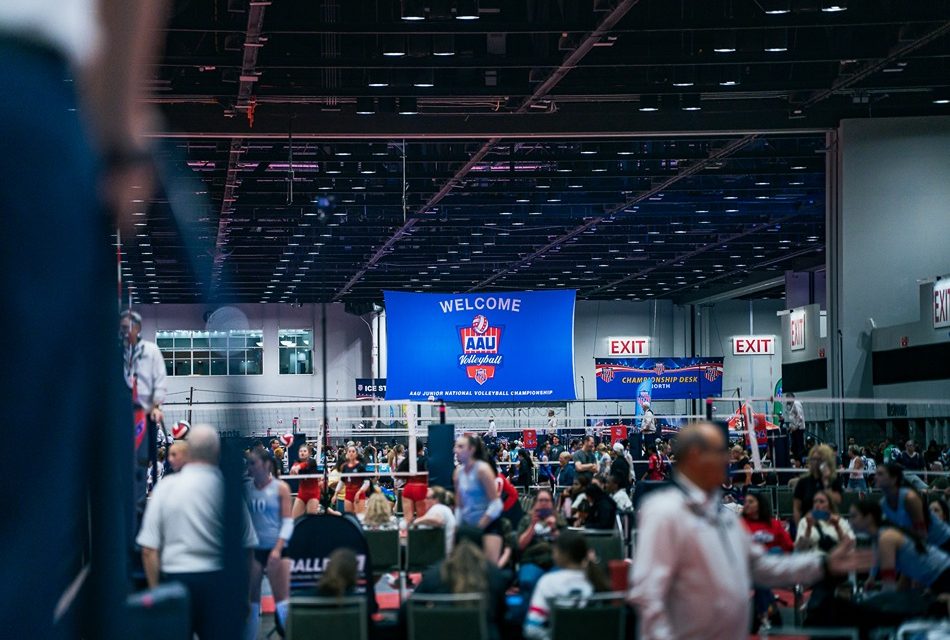
In the case of OTTO SPORT, its client base doubled in the second half of 2026. It became the event technology provider for the Junior Volleyball Association, as well as for events run by operators Kathy Lietzke (Junior Volleyball Association of Austin), Ryan Bozell, and Scott McQueen (Capitol Sports Center). A month later, it landed the Big Kahuna of youth volleyball: AAU, whose events include the AAU Girls Junior National Volleyball Championships, Grand Prix & Super Regionals, AAU Boys Junior National Volleyball Championships, and AAU Volleyball Classic.
With AAU alone, OTTO SPORT will run registration and athlete management for more than 100,000 athletes, as well as digital ticketing and admissions management for more than 300,000 spectators. Those are just the most easily quantifiable capabilities, according to Tichenor. The tech has a real-time, AI-powered scoring system to immediately update tournament brackets and signal to planners when courts are free for the next matches or can be broken down. It also handles compliance and eligibility verification for athletes, coaches, and referees, and assists with assigning referees, volunteers, and staff to courts.
The multi-year partnership is a reflection of the big money, high-stakes world of youth sports. The fact that AAU, no stranger to running massive events, shifted to an external tech provider is a significant moment for the industry.
“Technology has become an essential part of delivering a high-quality experience at the scale of today’s youth sports events,” said Pellew. “AAU has decades of experience operating large-scale youth sports events, and we saw an opportunity to further modernize and streamline the technology supporting those events.”

Playing Catchup with Tech
Pellew was speaking specifically about AAU, but her thoughts reflect many, if not most, event organizers and stakeholders in youth and amateur sports.
“Youth sports are still surprisingly fragmented technologically, and every sport tends to solve the same fundamental problems independently,” said Steve McNally, CEO of USA Taekwondo.
One potential, and in fact a base-case scenario, is as growing tech companies absorb platforms and serve additional clubs across more sports, they can identify common challenges and address them across the board.
As McNally puts it, “Taekwondo shouldn’t have to operate exactly like basketball or volleyball, but we also shouldn’t all have to reinvent scheduling, ticketing, logistics, communications, and data from scratch.”
From the right holder’s and planner’s perspective, experience and knowledge of the sports industry is increasingly important. Yes, they are buying into a technology, but also into a company that builds around their needs.
Since assuming the NGB’s top spot in 2017, McNally has sought to implement a robust rankings platform that goes beyond simply being a list of athletes and points and starts using competition data to tell the story of an athlete’s development and of the sport itself.
After some false starts, USA Taekwondo in 2025 joined the wave of organizations to adopt Fastbreak.ai, whose rapid expansion is based on the belief youth sports should have the same level of support as professional leagues, said Co-Founder and CEO John Stewart. Fastbreak’s clients include the NBA, NHL, NWSL, and MLS, as well as the SEC and Big 10. RISE Events, The Capital City National Showcase, and Rising Stars Cup, an academy-level youth soccer tournament, are among the youth sports success stories Fastbreak has detailed on its website.
Clients are not the only numbers going up at Fastbreak, which is operating at a pace befitting its name. Acquisitions made since 2024 include Optimal Planning Solutions, SEQL, Tourney Pro, Barcelogic, and GroupHousing. Each company addressed a different component of youth sports and is now under the same big tent.
Scheduling is among the many logistics the platform addresses. Ticketing, event planning, hotel booking, and data analytics are among the core uses McNally envisions for Fastbreak. Phase 1 is completing the rankings system McNally has dreamed of for nearly a decade. “If we get this right, I genuinely believe it has the potential to reshape the way athletes, coaches, families, and fans look at taekwondo,” he said.
Added Stewart: “From optimizing operations to mobile ticketing to unlocking better experiences for athletes and fans, this partnership is about more than software. It’s about setting a new standard for how modern sports organizations run and grow.”
Christine Strong Simmons, promoted to Managing Director of Operations in 2025, is among a veteran group of events staff at USA Taekwondo, which was named the No. 1 national association in the world by the World Taekwondo International Federation, also in 2025. McNally said it had gotten to the point where most of the improvements could only be incremental without going all-in on technology.
“We wanted a partner that could challenge our thinking and help us see opportunities we might not see ourselves,” he said. “Trying to run a sport while simultaneously keeping pace with technology has probably never been harder.”

Creating a Unified Front
Data collected directly related to events, including registrations, ticketing, housing, and travel logistics, as well as ancillary revenue from dining at restaurants, shopping locally, and frequenting arcades, movie theaters, mini-golf courses, go-kart tracks, and other entertainment, is central to creating more personalized and enjoyable experiences at tournaments and within a destination.
If there can be considered a legacy tech vendor in youth sports, it would be EventConnect, founded in 2013 specifically to address the sports tourism industry. EventConnect has the potential to manage all the major elements of an event, including tournament administration, accommodations and travel, and providing real-time updates for schedule updates, scoring, and more.
Its latest iteration is designed to factor in the entire youth sports ecosystem, making it a valuable tool not just for organizers, venue operators, and participants, but also for convention and visitors bureaus and sports commissions. Quantism, as it is called, is designed to help industry representatives understand the economic impact and behavior surrounding sporting events.
“Youth sports tournaments do not just need more software,” said Eric Vardon, president of EventConnect. “They need a better-connected infrastructure. The next generation of platforms will reduce manual work for organizers, improve the travel experience for families, and give destinations and partners better visibility into the real impact of these events.”
According to Vardon, Quantism helps operators understand where participants come from, how long they stay, where they go and how events influence local spending and visitation.
Lance Fite, vice president of sports at Visit Mesa, who came to the position in 2021 after six years in hotel sales, said that type of information unlocks opportunities for communities seeking to attract more events and visitors. For instance, Mesa is one of several Phoenix suburbs, including Glendale and Scottsdale, competing for events against one another and the big city.
Mesa has a leg up in youth sports because Arizona Athletic Grounds, the largest sports and entertainment facility in North America, is within its city limits. However, there are just as many hotels equidistant to the facility outside of Mesa as within the destination.
While a team or event organizer primarily cares about driving distance to and from the venue and not city where they are lodged, Visit Mesa relies on taxes collected from hotel stays and discretionary spending for funding to promote the destination and generate money that improves residents’ quality of life. So, to the CVB, it’s vital to have enough information to present a compelling case to local government officials to add amenities or improve current infrastructure.
Fite credits reports that area hotels collected from EventConnect as well as the CVB’s own use of Placer AI, Adara, CRM data, and economic-impact calculators to successfully make the case for a Tourism Improvement District (TIA) after other failed attempts. Governor Katie Hobbs signed the bill into law. Visit Mesa’s website says that conservative modeling by Rounds Consulting Group estimates that every $1 in additional Mesa TIA spending could generate nearly $7 in state and local tax revenue.
“The technology really does help you paint the full picture,” said Fite, adding the CVB also uses popular AI tools like ChatGPT and Claude to support its efforts. “There’s a lot of other ways to start quantifying spend, and it doesn’t just have to be room nights.”
As Fite said, an event’s value goes beyond heads in beds. Platforms like EventConnect can track clicks and exposure generated by high-profile tournaments. For example, a tournament featuring eight elite teams at an MLB spring-training facility can generate exposure from college coaches, media and social media, even if the event itself isn’t enormous.
According to Fite, Placer AI can help the DMO examine what brought people to Mesa and whether a tournament visit could potentially lead to a future move, home purchase, or other longer-term connection to the destination.
Visit Mesa isn’t just using data to make tournaments easier to manage; it’s using it to decide which events to pursue, how much to invest, and how to demonstrate the value of sports tourism to policymakers. “It actually quantifies spend versus investment,” Fite said.
In today’s digital age, it’s not surprising to see a great reliance on AI and event technology in youth sports, an industry taking a more business-like approach to events while creating a smoother and more enjoyable experience for athletes and families. Regardless of the platform, the end goal is the same.
“The right technology can connect the many components of an event and help organizations deliver more efficient, accessible, and engaging experiences for everyone involved,” said AAU’s Pellew.
Stay ahead of the trends shaping sports tourism with the Sports Planning Guide InSite newsletter.