Associations, Leagues, Stars, and the Venues Powering a Movement
By Christopher D. Silbernagel
Pickleball has outgrown its “fastest-growing sport” label and settled into something bigger: an ecosystem. What began as a backyard pastime is now a structured pathway from community play to global aspirations, complete with governing bodies, amateur circuits, professional tours and purpose-built venues. For event planners and destination leaders, that ecosystem translates into calendars to fill and measurable impact to capture on courts that welcome youth, seniors and elite athletes alike.
Explore the nation’s top tournament venues—access the Sports Planning Guide now and start planning with confidence.
How Pickleball Is Organized
The best way to better understand the sport of pickleball is to dive into the associations that run it. As the official National Governing Body of the United States, USA Pickleball sets the standard at home by sanctioning tournaments, maintaining the official rulebook, certifying facilities and equipment and expanding a nationwide network of places to play.
Its referee and coaching pipelines, equipment testing and facility advisory work give destinations a turnkey framework for quality and consistency, which is useful whether you’re standing up a regional event or preparing for something bigger. USA Pickleball’s expanded services now include feasibility studies and acoustic guidance for new builds, reflecting how facility development has become an economic development question as much as a sport one. More on that later.
Internationally, the Global Pickleball Federation (GPF) is positioning the sport for prime time beyond U.S. borders. Organized through four continental federations and 71 member nations, the GPF leads on rules alignment, event standards and Olympic-minded showcases such as the Pickleball World Cup—the so-called “dress rehearsals” as they pursue recognition of pickleball as an Olympic sport.
The national-to-continental-to-global structure sets destinations up for cross-border event traffic and familiar playbooks, making it easier to scale from local opens to international draws.
Amateur Circuits Fuel Pickleball’s Grassroots Rise
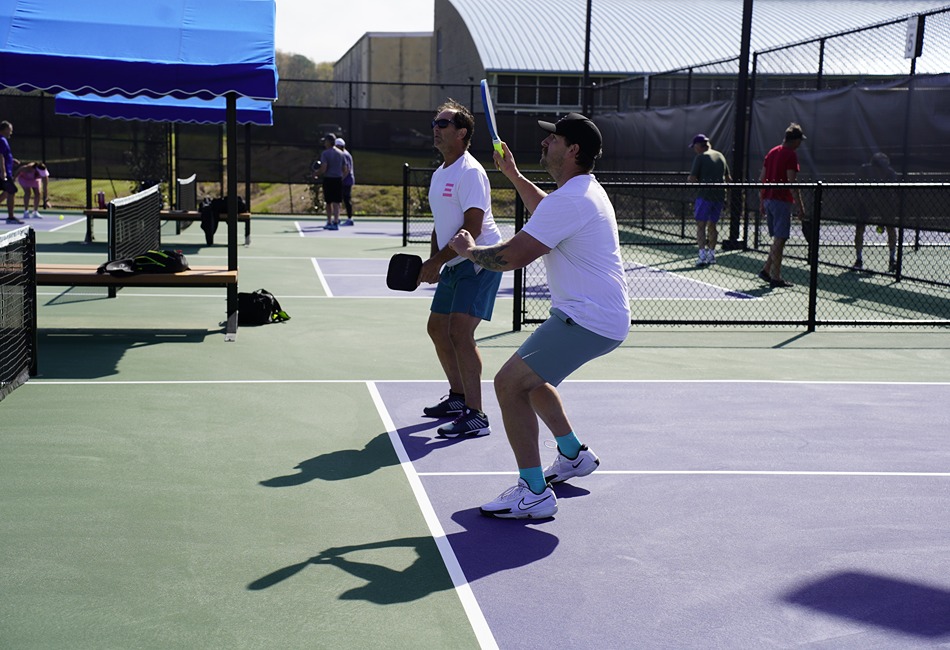
The backbone of demand, and the onset of lifelong engagement, lives in the amateur tier. The Amateur Pickleball Association (APA) runs player-centric tournaments that guarantee meaningful matches through round-robins into medal brackets with divisions that map to skill and age, so players get balanced, competitive games. The APA’s integration with Dynamic Universal Pickleball Rating (DUPR) gives athletes a transparent rating record and gives organizers a simple tool for bracketing. The result is a predictable event experience planners can scale across collegiate venues, permanent clubs and more.
The World Pickleball Tour (WPT) takes that promise nationwide with 30-plus challenger events each year and a carrot at the end: its Amateur Invitational Championships and a six-figure prize purse. Challenger stops use round-robin formats, DUPR integration and amenity-rich touches, like swag, and on-site media and music that turn weekends into mini-festivals. It’s a proven recipe for visitor nights and vendor activation.
For week-to-week engagement, Honcho Pickleball runs seasonal city leagues and a growing Amateur Tour. Honcho’s “same-partner” and rotating-partner ladder formats, DUPR-based divisions and clear playoff structures create a social-first competitive experience, which is exactly the kind of recurring programming DMOs and facilities leverage to convert new players into repeat locals and shoulder-season room nights.
The Professional Game Finds Its Rhythm
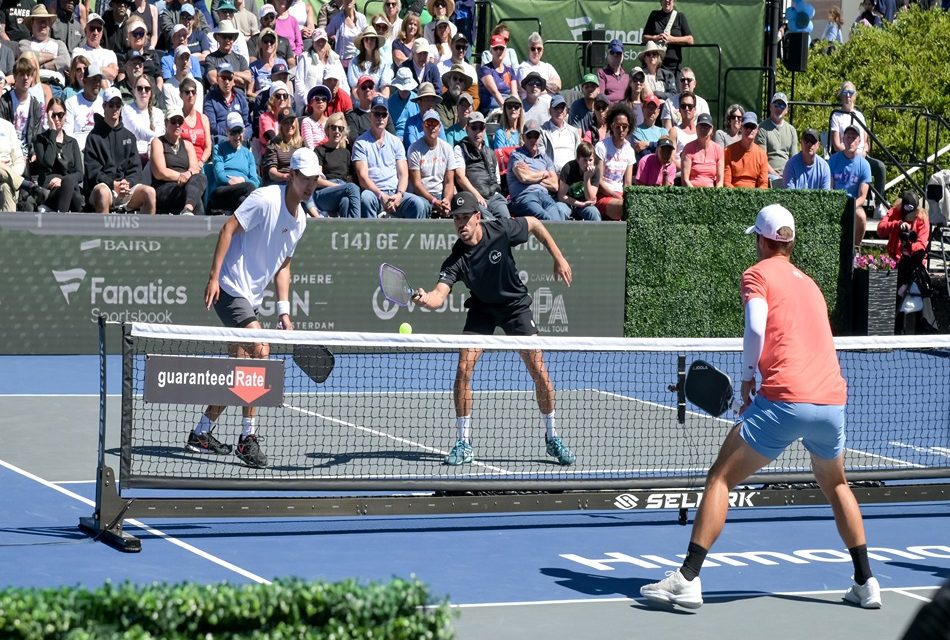
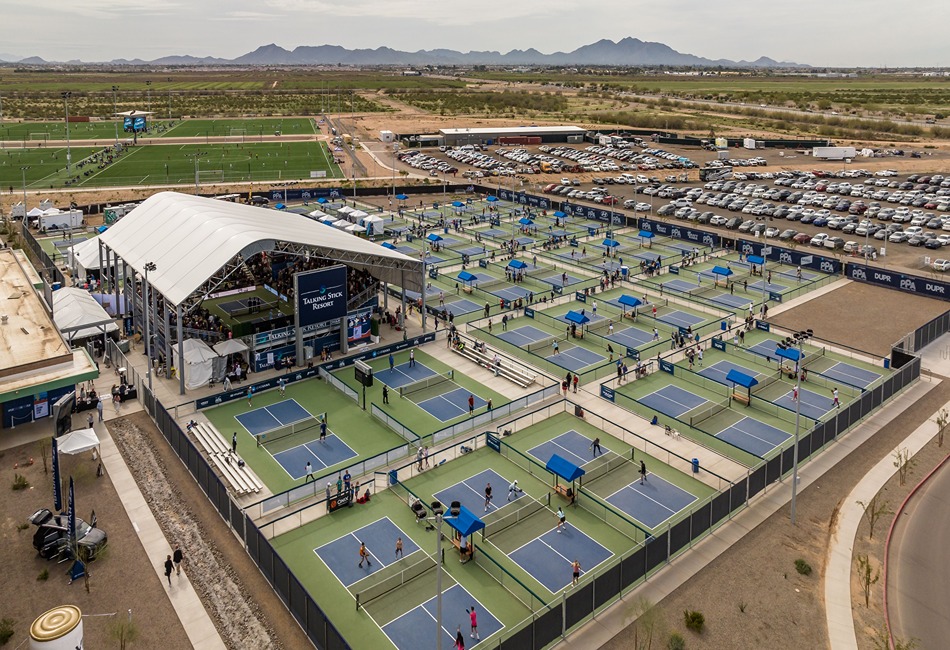
The PPA Tour is the marquee individual circuit, staging over 25 events across a ladder of points tiers—Slams, Cups, Opens and Challengers—plus open qualifiers that let ambitious athletes test themselves against contracted pros. Rankings update weekly on a rolling 52-week window, and hybrid scheduling puts semifinals on weekend stages for broadcast-friendly storytelling. Most PPA stops also run amateur brackets, so “play where the pros play” is more than a slogan; it’s a room-night strategy.
Team sport energy—and don’t we love our franchise team sports here—arrives in the form of Major League Pickleball (MLP). MLP’s MLPlay™ format blends women’s doubles, men’s doubles, and mixed doubles into a four-game match, with the high-drama DreamBreaker™ singles tiebreaker if needed. The two-tier Premier and Challenger structure creates narrative, with promotion, relegation, draft picks, celebrity owners and more, and a reason for markets to follow teams the way they follow minor-league baseball or G League basketball.
The PPA–MLP consolidation under a unified umbrella brings scheduling coherence, media clarity and a single podium for sponsors, which is good news for destinations pitching long-term hosting rights.
Ready to elevate your event strategy?Get the Sports Planning Guide for insider insights and facility showcases.
Design Innovations That Redefine the Court Experience
Pickleball’s facility story is part innovation, part reclamation. On one end, derelict malls are being reborn as “pickle malls.” Some examples include:
- A vacant JCPenney at Arizona Mills in Tempe, Arizona, reimagined the department store space into 24 courts.
- The former Belk at Macon Mall in Macon, Georgia, transformed into one of the largest indoor pickleball complexes.
- A Toronto-area Target in Canada was repurposed for a multi-court footprint. For landlords and municipalities, that’s a double win with steady foot traffic and a new, experience-driven anchor for retail.
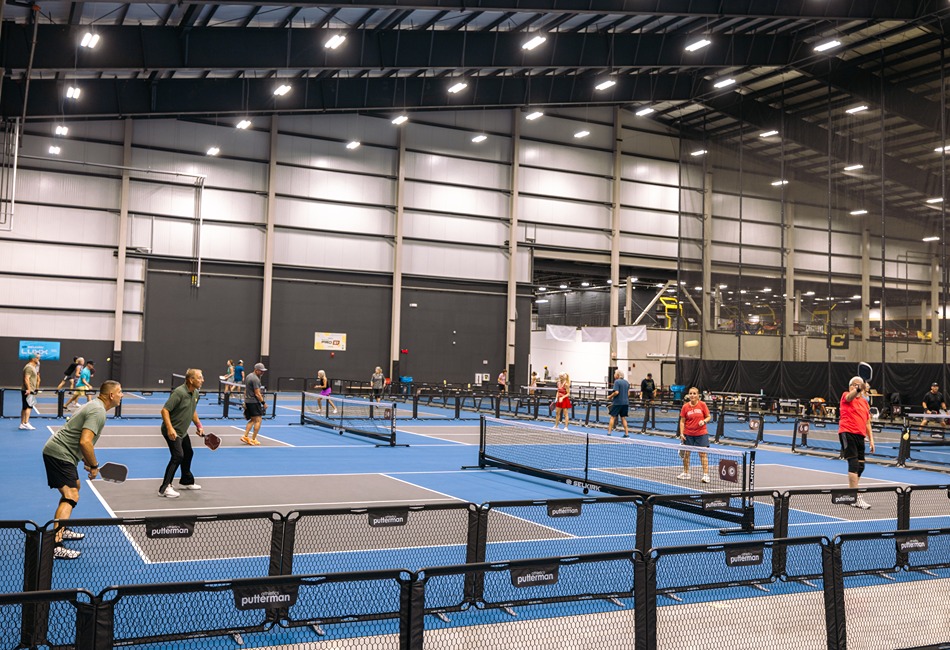
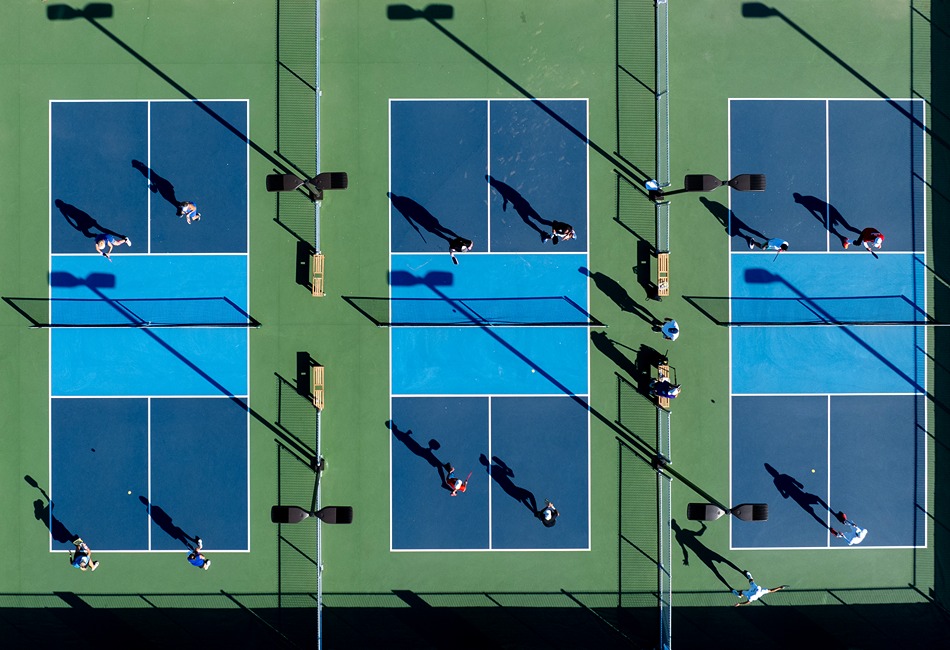
On the purpose-built side, destinations are deploying scale and versatility. The Arizona Athletic Grounds in Mesa, Arizona, is a prime example, combining 41 courts and a stadium court, with elite lighting, performance amenities and capacity for USA Pickleball regionals and daily programming. East Naples Community Park, Florida, home of the U.S. Open, pairs over 60 courts with academy operations and community park features that serve locals year-round.
These facilities are just a small fraction, of course, and design is evolving quickly. Others like Mishawaka Fieldhouse in Mishawaka, Indiana, are adopting advanced surfaces to reduce joint impact and extend player longevity, which is particularly important for older participants and multi-day tournaments.
“One thing that sets us apart is that all our courts have a CushionX surface, providing extra comfort for players during all seasons of the year,” said Nick Kleva, VP of events, marketing and strategy at Mishawaka Fieldhouse. “[The fieldhouse] offers 12 pickleball courts that are open to the community, and they have embraced it. We see on average 60 players every Friday night during our peak season. We haven’t been open a year yet and have seen over 1,500 players come through the doors specifically to participate in a pickleball program.
”The business models are diversifying, too. The Picklr is scaling a franchise network of premium indoor clubs with consistent lighting, controlled backgrounds for visibility and all-inclusive memberships that bundle clinics, leagues and tournaments. Chicken N Pickle leans into “eatertainment,” combining chef-driven menus, bars, yard games and mixed indoor and outdoor courts. Both concepts make pickleball a social anchor and provide destinations repeatable, family-friendly activation that plays well with convention groups and corporate teambuilding.
Programming Trends Close the Loop
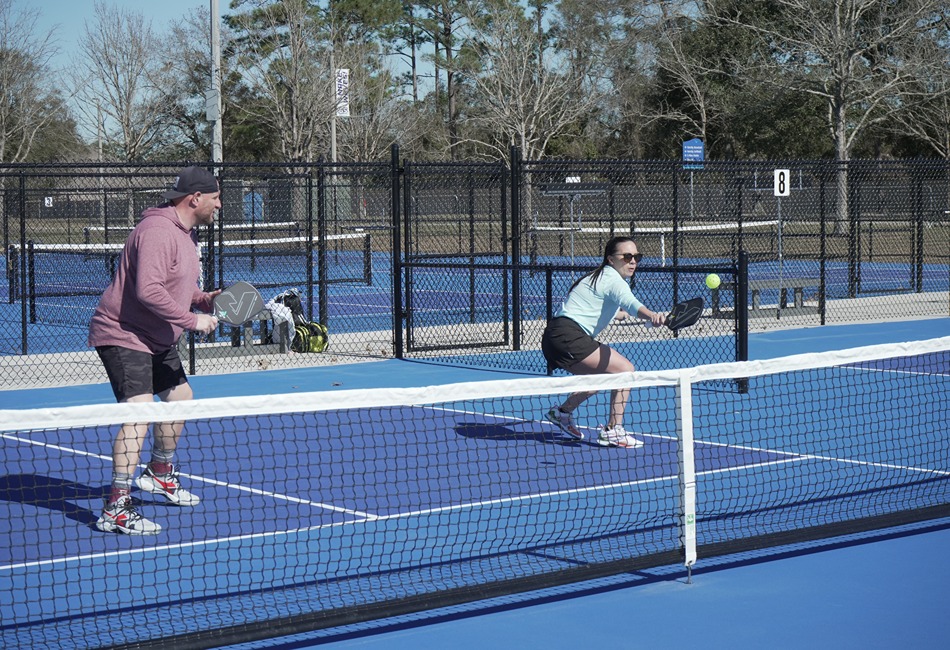
Open play windows fill off-peak inventory and welcome newcomers, with skill-organized blocks ensuring that beginners aren’t outgunned and advanced players aren’t bored. Community-first events, such as leagues, charity mixers and clinics, turn facilities into third places—something that has been lost or even non-existent in communities. That blend keeps locals engaged between tournament weekends and strengthens the value proposition when you bid for regional or pro tour stops.
Economically, the signals are unambiguous. USA Pickleball’s latest snapshot shows tens of thousands of courts nationwide and a consistent flow of sanctioned events. Facility development has accelerated into the hundreds of millions, and single-week majors have generated multi-million-dollar impacts while underwriting community programming, volunteer hours and adaptive divisions that broaden access. For cities, that’s hotel demand and food and beverage lift. For operators, it’s diversified revenue riding on a relatively small footprint per player hour compared to other sports.
Pickleball’s Rise is Not an Accident
Governance gives pickleball rules and pathways, amateur tours give it scale and rigidity, professional leagues give it narrative and star power, and smart facilities and franchises give it a home that communities large and small can embrace. This architecture creates options: league nights that feed visitor guides, qualifiers that fill shoulder seasons and championships that validate investments. Build for the player experience, program for community and align with the sport’s organizing bodies, and pickleball will pay you back both on court and across town.
Discover more game-ready destinations—flip through the Sports Planning Guide and find your next perfect host city.
A Touch of Pickleball Star Power
Ben Johns (USA)
• Multiple year-end No. 1 rankings across singles, doubles and mixed
• A record haul of PPA titles
Pickleball’s defining men’s star. His doubles runs with brother Collin and mixed doubles success with Anna Leigh Waters set the gold standard for chemistry and court control.
Tyson McGuffin (USA)
• Five-time Grand Slam champion
• Four-time national champion
A former college tennis standout turned pro pickler. Known for fiery, high-pressure shot-making and for building the sport’s culture through camps, content and brand partnerships.
Anna Leigh Waters (USA)
• Turned pro at 12 and rocketed to No. 1 in singles, doubles and mixed
• Piled up triple crowns at a record pace
The face of women’s pickleball. Waters is a crossover star whose televised moments and youth appeal have expanded the sport’s audience.
Catherine Parenteau (CAN)
• Three-time U.S. Open champion
• MLP title winner
As a perennial top-three threat in doubles and mixed, Parenteau’s consistency, defensive reads and counterpunching have produced PPA golds and signature wins over No. 1s.