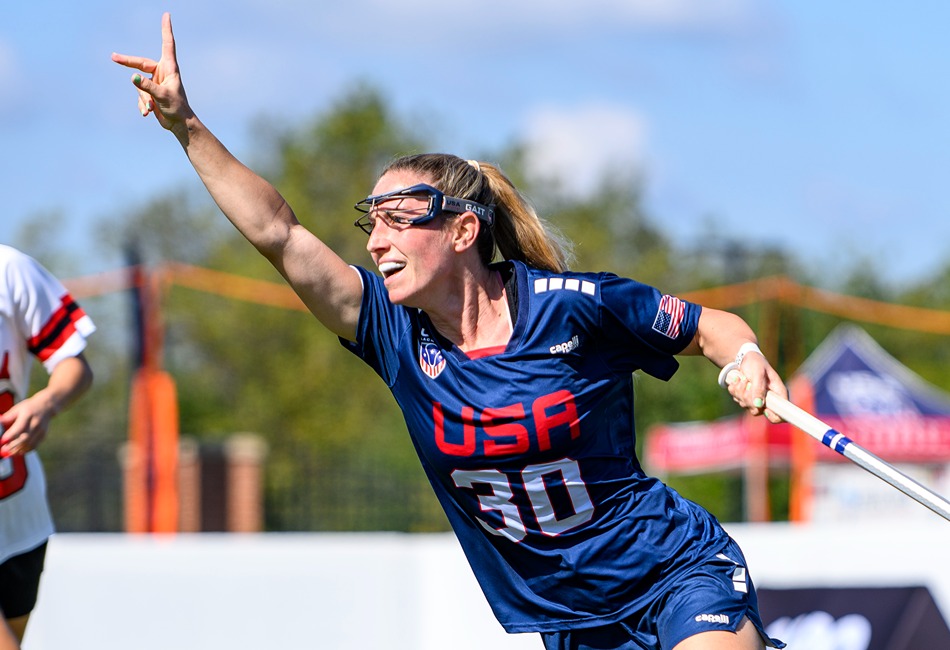

Rising costs are reshaping who gets to play youth sports and forcing destinations to rethink the future of sports tourism
The youth sports industry has spent years sounding alarms about declining participation rates, burnout and overspecialization, yet one of the clearest takeaways from the Aspen Institute’s 2025 Project Play Impact Report is that participation itself is not disappearing. In many communities, the bigger issue is who can still afford to participate.
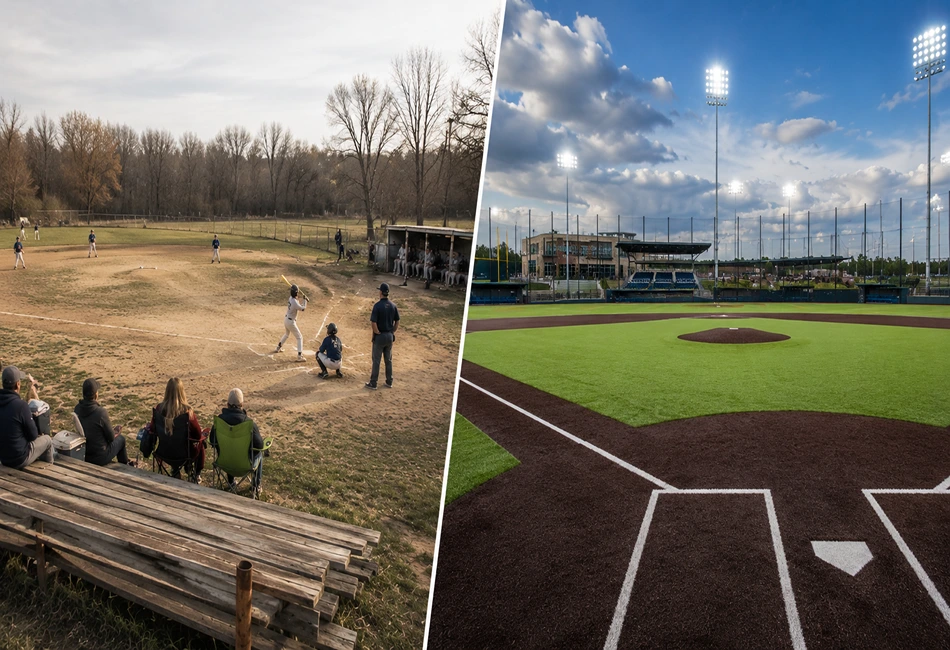
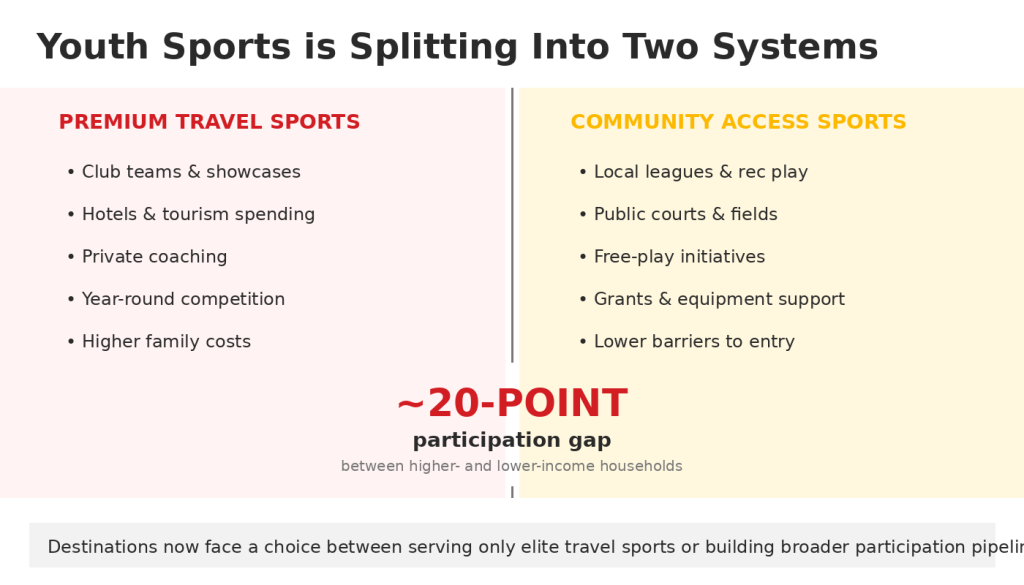
That distinction matters for destinations, event owners and sports tourism professionals because the modern youth sports economy is increasingly split into two systems: one built around premium travel experiences and another struggling to preserve affordable local play.
Read about the latest facility developments in Breaking Ground news.
The Gap Between Two Systems is Widening
Data tied to Project Play’s broader research continues to show roughly a 20-percent point participation gap between higher-income and lower-income households. Families with greater financial resources are far more likely to keep children engaged in organized sports through adolescence, while lower-income participation drops off sharply as costs rise.
At the same time, the economics of youth sports are changing. Travel tournaments, club teams, private coaching and year-round competition have transformed portions of the industry into a premium consumer market. Destinations have benefited from the boom. Hotels fill weekends around volleyball qualifiers, baseball showcases and elite soccer tournaments. New multisport complexes continue to emerge because demand remains strong among families willing and able to spend.
Travel Sports Is Becoming a Premium Product
The challenge is that the same growth model generating tourism revenue is also creating barriers for millions of families. For destinations, that creates a difficult long-term question: what happens when youth sports participation becomes increasingly concentrated among affluent households?
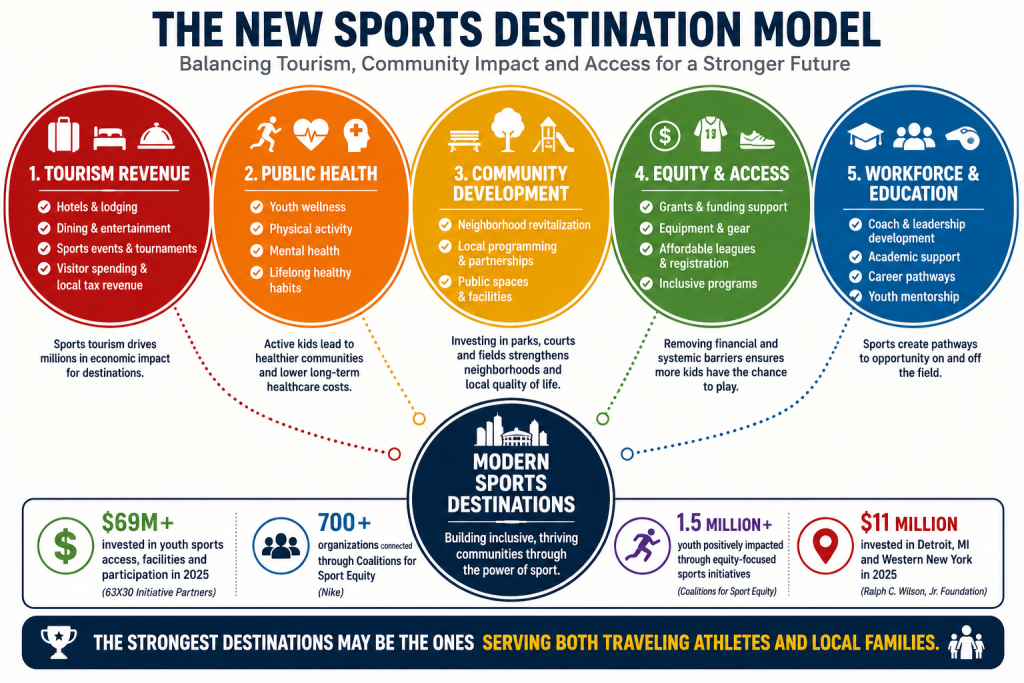
There are significant investments aimed at slowing that trend. Organizations within the 63X30 initiative collectively invested more than $69 million in youth sports access, facilities and participation programs in 2025 alone. Registration support, equipment grants, free-play initiatives and subsidized programming are becoming essential tools for keeping kids connected to sports. Those investments are not only charitable efforts but economic development strategies.
Communities that prioritize inclusive access are positioning themselves differently in the sports landscape. Instead of viewing sports solely through the lens of tourism spending, communities are tying participation to public health, workforce development, neighborhood revitalization and long-term community identity.
Destinations Are Investing in Inclusive Access
Detroit, Michigan, and Buffalo, New York, offer two notable examples. The Ralph C. Wilson, Jr. Foundation invested $11 million in 2025 toward public play spaces, coach training, girls sports initiatives and community-based sports infrastructure across Southeast Michigan and Western New York. These projects are designed to create accessible entry points for youth participation rather than simply attracting elite events.
That distinction could become increasingly important as destinations compete for relevance in the next era of youth sports. For years, many communities pursued large-scale sports facilities with a relatively straightforward goal to attract traveling teams and drive visitor spending. That model still works, especially for destinations capable of hosting national-level events. However, the communities likely to build sustainable sports ecosystems moving forward may be the ones balancing tourism ambitions with grassroots participation.
The Aspen report emphasizes place-based investment as a critical driver of participation growth. Courts, fields, lighting, free programming and neighborhood access all influence whether children enter sports in the first place. Without those foundations, the pipeline feeding both local leagues and travel competition begins to shrink.
Explore our collection of in-depth resources like whitepapers, case studies and more.
The Urban-Suburban Participation Divide
There is also a growing geographic divide inside the participation conversation. Suburban communities have traditionally dominated travel sports participation because families often have greater financial flexibility, transportation access and stronger recreational infrastructure. Meanwhile, urban communities frequently face declining park resources, fewer volunteer coaches and higher participation costs relative to household income.
Several initiatives attempt to address that imbalance directly, such as Under Armour’s Project Rampart which continues investing in Oakland, Baltimore and Washington, D.C. by pairing athletic opportunities with academic support, upgraded facilities and community leadership programming. Nike-backed Coalitions for Sport Equity now connect more than 700 organizations focused on expanding access across underserved communities.
These are ecosystem-building models, and that shift could influence how sports commissions and destination organizations approach future partnerships. Grant-funded tournaments, subsidized registration models and community-based event programming may become more common as destinations attempt to widen participation pipelines rather than rely solely on high-cost travel teams.
Why This Matters Beyond Sports Tourism
The business implications are substantial. Travel sports currently operate as one of the strongest segments in sports tourism because families consistently spend on hotels, dining, transportation and entertainment. But if participation becomes increasingly limited to affluent demographics, the industry risks narrowing its long-term consumer base.
A smaller, wealthier participant pool may still support elite events, but it weakens the broader foundation of youth sports culture that sustains leagues, facilities and fan engagement over generations.
The Aspen report points toward a different possibility: one where coordinated investment keeps participation broad enough to sustain both community sports and tourism growth.
That coordination is becoming more visible at the policy level as well. States including Illinois, California and Massachusetts have explored or established youth sports-focused governmental initiatives, while national organizations continue pushing for stronger standards around coaching, safety and equitable access. Youth sports are increasingly being viewed as public infrastructure rather than private recreation.
This reframes the conversation entirely for destinations where sports facilities are no longer just visitor generators but community assets. The strongest sports destinations may ultimately be the ones capable of serving both traveling athletes and local families.
That broader approach also aligns with changing expectations among parents and policymakers. Communities increasingly want measurable social returns alongside tourism dollars. They want facilities that support neighborhood programming, accessible recreation and youth wellness in addition to marquee events.
A Challenge that Extends Far Beyond Athletics
The industry is unlikely to abandon the travel sports economy. The demand remains too strong, and the financial impact too significant. But the next major conversation in youth sports may center less on growth and more on accessibility.
Participation is recovering nationally. The Aspen report notes youth sports participation rebounded to 55.4% in 2023 following pandemic-era declines. Yet the future trajectory may depend on whether communities can prevent organized sports from becoming increasingly exclusive.
For destinations, the income gap in youth sports touches tourism strategy, facility planning, public health, education and economic development all at once. Communities that recognize those connections early may be best positioned to lead the next chapter of the sports industry.
Subscribe to SPG for the latest fields, facilities, sites and stories in sports tourism.