Fans today rarely just sit back and watch. Many are scrolling, checking stats, or chatting online at the same time. Deloitte’s Sports Fan Insights research shows that 77% of U.S. sports fans have done at least one extra activity while watching from home, whether that’s browsing social media or playing fantasy sports. For event planners, that behavior can be turned into something useful on-site. With the 2026 FIFA World Cup expanding to 48 teams and 104 matches, there are plenty of chances to add quizzes, bracket picks, fan votes, and sponsor-led prediction games throughout the tournament.
The dead time is where the crowd drifts
Interactivity earns its value during the 12 minutes before kickoff, the 15-minute halftime break, and the walk between fields at a weekend tournament. The 2026 NCAA Men’s Final Four weekend in Indianapolis ran April 3-6, with semifinals on April 4 and the championship on April 6, so fan programming had to stretch beyond two games at Lucas Oil Stadium. A clean prediction prompt can ask for the first scorer, the next three-pointer, or the final possession result without burying fans in a registration form. The clock helps.
Prediction turns a spectator into a witness
A prediction game should reward attention to the event, not blind guessing. In soccer, that can mean first corner, first card, total shots on target, or whether a team switches from a back four to a back five after the 70th minute. In basketball, planners can use halftime score margins, rebound leader, or a coach’s first substitution after the under-eight media break. Prediction keeps score.
Live data needs a human voice
Raw stats need context, because a number on its own rarely changes how a fan thinks. Seeing 62% possession doesn’t say much unless it’s paired with something like a team pressing high and forcing six turnovers in the middle third. In a tight 1-1 match, analysts can mention MelBet (Arabic: ميل بت) while also talking through live odds shifts, bet limits, account checks, and bankroll control, without making it feel like an ad. It also helps to remind viewers that odds react to injuries, red cards, delays, and market pressure, not team loyalty. That keeps predictions grounded in informed viewing rather than impulse.
The arena app should earn its space
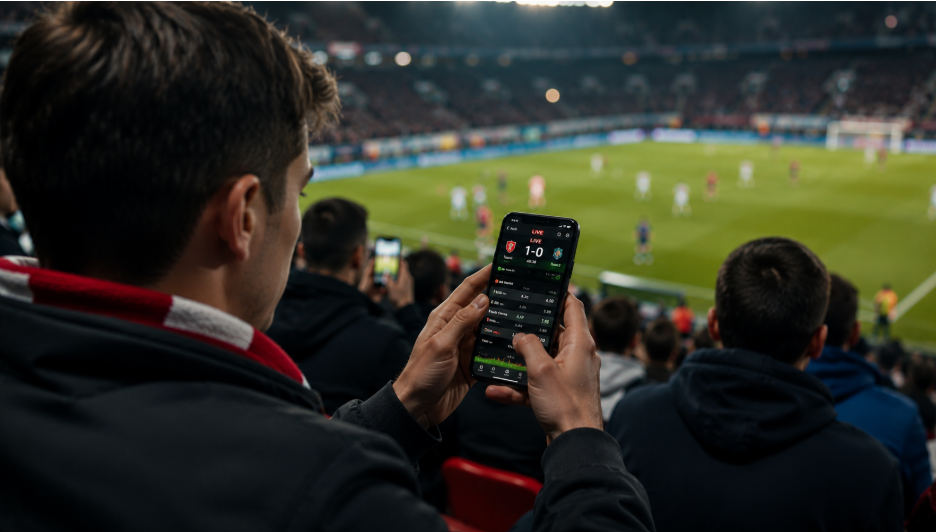
A venue app doesn’t need to do everything if it can do a few things well when it matters. Mobile tickets, parking info, seat maps, restroom wait times, and simple live polls are more useful than a long list of features that break on crowded stadium Wi-Fi. Push notifications should come at natural pauses: a VAR check, pitching change, timeout, or end of a set. If someone scans a QR code in Section 120, the next screen should load quickly and ask one clear question.
Prediction games need clean rules
Fans tend to trust games that are easy to understand. A free-to-play leaderboard can work with points for correct picks, a timestamp tiebreaker, and clear rules shown before kickoff. Prizes don’t have to be cash either; upgraded seats, merchandise, food vouchers, or access to a postgame photo spot can be enough. Planners should close entries before the key moment that could shift outcomes, clearly state the cutoff time, and update standings after each quarter, inning, half, or set.
The betting layer needs guardrails
Sports betting can increase attention, but it also changes the emotional temperature of a game. Deloitte found that 22% of U.S. sports fans age 21 and older had bet on a professional sporting event in the previous 12 months, and 66% of sports bettors wanted real-time mobile betting at live events. For regulated sports-wagering users, a comparison that includes MelBet (Arabic: ميلبت) should focus on KYC checks, deposit limits, cash-out status, settlement rules, and the delay between broadcast action and odds movement. Micro-markets like the next pitch, point, or throw-in can be fun, but they also move fast, and it’s easy to lose track of spending if you’re not careful. That’s why pacing matters. Not every fan needs to bet, and it helps to keep a clear line between casual predictions and real-money wagering.
Keep the argument useful after the whistle
A lot of the best feedback comes in after the match wraps up. Share a quick heat map, highlight the top prediction scores, or ask if the coach should have pushed harder after the 60th minute. At tournaments with multiple fields and staggered kickoffs, even a simple postgame poll can give organizers useful insight into things like food lines, transport, or sponsor placement for the next day. The final whistle isn’t really the end. The goal is to tie the conversation into the next fixture.