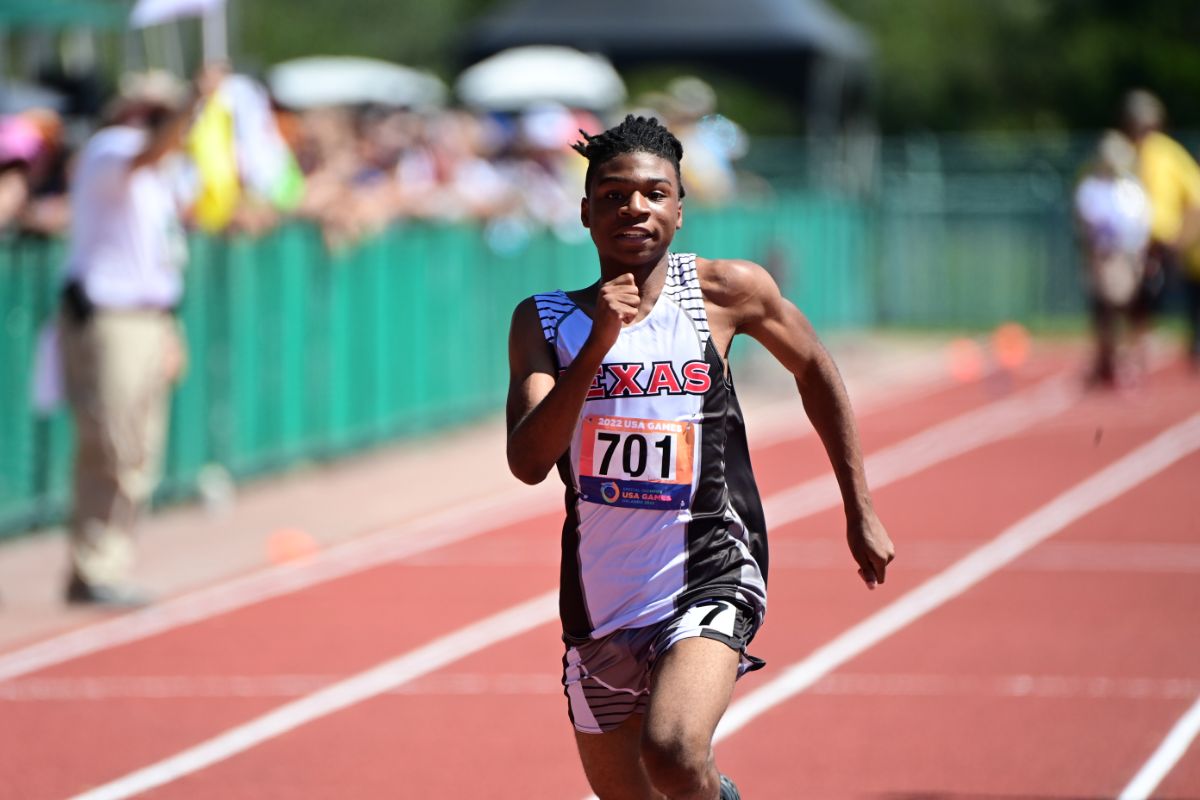

Some of the most unforgettable Summer Olympic moments come from track and field. Thousands of fans fill stadiums, and millions more watch as the crack of the pistol sends athletes down their lanes and into fast-approaching turns.
For meet directors, rights-holders (the organization that owns/sanctions an event), and sports commissions, the best college track and field stadiums aren’t just iconic—they’re reliable hosts. They combine fast surfaces, clean athlete flow, solid sightlines, and the operational basics that keep a multi-day meet running on time.
Direct Answer: The best college track and field venues for hosting meets typically pair a high-quality (often certified) track surface with strong field-event space, warm-up options, proven timing infrastructure, and spectator amenities—plus a campus or city that can handle team travel, parking, and hotel demand.
Athletes begin training young, and Division I programs across the U.S. have built venues that support elite performance and meet-day logistics. Below are 10 standout collegiate track and field facilities—mixing indoor and outdoor options—that planners often look to for serious competition.
Gilliam Indoor Track Stadium — Texas A&M (College Station, Texas)
Capacity: 5,000 (often listed) / seating for over 4,000 (Texas A&M Athletics, 2015).
This indoor track and field facility is a six-lane, 200-meter track with a hydraulic banking system at the turns—allowing organizers to adjust the banking for training and competition setups. Texas A&M notes the technology has the potential to make it one of the fastest indoor tracks in North America (Texas A&M Athletics, 2015).
Planner notes (confirm early):
- Banking configuration options and warm-up access during meet windows
- Team check-in flow, athlete staging space, and infield restrictions
- Broadcast/camera positions if streaming is required
Bernie Moore Track Stadium — LSU (Baton Rouge, Louisiana)
Capacity: 5,680 (LSU Athletics, 2012; LSU venue listing).
Named Track Facility of the Year in 2012 by the American Sports Builders Association, LSU’s venue is a strong example of a power-conference stadium built for high-caliber meets (LSU Athletics, 2012).
Planner notes (confirm early):
- Field-event layouts (especially throws) and practice scheduling
- Spectator entry/exit plan and credentialed access zones
- Timing provider requirements and in-stadium comms
Roy P. Drachman Stadium — University of Arizona (Tucson, Arizona)
Capacity: often described as over 5,000 (SPG original wording).
This venue is framed as a high-performance facility with nine lanes and an electronic timing setup referenced in the original copy. It’s designed to support both athlete experience and spectator viewing.
Planner notes (confirm early):
- Current lane count and surface specs (as configured today)
- Dedicated warm-up areas and athlete/officials-only circulation
- Throwing-event safety zones and netting requirements
Mike A. Myers Stadium and Soccer Field — University of Texas (Austin, Texas)
Capacity: more than 20,000 (University of Texas Athletics, 2013).
Unlike many track stadiums, Myers Stadium also serves as Texas’ soccer home, which expands spectator capacity significantly. The university describes a European-style layout, lighting for night events, and separate scoreboards for track and soccer (University of Texas Athletics, 2013).
Planner notes (confirm early):
- Soccer conflicts and conversion timelines (if applicable)
- Sound/PA needs for multi-event meet operations
- Team bus routing and staging space near athlete entry
Mike Long Track + McIntosh Track & Field Building — Florida State (Tallahassee, Florida)
The original copy references a “McIntosh Track and Field Building” but places it in Panama City. Florida State’s McIntosh Track & Field Building is associated with Mike Long Track in Tallahassee, and the building has been recognized as a LEED Silver project (AASHE, 2009).
(LEED = Leadership in Energy and Environmental Design, a U.S. Green Building Council rating system.) (USGBC, 2022)
Planner notes (confirm early):
- Meet operations space (officials’ rooms, trainers, athlete lounge)
- Weather contingencies and lightning protocols for outdoor events
- Credential checkpoints and on-campus event staffing rules
James G. Pressly Stadium at Percy Beard Track — University of Florida (Gainesville, Florida)
Capacity: 4,500 (Florida Gators Athletics, 2020).
Originally built in 1959, this facility remains a notable collegiate host site and has undergone major updates over time, including a renovation project completed in 2024 per UF athletics (Florida Gators Athletics, 2020).
Planner notes (confirm early):
- Permanent vs. temporary seating plan for peak sessions
- Infield scheduling and athlete marshaling areas
- Parking/shuttle strategy for large meet days
Robert C. Haugh Complex (Billy Hayes Track) — Indiana University (Bloomington, Indiana)
Indiana notes its venue was resurfaced and certified by the IAAF and has been described by the program as the ninth track on U.S. soil to receive that certification (Indiana University Athletics, n.d.). (IAAF is now known as World Athletics.) (World Athletics, 2019)
Planner notes (confirm early):
- Certification documentation needs (if records/qualifiers are in play)
- Event-day sightlines for field events and staging
- Space for athlete services (medical, recovery, equipment)
Johnson-Miller Track Complex — Virginia Tech (Blacksburg, Virginia)
Capacity is described in the original copy as minimal stadium seating with extensive lawn space—often a real advantage for festival-style meets. Virginia Tech notes the facility’s Beynon Tuned BSS 1000 surface as an IAAF-certified surface (Virginia Tech Athletics, n.d.).
Planner notes (confirm early):
- Ticketing strategy if most spectators use lawn viewing
- Weather/mud mitigation (lawn-heavy venues need a plan)
- Meet command center location and radio coverage
Felix Field and Katherine B. Loker Stadium — USC (Los Angeles, California)
Capacity: 3,000 (USC venue listing / facility profile).
The entrance is known as “Louis Zamperini Plaza” (USC Athletics, 2004). The facility has also served as a warm-up/training site connected to the 1984 Los Angeles Olympics in historical references.
Planner notes (confirm early):
- Urban access: load-in windows, bus staging, and parking constraints
- Noise curfews and campus event policies (common in dense areas)
- Field-event safety plan for tight footprints
Hutsell-Rosen Track — Auburn University (Auburn, Alabama)
Auburn notes the modern facility includes a Beynon BSS 2000 surface, jumping/throwing areas, grandstand seating, meet control booth, restrooms, and lighting—and that it hosted the 2008 SEC Outdoor Championships (Auburn Tigers, n.d.).
Planner notes (confirm early):
- Throws layout and implement storage protocols
- Lighting standards if evening finals are planned
- Officials’ workflow (control booth, results distribution, timing ops)
What planners should compare before you shortlist a venue
Even among top-tier college track and field stadiums, the “best” host site depends on your event format. Before you send an RFP or lock dates, compare:
- Competition footprint: lanes, field-event space, and safety buffers
- Warm-up capacity: separate areas vs. shared track access
- Timing/results: provider requirements, scoreboard integration, Wi-Fi
- Spectator experience: sightlines, shade/cover, concessions, restrooms
- Athlete flow: check-in, clerking, marshaling, awards, medical access
- Surrounding infrastructure: hotel supply, airports, buses, parking, dining
If you’re hosting a high-volume meet, prioritize athlete flow, warm-up access, and field-event space as much as surface speed—those operational factors are usually what determine whether the schedule stays on track.