New facilities across the state aim to nurture athletic talent and boost sports tourism
Texas continues to invest in new sports facilities that support youth athletics, high school competition, collegiate performance, sports tourism and community recreation. From indoor court expansions and esports concepts to large outdoor tournament complexes, the state’s sports infrastructure is evolving around both local athletes and traveling teams.
Direct Answer: New sports facilities in Texas are being built to serve multiple goals at once: athletic development, tournament hosting, community recreation, sports tourism, student engagement and year-round programming.
For sports planners, the most important question is not simply which venues are new. It is which facilities offer the right mix of field or court capacity, event operations, parking, hotels, transportation access and community support.
Stay Ahead in Sports Planning—Subscribe Today! and Read More Sports Info for FREE
Michael Glaspie Field Athletic Complex
Arlington, Texas
Arlington Independent School District’s Michael Glaspie Field Athletic Complex gives the district a major new high school competition venue. The project converts the athletic field at Martin High School into Arlington ISD’s third competition field and is designed to serve both Martin and Seguin high schools.
The venue includes approximately 10,000 seats, a larger press box, locker rooms, restrooms and concessions. Arlington ISD noted during construction that the project would help replace access to UTA Maverick Stadium, giving the district a needed third venue for its six high schools.
For planners and athletic departments, the project is a useful example of school-district infrastructure designed around both competition and logistics. Stadium access, pedestrian flow, school-bus movement, parking, neighborhood impact and lighting all matter when a venue is located on or near an active campus.
Planner takeaway: Michael Glaspie Field Athletic Complex strengthens Arlington ISD’s high school sports capacity and gives the district a dedicated competition venue for football, track and other school-based events.
Beaumont Athletic Complex and Municipal Tennis Center
Beaumont, Texas
Beaumont Athletic Complex remains one of Southeast Texas’ stronger multi-sport assets, with facilities for baseball, softball, sand volleyball, basketball and tennis. For tournament planners, the complex is especially relevant because it offers 12 baseball/softball fields, four sand volleyball courts, a covered pavilion basketball court and access to the Beaumont Municipal Tennis Center.
The Municipal Tennis Center includes 24 tennis courts, with four covered and 20 uncovered, all lighted. The facility also includes raised viewing stands, ample parking, and a 4,500-square-foot clubhouse with a pro shop, lounge, restrooms, locker facilities and a covered porch.
For sports tourism, Beaumont’s strength is variety. The athletic complex can support diamond sports and court sports, while the tennis center gives the city a tournament-ready racquet facility with weather protection through covered courts.
Beaumont Athletic Complex is a strong Texas tournament site because it combines diamond fields, sand volleyball, basketball and a 24-court tennis center on one sports campus.
Planner takeaway: Beaumont is a practical option for planners seeking a multi-sport complex with strong tennis infrastructure and enough field inventory to support regional tournaments.
College Station Esports Redevelopment
College Station, Texas
College Station’s former Macy’s building at Post Oak Mall has been discussed as a potential esports and gaming facility, with the city purchasing the property for $7.3 million in 2022. Early concepts connected the site to Texas A&M esports and described a major collegiate gaming space with room for tournaments, broadcasting, classrooms and community use.
The project should now be treated as a developing opportunity rather than a confirmed Texas A&M facility. Public reporting in 2025 indicated that negotiations with Texas A&M had not moved forward as originally envisioned, and College Station later discussed bid and redevelopment options for the former Macy’s site.
That does not remove the project’s relevance for sports planners. Esports remains a growing part of the sports facility landscape, especially for universities, conventions, youth programming and indoor event spaces. However, planners should confirm ownership, operator status, event availability and final facility use before positioning the location as an active esports venue.
Planner takeaway: College Station remains a market to watch for esports redevelopment, but event planners should verify the project’s current operator, buildout and booking status before including it in a bid or itinerary.
Level Up Your Event Planning Skills—Subscribe Now and Download the SPG Magazine for Expert Tips and News
Lubbock’s Youth Sports Facility Growth
Lubbock, Texas
Lubbock is positioning itself for a larger role in youth sports through new indoor facility planning and continued investment in athletic infrastructure. The most current project to watch is the proposed youth multi-sports complex led by Lubbock Game Changers, following city approval of a 20-acre lease.
The proposed facility is expected to cost $51 million and include approximately 137,000 square feet, with six regulation basketball courts, 12 volleyball courts, a sports medicine clinic, player and parent lounges, a video game room and a championship/exhibition arena with second-story seating. Lubbock Game Changers is responsible for raising 85 percent of the construction cost.
The facility reflects a familiar challenge in mid-sized markets: families often travel to larger cities for major youth tournaments. A modern indoor complex could help Lubbock retain more local activity while attracting basketball, volleyball and multisport events to West Texas.
Texas Tech University also remains an important part of the city’s athletic facility landscape. Its $48 million Sports Performance Center opened in 2017 and supports all 17 intercollegiate sports with training and competition space.
Planner takeaway: Lubbock’s next major opportunity is youth indoor sports, especially basketball and volleyball, supported by the city’s broader sports, university and visitor infrastructure.
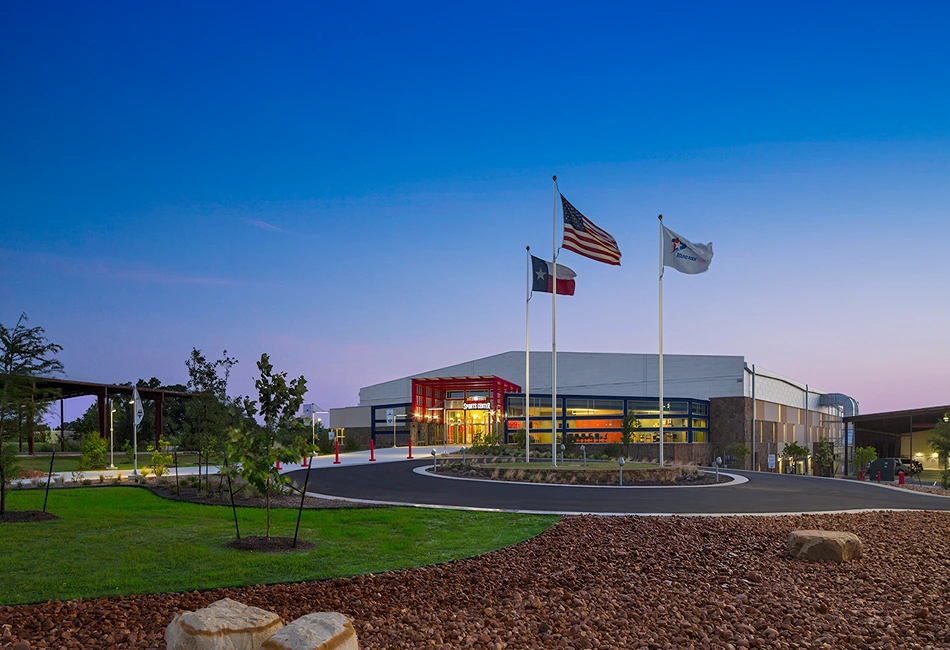
Roanoke Sports Complex Presented by Play It Forward
Roanoke, Texas
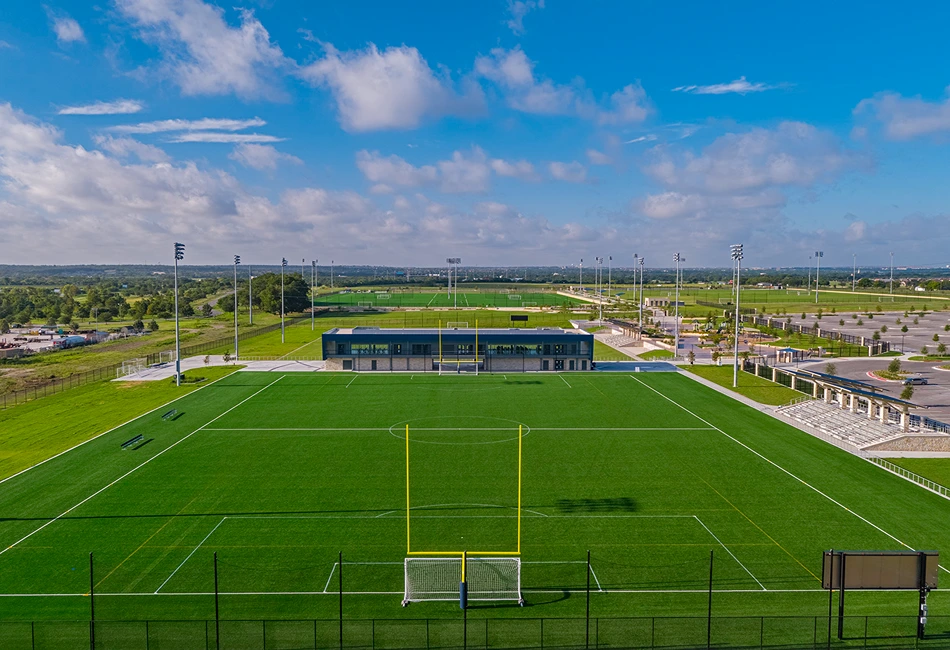
The Roanoke Sports Complex, presented by Play It Forward, is planned as a 122-acre sports and entertainment destination near Highway 114 at Cleveland Gibbs Road. The complex is designed to support baseball, softball, soccer, lacrosse and football, with youth sports opportunities at the travel, club, recreational and community levels.
The latest public timeline states that construction on the first five baseball fields is expected to be completed by September 2026, with the remaining three fields planned for February 2027. Retail and trail portions of the project are expected to follow, with the broader mixed-use components extending into 2027.
The complex is planned around more than fields. Play It Forward describes the development as a sports, dining and shopping destination, with a hotel, high-end retail, restaurants and trails incorporated into the larger site.
For sports tourism, Roanoke’s location in the Dallas-Fort Worth market is a major advantage. A large baseball-focused complex with mixed-use amenities could give the city a stronger position in regional and national youth tournament conversations.
Roanoke Sports Complex is important because it combines youth sports fields with dining, retail, trails and hotel plans, creating a tournament destination rather than a stand-alone sports park.
Planner takeaway: Roanoke is a high-potential youth sports destination, but planners should track the phased opening timeline carefully as fields, trails and mixed-use amenities come online.
ound Rock Sports Center Expansion
Round Rock, Texas
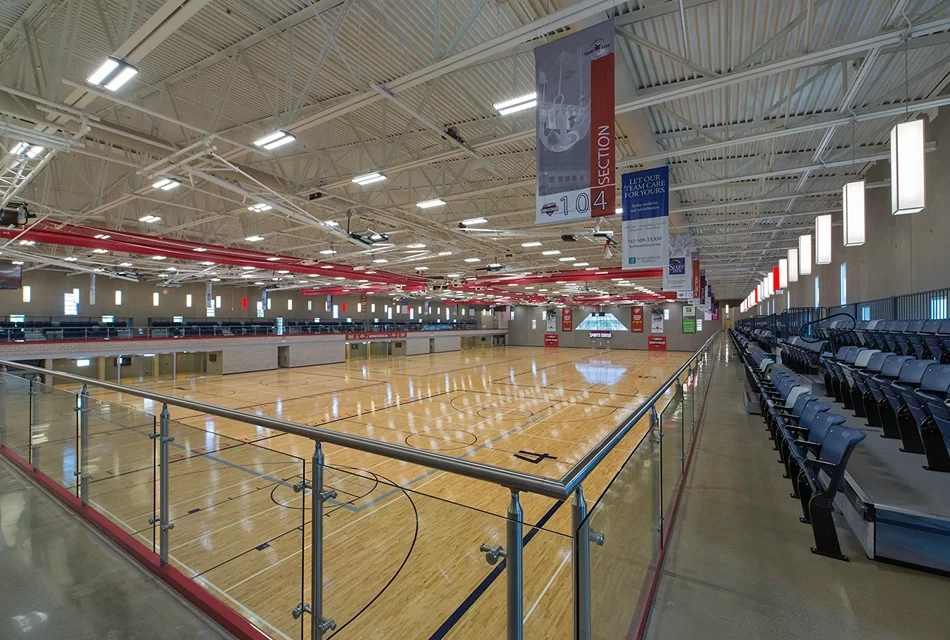
Round Rock continues to reinforce its “Sports Capital of Texas” identity through the expansion of the Round Rock Sports Center. The $17.5 million expansion added 25,000 square feet of space, including room for two new full-sized basketball courts or four volleyball courts, championship court seating, a secondary entrance and additional parking.
The expanded facility now offers 118,750 square feet of indoor space and 63,995 square feet of flexible playable space. Current configurations include eight high school basketball courts, 16 high school volleyball courts or four NCAA basketball courts.
For event planners, the expansion matters because it increases flexibility. The facility can now accommodate larger volleyball events, basketball tournaments, cheer competitions or multiple events at the same time.
Planner takeaway: Round Rock Sports Center is one of Texas’ strongest indoor tournament venues for basketball, volleyball, cheer, dance and other court-based events.
Buena Vista Sports Complex
Laredo, Texas
Buena Vista Sports Complex in Laredo is one of the newest major public sports complexes in Texas. The City of Laredo says the 200-acre facility opened in 2026 and features 10 artificial-turf baseball and softball fields, two multipurpose fields for soccer, football and rugby, and professional-grade lighting.
The complex is designed for both community use and tournament activity. Laredo’s Phase 1 opening included artificial-turf diamond fields, multipurpose fields and evening-play lighting, with the city positioning the venue as a major investment in youth, development and economic opportunity.
For planners, Buena Vista’s biggest advantage is field inventory. Ten turf baseball and softball fields create a strong base for youth tournaments, adult recreation, regional events and showcase-style competition.
Planner takeaway: Buena Vista Sports Complex gives South Texas a major new tournament-ready venue for baseball, softball and multipurpose field sports.
What These Texas Sports Facilities Signal for Planners
New sports facilities in Texas are not all following the same model. Some are high school competition venues. Others are municipal tournament complexes, collegiate performance centers, esports redevelopment concepts, indoor court facilities or mixed-use youth sports destinations.
For planners, that variety creates more opportunity, but also more due diligence.
Before booking or recommending a new sports facility in Texas, confirm:
- Current construction or opening status
- Field, court or gaming station count
- Surface type and lighting
- Parking capacity and bus access
- Restrooms, concessions and spectator areas
- Hotel access and nearby restaurants
- Tournament history or future booking calendar
- Weather contingency plans
- Operator, ownership and rental policies
- Whether the venue is fully open, partially open or still in phased development
Texas’ sports infrastructure growth is helping communities compete for tournaments, serve local athletes and expand year-round recreation. The strongest projects are those that combine quality sports spaces with smooth event operations, visitor amenities and clear community value.
For sports planners, the takeaway is simple: Texas continues to add venues, but the best fit depends on the sport, age group, event scale and travel needs.
FAQ
What are some of the newest sports facilities in Texas?
Recent and developing Texas sports facilities include Round Rock Sports Center’s expansion, Buena Vista Sports Complex in Laredo, Roanoke Sports Complex, Michael Glaspie Field Athletic Complex in Arlington, Beaumont Municipal Tennis Center and proposed youth-sports projects in Lubbock.
Which new Texas facilities are best for youth tournaments?
Round Rock Sports Center, Roanoke Sports Complex, Buena Vista Sports Complex and the proposed Lubbock Game Changers facility are especially relevant for youth tournaments because they focus on courts, fields, tournament operations and family-friendly sports travel.
Are all of these Texas sports facilities open now?
No. Some facilities are open or expanded, while others are still in planning, construction or phased development. Planners should verify each venue’s current status before using it in a bid or tournament plan.
Why is Texas investing in sports facilities?
Texas communities are investing in sports facilities to support local athletes, attract tournaments, generate visitor spending, improve recreation access and compete in the growing sports tourism market.
What should planners ask before booking a new sports facility in Texas?
Planners should ask about current availability, construction status, field or court counts, rental rates, parking, concessions, nearby hotels, weather policies, staffing, insurance requirements and prior event experience.
Join the Community of Sports Planners! Get Your Free Subscription and Download the Sports Planning Guide Magazine for FREE